Asan Day Trip from Seoul: Hot Springs, Admiral Yi & a 500-Year-Old Village
Most visitors to Korea never make it to Asan (아산). That's a genuine missed opportunity. Just over an hour south of Seoul by car, this compact city in South Chungcheong Province holds three completely different attractions — Korea's oldest hot spring resort, the national shrine of the country's most celebrated historical figure, and a living Joseon-era folk village — all within 20 minutes of each other.
The drive is fast and easy: mostly expressway with almost no city traffic once you leave Seoul's southern suburbs. If you're renting a car in Korea and looking for a day trip that offers more than scenic landscapes, Asan rewards the detour.
Getting to Asan from Seoul
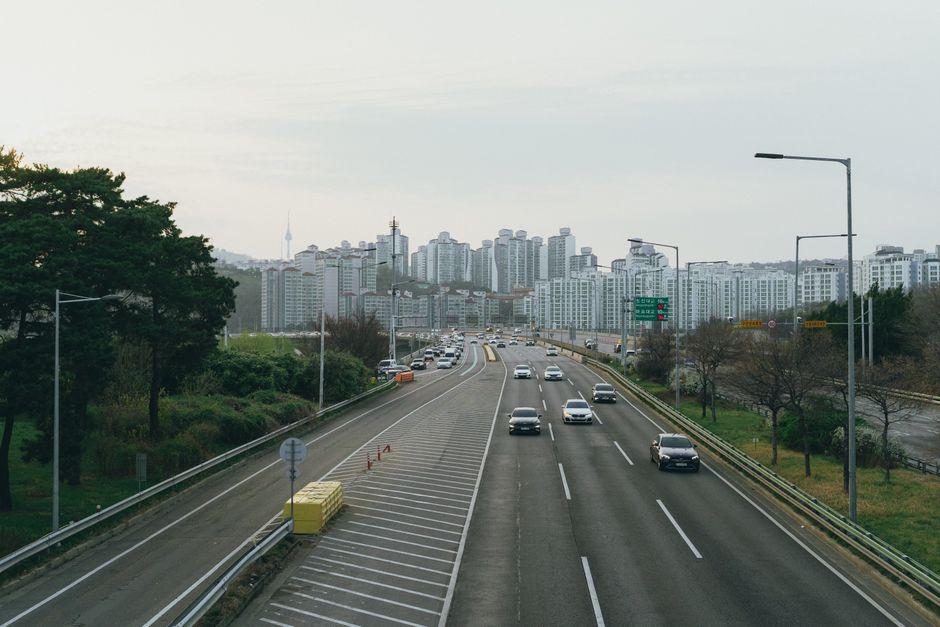
From central Seoul, take the Gyeongbu Expressway (Route 1) south toward Cheonan, then exit onto the Cheonan-Nonsan Expressway (Route 23) and follow signs for Asan/Onyang. The exit for Onyang-oncheon drops you directly into the hot spring district. Total distance from central Seoul is about 85–90 km.
- From Seoul (Gangnam): ~85 km, 75–90 minutes via Gyeongbu Expressway → Cheonan-Nonsan Expressway
- Tolls (one-way): ~5,500–7,500 KRW
- Parking: Free at Hyeonchungsa and Oeam Folk Village; paid parking near Onyang hot spring hotels
- Navigation: Set Naver Map to '현충사' (Hyeonchungsa) — it puts you near the center of everything
- Best departure: Before 8:00 to clear Seoul traffic; arrive in Asan by 9:30
- Fuel: Fill up in Seoul or Cheonan — stations are plentiful on the expressway
Hyeonchungsa — Shrine of Korea's Greatest Admiral
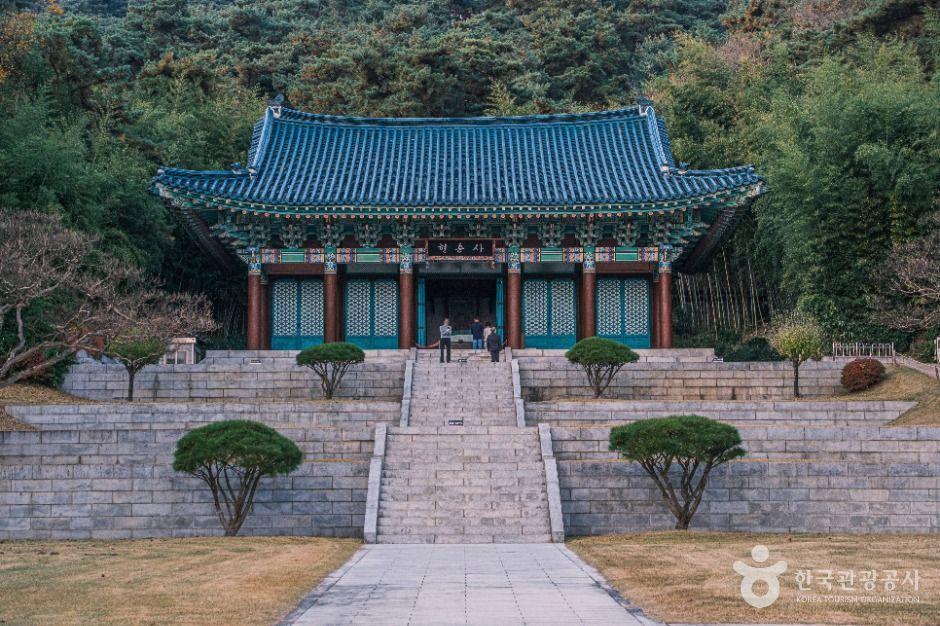
Hyeonchungsa (현충사) is the national shrine dedicated to Admiral Yi Sun-sin (이순신), the 16th-century military commander who repelled the Japanese invasions of Korea using a fleet of ironclad warships — the Geobukseon (거북선, turtle ships). Koreans revere him the way Americans revere George Washington. His portrait appeared on the 100-won coin for decades, and his face still appears on the 100-won coin today.
The grounds spread across 100 hectares of pine forest around the house where Yi was born and lived before his military career. The shrine building itself dates from 1706; the larger complex was restored in 1968. The museum holds his original war diaries — the Nanjung Ilgi (난중일기, Diary from the War Period), a UNESCO-listed document — along with models of turtle ships and artifacts from the seven-year war. Budget 1.5 to 2 hours here, more if you walk the full grounds.
- Admission: Free
- Hours: 9:00–18:00 (last entry 17:00); closed Mondays
- Duration: 90 minutes to 2 hours including museum
- Address: Navigate to '현충사' in Naver Map — there's a large free parking lot
- Tip: The pine-shaded path from the gate to the shrine is one of the most atmospheric 10-minute walks in central Korea
Oeam Folk Village — Joseon Life Preserved
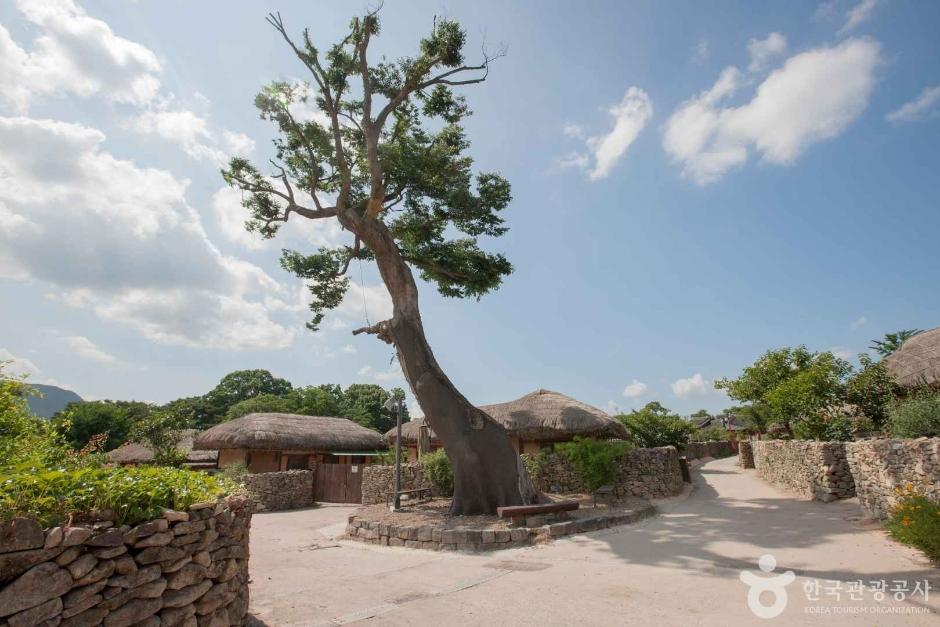
Ten minutes from Hyeonchungsa, Oeam Folk Village (외암민속마을) is something rare: a traditional Korean village that has been continuously inhabited for over 500 years. The families who live here trace their lineage to Joseon-era yangban (scholar-official) class. Their stone-walled compounds, thatched-roof farmhouses, and tile-roof manor houses line narrow alleys where the main sounds are wind, birdsong, and the occasional dog.
The village is a registered National Folk Cultural Heritage Site and is included on the tentative list for UNESCO World Heritage consideration. Unlike open-air folk museums, this is a real village — some residents weave, farm, or make traditional crafts in their front yards. You can walk in freely, but be respectful of the fact that people actually live in these houses. The walk through the village takes about 45–60 minutes.
- Admission: 2,000 KRW adults
- Hours: Sunrise to sunset (open all year)
- Duration: 45–60 minutes walking at a relaxed pace
- Address: Navigate to '외암민속마을' in Naver Map — small parking lot near the entrance
- Best time: Weekday mornings are quietest; autumn foliage (late October) is spectacular
Onyang Hot Springs — 600 Years of Soaking
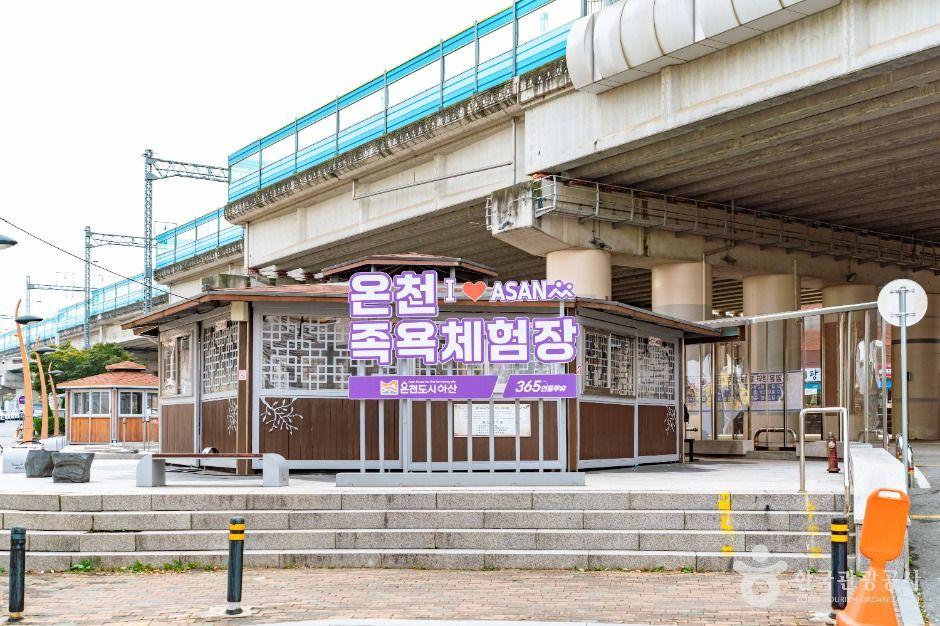
Onyang Hot Spring (온양온천) is one of Korea's oldest and most celebrated mineral spas. Joseon Dynasty records from the 15th century describe the spring as a royal retreat — multiple kings came here to treat skin ailments. The spring flows at 420 liters per minute and emerges at 57°C, then is cooled for bathing. The mineral composition is sodium bicarbonate, long associated with softening skin and easing joint discomfort.
The hot spring district clusters around Onyang-oncheon Station, about 15 minutes by car from Hyeonchungsa. Several public bath facilities operate in the area. Asan Spavis (아산 스파비스) is the largest, with outdoor pools, indoor baths, saunas, and family facilities. More compact traditional bathhouses are found directly around the train station. A 2-hour soak at a good facility runs 12,000–25,000 KRW depending on services.
- Asan Spavis: Large resort facility, outdoor pools, ~25,000 KRW, open 9:00–21:00
- Station-area bathhouses: Smaller, cheaper (~12,000 KRW), focused on the thermal soak
- Towel/amenities: Most facilities provide or rent at low cost — confirm at the door
- Tattoo policy: Some public facilities do not allow visible tattoos — check ahead if applicable
- Timing: Save this for the afternoon — after Hyeonchungsa and Oeam, a hot soak is the ideal closer
Where to Eat in Asan
The hot spring district has the most dining options, concentrated along the streets near Onyang-oncheon Station. Gejang (게장, soy-marinated raw crab) is a local specialty you'll see on many menus — it pairs well with hot rice and is worth trying if you eat seafood. For something simpler, the area has excellent Korean barbecue restaurants and traditional soup-and-rice spots.
For a full sit-down lunch, budget 12,000–20,000 KRW per person. Most restaurants have photo menus. If you're visiting Oeam Folk Village, check whether any of the traditional houses near the entrance offer traditional Korean meals (향토음식) — several residents serve home-cooked lunches to visitors.
Quick Tips
- 1Start with Hyeonchungsa: Opens at 9:00, beautiful and uncrowded in the morning — the pine walk is best with morning light.
- 2Oeam next: It's 10 minutes from Hyeonchungsa. Aim to arrive by 11:00 before day-tripping Korean families fill the alleys.
- 3Lunch in the hot spring district: The Onyang-oncheon area has the widest dining range — eat before you soak.
- 4Hot spring in the afternoon: A 2-hour soak after walking both sites feels like exactly what your legs need.
- 5Check Monday closures: Hyeonchungsa is closed on Mondays — plan accordingly if visiting mid-week.
- 6Return traffic: Leave Asan by 16:30 on weekends to avoid the Seoul-bound expressway backup starting around 17:00.
FAQ
Frequently Asked Questions
Asan sits at a peculiar crossroads in Korea's tourism geography — close enough to Seoul that Koreans drive there regularly, but almost entirely off the radar for foreign visitors. Three genuine attractions in one short drive makes it an unusually efficient day out. Leave early, walk Hyeonchungsa in the morning cool, explore Oeam before the afternoon tour buses arrive, and end the day in the hot spring. The drive back to Seoul on a warm, relaxed evening is the kind of day Korea's countryside does best.
Share this article
You Might Also Like


Get Travel Inspiration
Subscribe for new stories, route guides, and driving tips delivered to your inbox.