Chuncheon Day Trip from Seoul: Dakgalbi, Soyang Lake & What to Do All Day
Chuncheon doesn't get the attention it deserves. Despite sitting just 80 km east of Seoul — a comfortable drive on one of Korea's most scenic expressways — most foreign visitors skip it entirely. That's a missed opportunity: this Gangwon capital has a clear, distinct identity built around dakgalbi (spicy stir-fried chicken), Soyang Lake (Korea's largest artificial reservoir), and makguksu (cold buckwheat noodles). Hit all three, and you have a genuinely satisfying day.
Getting There from Seoul
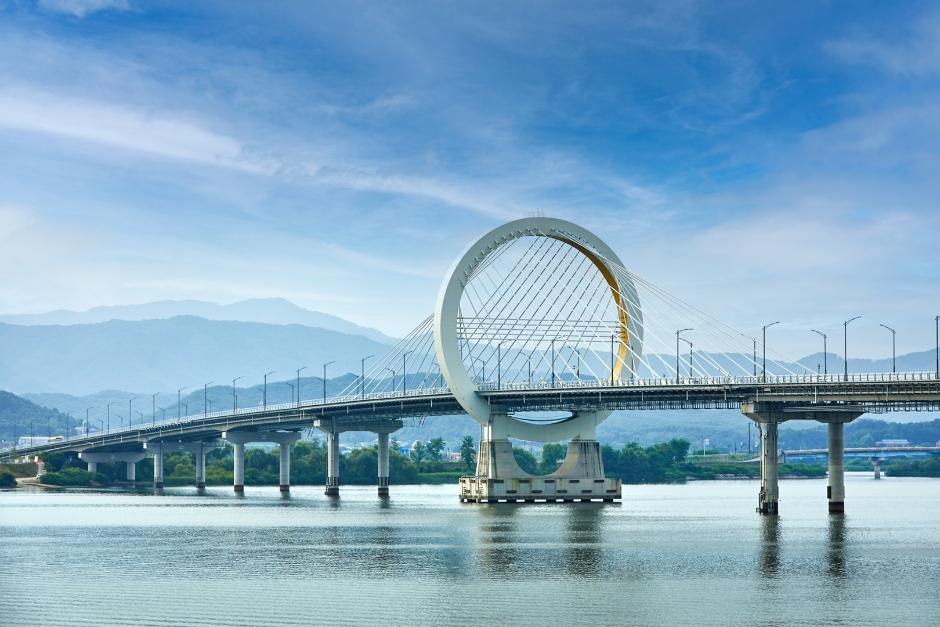
Take the Gyeongchun Expressway (경춘고속도로) from eastern Seoul. From Gangdong or Guri IC, the drive to Chuncheon IC is typically 70–80 minutes in normal traffic. Toll fees run 4,500–5,500 KRW each way. Naver Map and Kakao Map both handle routing here without issues.
Parking near Dakgalbi Street: the Nakwon Parking Lot (낙원주차장) is the closest paid lot — free for the first hour, then 500 KRW per 30 minutes. The Soyang Lake area has dedicated free parking at the Soyang Dam visitor lot, a 10-minute drive from the city center.
- Drive time: 70–80 minutes from eastern Seoul
- Distance: ~80 km via Gyeongchun Expressway
- Toll: ~5,000 KRW each way (Hi-Pass or cash)
- Parking: Paid lots near Dakgalbi Street (500 KRW/30 min); free at Soyang Dam
Dakgalbi Street: Chuncheon's Signature Dish
Dakgalbi (닭갈비) is Chuncheon's defining food — spicy stir-fried chicken marinated in gochujang (red pepper paste) with sweet potato, tteok (chewy rice cake), cabbage, and green onion, all cooked table-side on a cast-iron griddle. The dish originated here in the 1960s, invented by a restaurant owner who needed a cheaper alternative to pork ribs. It took off. Chuncheon now has an entire street dedicated to it.
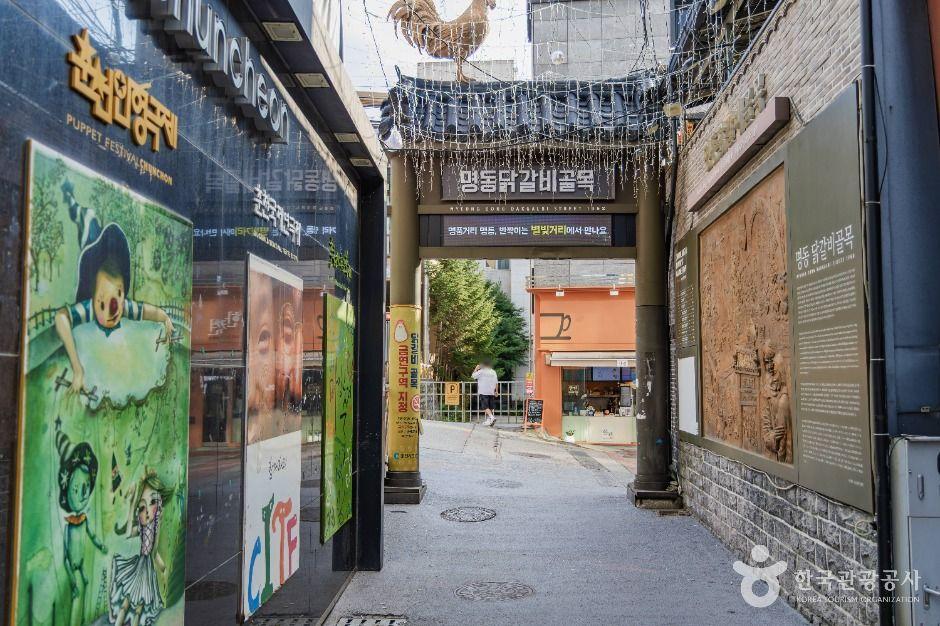
Myeongdong Dakgalbi Alley (명동닭갈비골목) is a pedestrian lane packed with 20+ restaurants serving essentially the same dish, each with its own marinade variation. A standard serving costs 12,000–14,000 KRW per person. The real trick: when the chicken is mostly gone, ask staff to add rice (볶음밥, bokkeumbap). They'll stir rice directly in the leftover sauce on the same griddle — crispy, caramelized, and completely addictive.
Come between noon and 2pm on weekdays and the alley gets busy. Arrive before 11:30 or after 2pm for a quicker seat. Most restaurants accept credit cards and Naver/Kakao Pay.
Soyang Lake: Korea's Biggest Reservoir
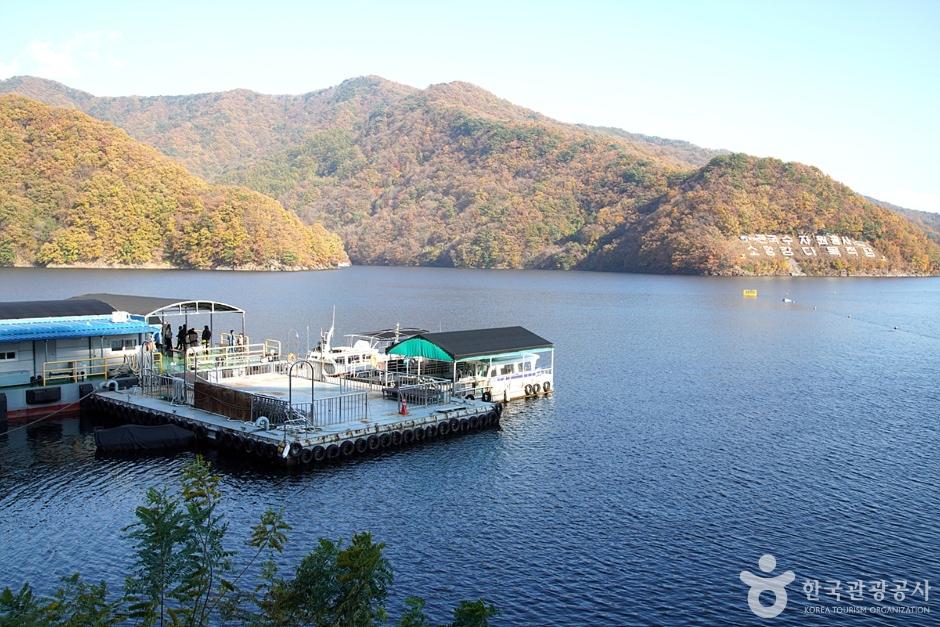
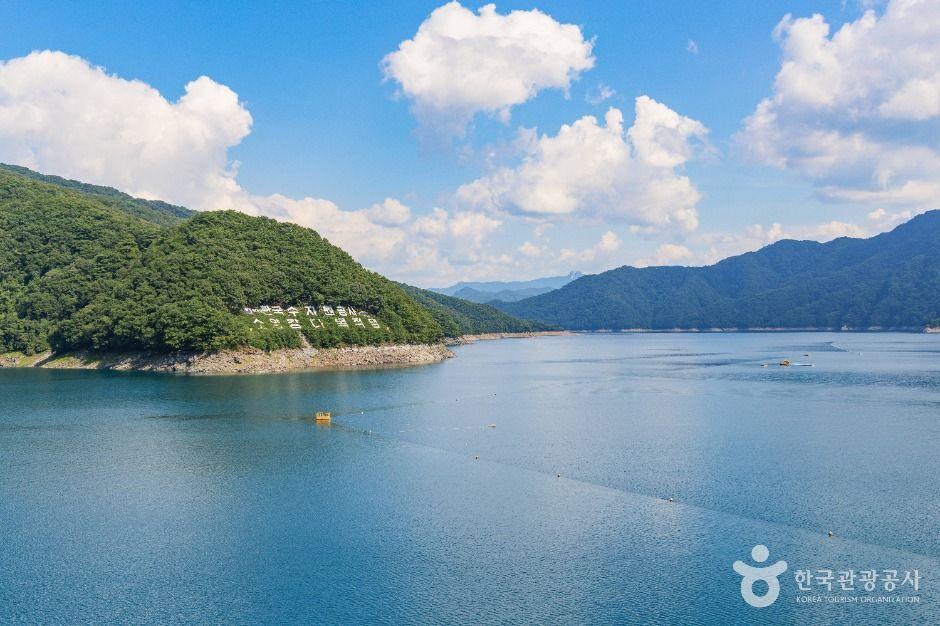
Soyang Lake (소양호) was created in 1973 when the Soyang Dam — then Asia's largest rockfill dam — was completed. The reservoir covers over 70 km², stretching north and east into mountain valleys with forested ridgelines visible in every direction. It's genuinely beautiful, and in summer the water turns a deep jade-green.
The best way to see it is by boat. The Soyang Lake Ferry (소양강 댐 유람선) departs from the dock near the dam and travels to Cheongpyeong-sa Temple, a historic mountain temple founded in the 10th century. The one-way trip takes about 20 minutes. From the temple dock, it's a 15-minute walk uphill through forest to the main hall. The round-trip by boat costs 9,000 KRW per person.
- Ferry hours: 9:00–17:30 (last departure varies seasonally)
- Fare: 6,000 KRW one-way / 9,000 KRW return
- Cheongpyeong-sa Temple: 1,500 KRW entrance fee
- Soyang Dam viewpoint: Free (10 min drive from city center)
- Parking at dam: Free
If you skip the ferry, the dam viewpoint itself is free and worth 20 minutes — you can see the full scope of the reservoir from above. The nearby Soyang River Skywalk (a glass-bottomed bridge over the river mouth) is also free and takes only 10 minutes to walk.
Makguksu: The Other Chuncheon Classic
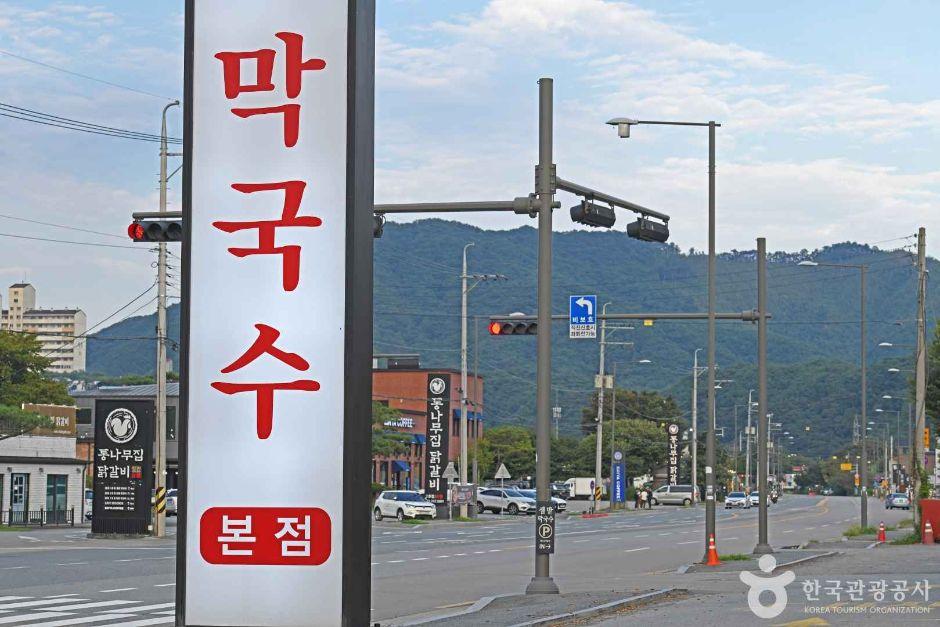
Chuncheon has a second food identity that most visitors miss: makguksu (막국수). These cold buckwheat noodles, served in an icy, slightly fermented broth with shredded radish, cucumber, and a boiled egg, are one of Korea's most refreshing summer foods. The Gangwon region is buckwheat country — the highlands grow it well — and Chuncheon has been serving makguksu for generations.
The Makguksu Street near Soyang Lake (소양호 막국수거리) clusters several good restaurants along the road to the dam. A bowl costs 9,000–11,000 KRW. Look for restaurants that make noodles in-house (직접 뽑는 막국수) — you can often see the noodle press through the window. Pour a splash of the accompanying dongchimi broth (fermented radish water) over the noodles, add sesame oil and vinegar from the table condiments, and mix.
Makguksu works well as a late afternoon meal before the drive back to Seoul. It's light enough that you won't feel heavy on the road.
Practical Tips & Day Timeline
A comfortable Chuncheon day trip from Seoul runs 9:30am to 6:30pm with time to see the main highlights without rushing. The route from Dakgalbi Street to Soyang Lake is 10 minutes by car.
- 9:30 — Leave Seoul
- 11:00 — Arrive Chuncheon; park near Dakgalbi Street
- 11:30–12:30 — Chuncheon city walk, Myeongdong Street
- 12:30–14:00 — Dakgalbi lunch + fried rice finish
- 14:30–16:30 — Soyang Lake, dam viewpoint, optional ferry to Cheongpyeong-sa
- 17:00 — Makguksu near the lake
- 18:00 — Leave for Seoul (arrive ~19:30)
Best season: May–October. Summer brings lush mountain greenery and the lake is at its most vivid. Winter is quieter but the snow-capped mountains around the lake are stunning — just note the ferry may be reduced December–February.
Frequently Asked Questions
Frequently Asked Questions
Share this article
You Might Also Like


Get Travel Inspiration
Subscribe for new stories, route guides, and driving tips delivered to your inbox.