Gwangju City Drive: Korea's Democracy City, Food Capital & Art Scene
Most foreign visitors to Korea's south spend their rental car days driving to Boseong's tea fields, Yeosu's harbor, or Namhae's coastal roads. Few stop in Gwangju (광주) — Korea's fifth-largest city and, arguably, its most historically and culturally significant one. That's a shame, because Gwangju punches well above its weight: it sparked Korea's democratic movement in 1980, it's home to Asia's largest underground arts complex, it sits at the foot of a spectacular national park, and chefs across Korea will tell you, without hesitation, that Gwangju's regional food is simply the best in the country.
You don't need to choose between depth and scenery here. A full day loop from Seoul — or an overnight stop between the capital and the south coast — covers the city's highlights and leaves you with a genuinely different picture of Korea than the one most tourists bring home.
The Drive from Seoul
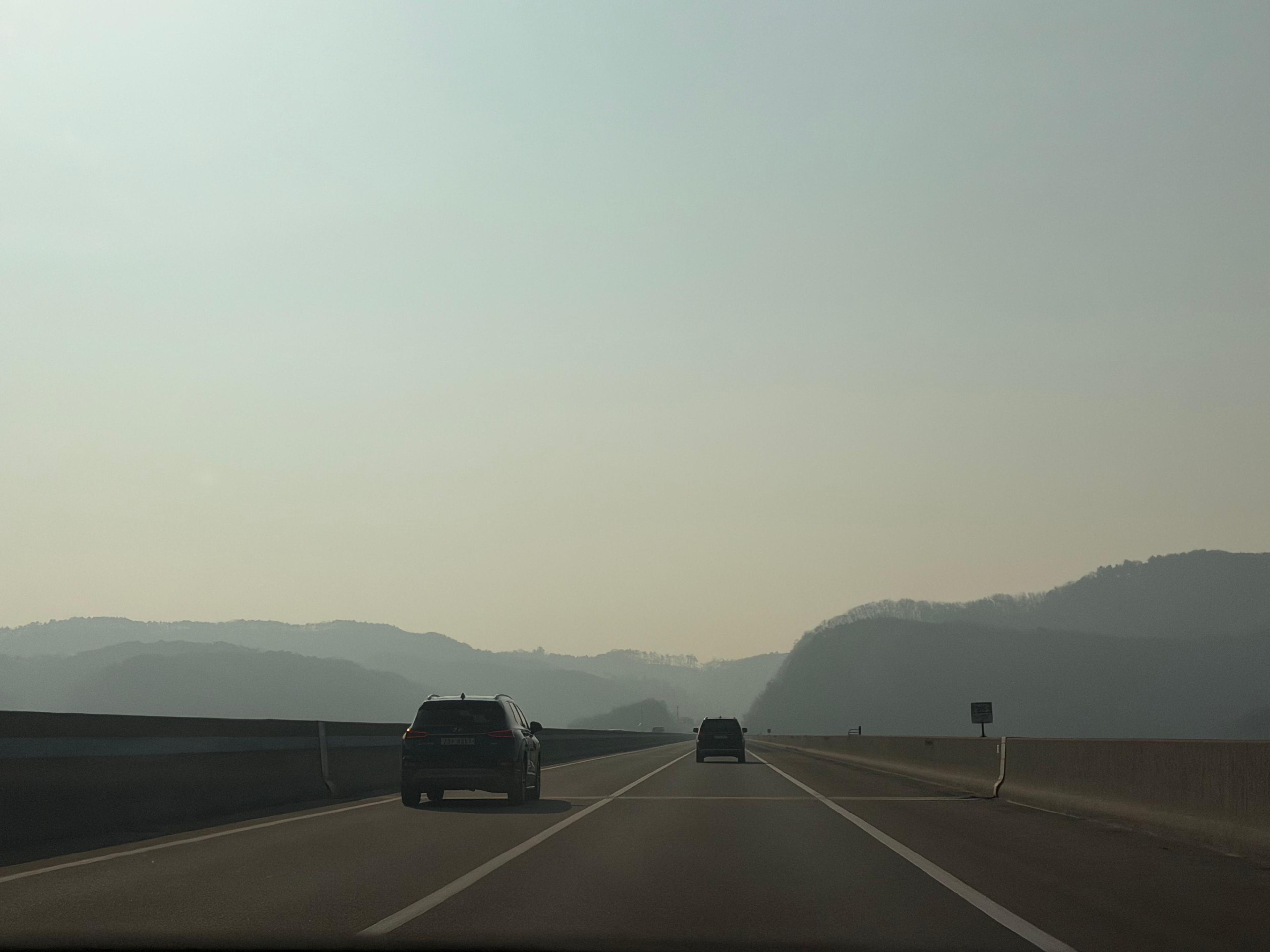
From Seoul, take the Gyeongbu Expressway (Route 1) south toward Daejeon, then merge onto the Honam Expressway (Route 25) at Honam JC and follow it all the way to Gwangju IC or Gwangju Dongbu IC. Total distance is roughly 340 km, and in moderate traffic you're looking at 3 hours 30 minutes to 4 hours. Tolls run approximately 22,000–26,000 KRW one-way. There is no meaningful public transit option for most of the city's highlights, so a rental car is essentially the only way to do Gwangju justice in a single day.
- From Seoul: ~340 km, 3 hrs 30 min via Gyeongbu → Honam Expressway
- Tolls (one-way): ~22,000–26,000 KRW
- Best departure: Before 7:00 to clear Seoul's southern ring road
- Return route option: Head east to Boseong, Yeosu, or Namhae instead of returning to Seoul
- Fuel: Fill up before Gwangju IC — city driving eats into the tank
May 18th Democracy Movement: Korea's Most Powerful Memorial
No visit to Gwangju is complete without the May 18th National Cemetery (5.18 국립묘지) and the 5.18 Democratic Uprising Memorial Park downtown. In May 1980, Gwangju citizens rose against military dictatorship and were brutally suppressed — an event that became the moral foundation of Korea's democracy movement and is now listed in UNESCO's Memory of the World register. The national cemetery in northern Gwangju holds the remains of those who died; the adjoining memorial hall tells the story in full, with English-language panels, documentary footage, and photographs that many visitors find genuinely moving.
- 5.18 National Cemetery: Free entry, open daily 6:00–22:00 (Apr–Oct); parking free
- 5.18 Democratic Uprising Archives: Downtown, free, Tue–Sun 9:00–18:00
- 5.18 Memorial Park: Walking paths, fountains, sculptures on the uprising site
- Drive time from highway: ~15 min from Gwangju IC to the cemetery
Asia Culture Center: The World Underground
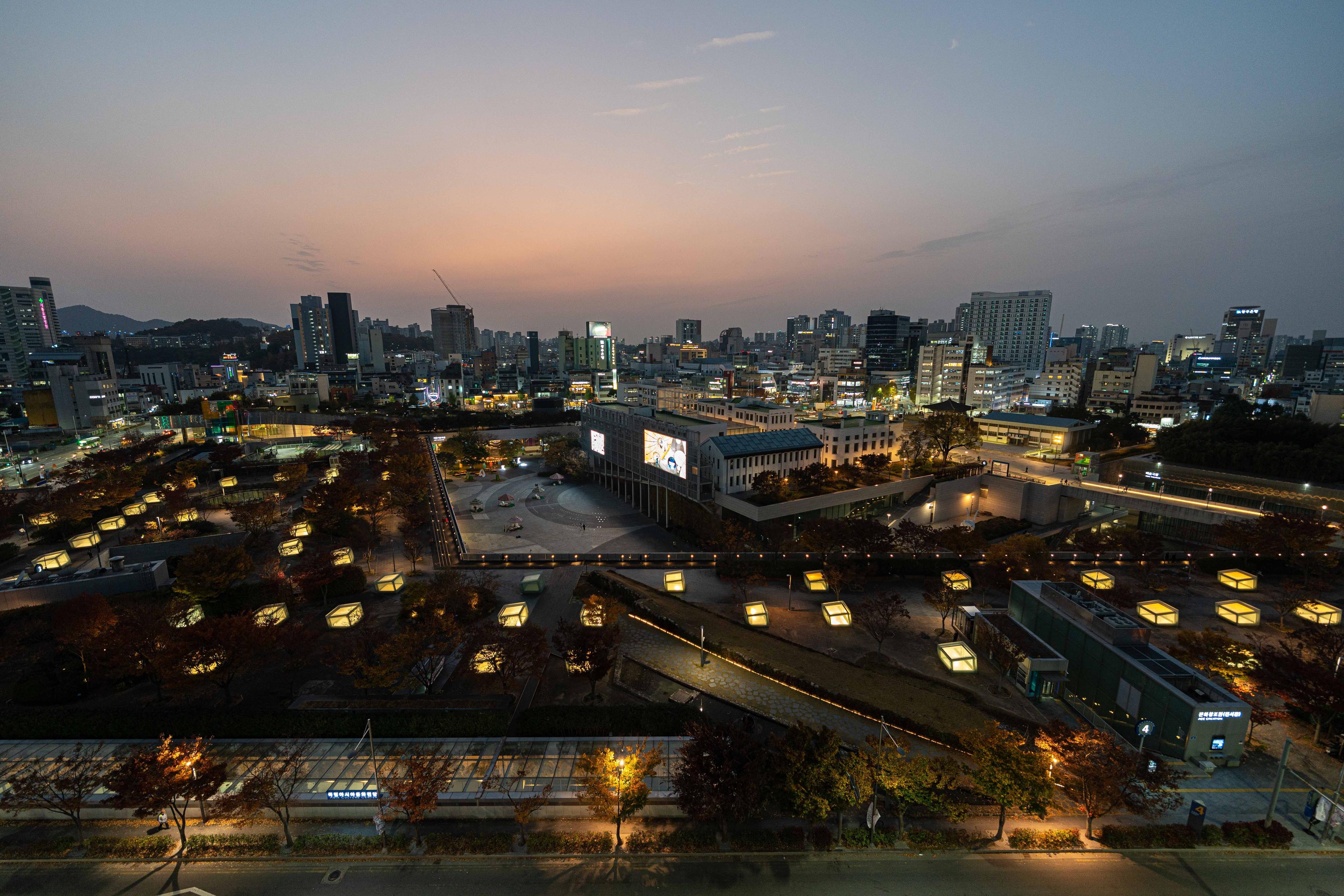
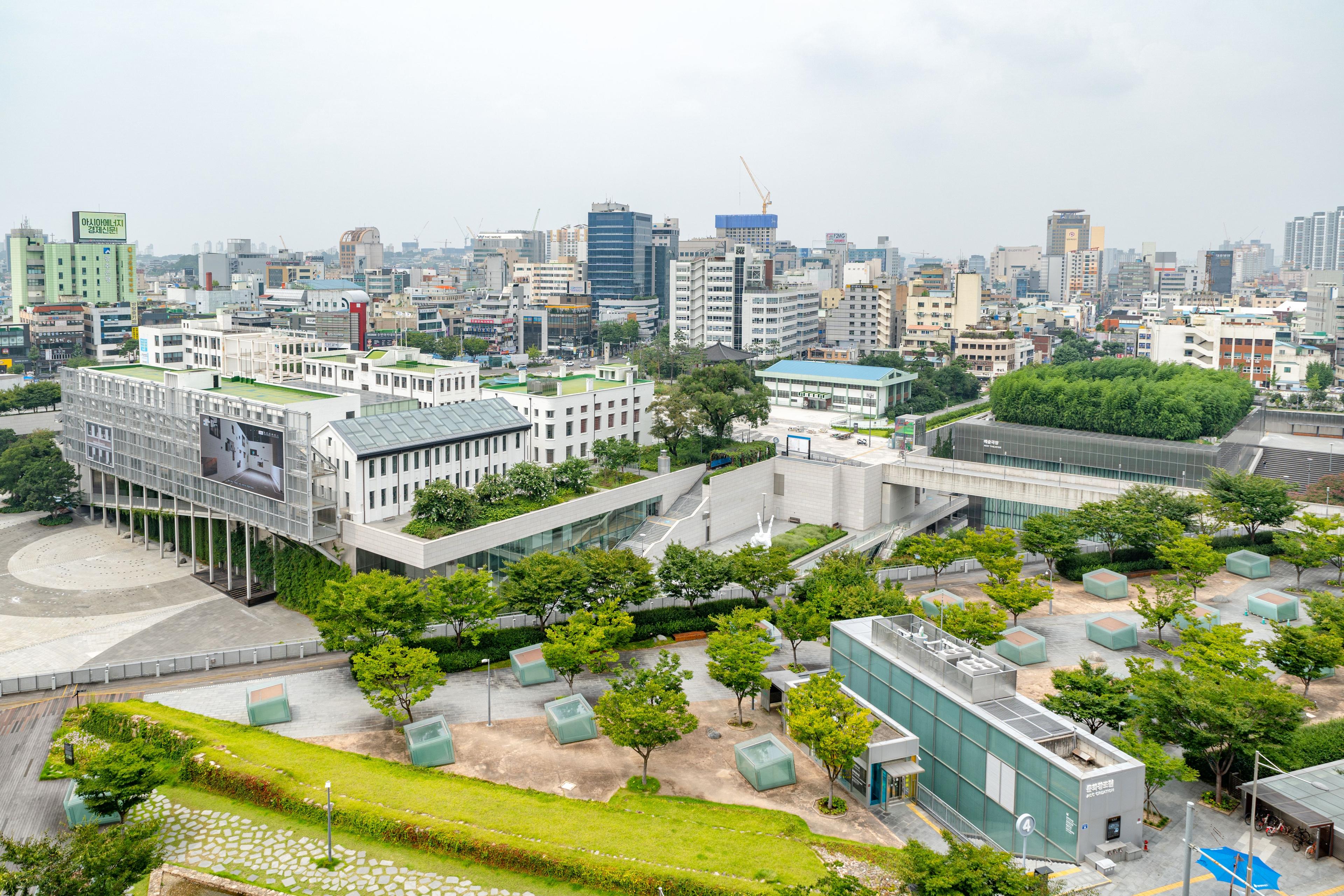
In the heart of the city sits one of Asia's most remarkable architectural projects: the Asia Culture Center (아시아문화전당), an enormous sunken complex where five interconnected buildings are buried beneath a forested plaza, their rooflines level with the surrounding streets. The facility opened in 2015 and covers 160,000 m² — Asia's largest cultural complex — housing galleries, performance halls, a children's museum, a media art centre, and the 5.18 Civil Archives. Walking above it, you barely notice it exists. Walking through it, you feel like you're in a different city altogether.
- Hours: Tue–Sun 10:00–18:00 (exhibitions vary)
- Entry: Most areas free; some exhibition tickets ~5,000–10,000 KRW
- Parking: Underground at the ACC, ~1,000 KRW/30 min
- Allow: 1.5–2 hours to walk through the main galleries
Mudeungsan National Park: The City's Sacred Mountain
Ten minutes from the ACC, Mudeungsan National Park (무등산 국립공원) rises to 1,187 m above the city. The mountain is Gwangju's spiritual anchor — its distinctive columnar rock pillars (Seoseokdae and Ipseokdae) appear on everything from Gwangju's city seal to local soju labels. The Jeungsimsa Temple (증심사) at the mountain base is free to enter and surrounded by ancient pine and ginkgo trees; from there, a well-marked forest trail climbs through bracken and oak to a plateau with sweeping city views. In summer the gorge streams are cool and the shade is dense — a rare escape from southern Korea's humidity.
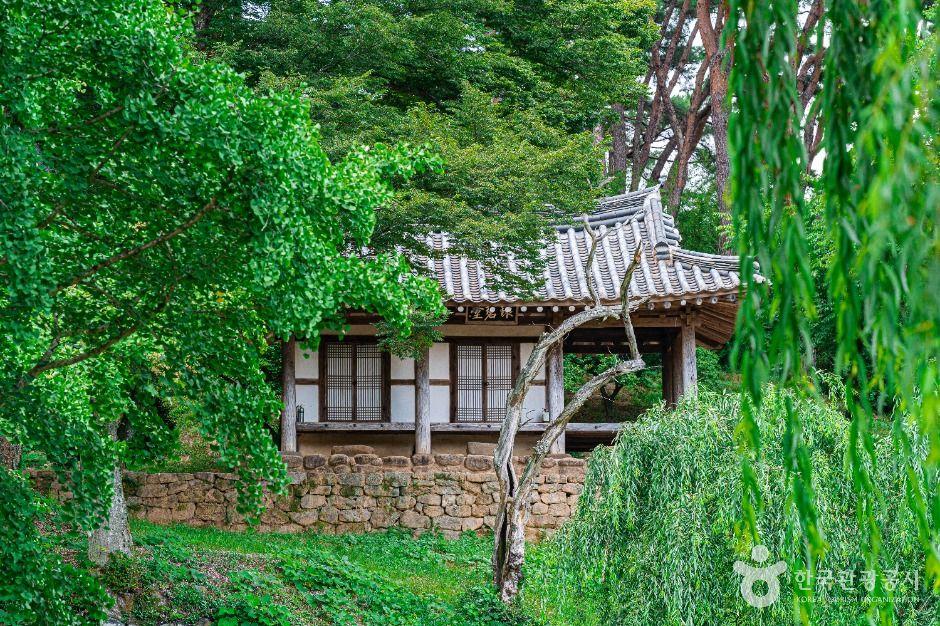
- Jeungsimsa Temple: Free entry, open daily
- Parking at Jeungsimsa: ~2,000 KRW/hr; arrive before 9:00 on weekends
- Trail to ridge: ~2 hours return, moderate difficulty
- Highest point accessible: Upper shuttle bus available in peak season (fee applies)
- Drive from ACC: ~12 min via Mudeungsan-ro
Where to Eat: Korea's True Food Capital
Koreans will debate which city has the best food for hours, but Gwangju's claim is hard to argue with. The Jeolla Province (전라도) food tradition — Gwangju's culinary base — emphasizes a rich spread of banchan side dishes, slow-fermented ganjang (soy sauce), and a generosity of serving that other regions simply don't match. A single meal at a traditional restaurant here might arrive with twelve or more side dishes alongside the main course, all included in the price.
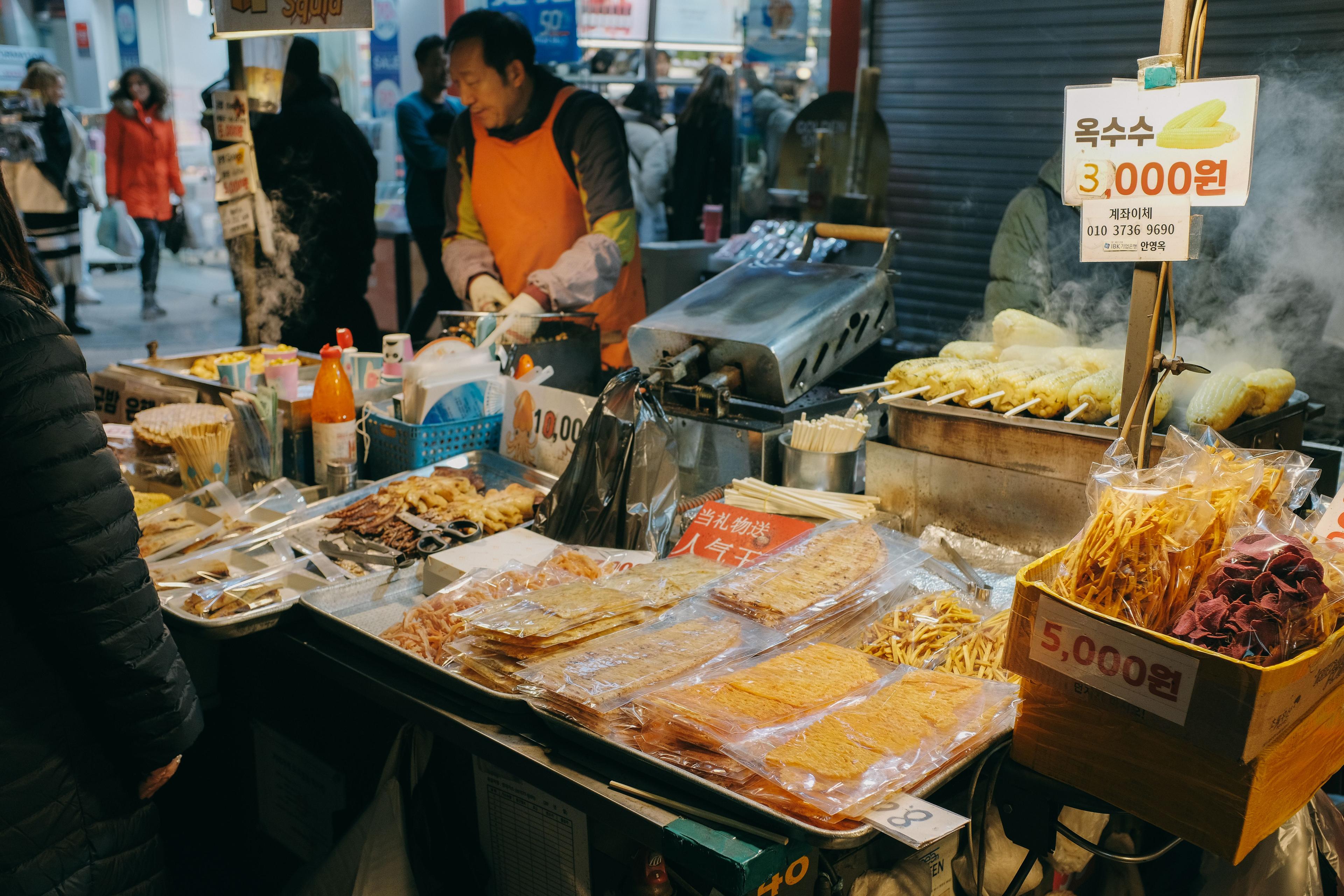
Local specialties to look for: Gwangju jeon (광주 전) — buckwheat pancakes stuffed with kimchi and pork — available all over the Yangdong Market area; ttukbaegi bulgogi (뚝배기 불고기) — brothy beef bulgogi served in a clay pot; and hongeo-samhap (홍어삼합) — fermented skate fish, pork belly, and kimchi, an acquired taste that locals are immensely proud of. Budget 12,000–20,000 KRW per person for a full sit-down meal at a traditional restaurant.
Yangdong Market: Gwangju's Oldest and Largest Traditional Market
Before leaving the city, drive to Yangdong Market (양동시장) — one of the largest traditional markets in Korea, spread across an entire city block near the train station. The market has been operating since 1910 and today holds roughly 1,600 stalls selling everything from dried seafood and fermented vegetables to Korean street snacks. The food court section (watch for 떡볶이 and 순대 stalls) is cheap, fast, and excellent. Arrive hungry.
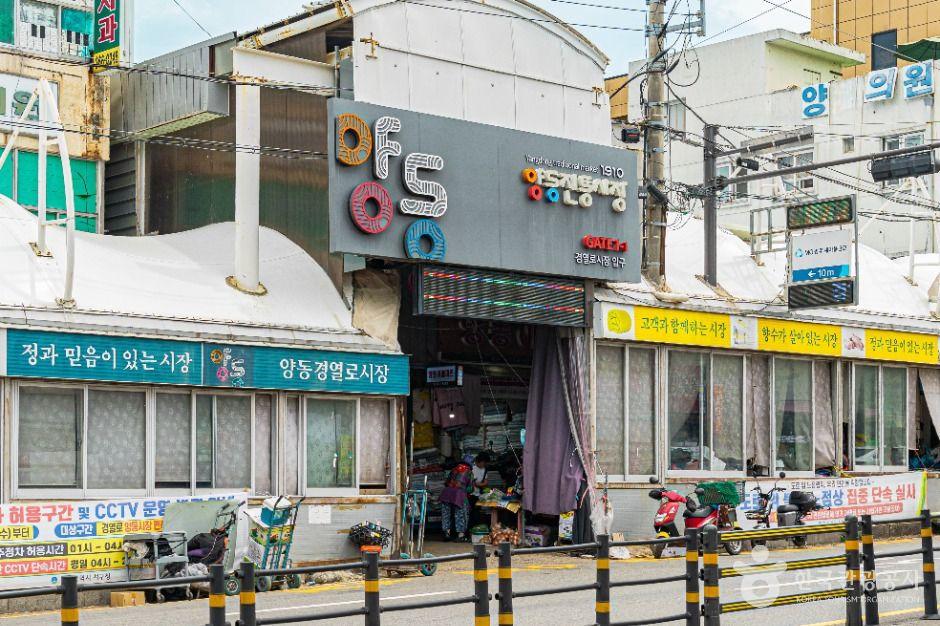
- Hours: Most vendors open 8:00–18:00; food stalls later on weekends
- Parking: Paid lot on Cheonbyeon Jwa-ro, ~1,000 KRW/hr
- Don't miss: Buckwheat jeon (메밀전병), fresh pressed perilla oil, dried anchovy
- Budget: 5,000–10,000 KRW for a snack lunch from market stalls
Quick Tips for Visiting Gwangju by Car
- 1Start with the National Cemetery (opens early, uncrowded before 9 AM) and end with the market (busier in the afternoon).
- 2Gwangju's one-way streets in the downtown core can be confusing — use Naver Map or Kakao Map in navigation mode rather than trying to read signs.
- 3The Hi-Pass electronic toll lane works fine on the Honam Expressway — no need to queue at cash booths.
- 4Gwangju can be brutally hot in July and August (temperatures regularly hitting 35°C) — book an early start and retreat to the ACC or a café during the 2–4 PM heat peak.
- 5If continuing south, Boseong (green tea fields) is 1 hour from Gwangju via Route 29; Yeosu is 1 hour 30 min via the Namhae Expressway.
FAQ
Frequently Asked Questions
Gwangju doesn't offer the coastal drama of Yeosu or the ancient atmosphere of Gyeongju, but it gives you something rarer: a Korean city that feels genuinely lived-in and historically serious, where great food is a daily fact of life. Add it to your southern circuit and you'll return home with a story most visitors to Korea never get to tell.
Share this article
You Might Also Like


Get Travel Inspiration
Subscribe for new stories, route guides, and driving tips delivered to your inbox.