Gyeongbokgung Palace Complete Guide: Tickets, Hours & What to See in 2026
Planning a visit to Seoul's most iconic palace? Gyeongbokgung (경복궁) is the largest of Seoul's five Joseon-era palaces and a must on every Korea itinerary. Built in 1395 and painstakingly restored after centuries of destruction, it's both a stunning architectural masterpiece and a living history lesson. This guide covers everything you need to know to make the most of your visit.
Getting to Gyeongbokgung
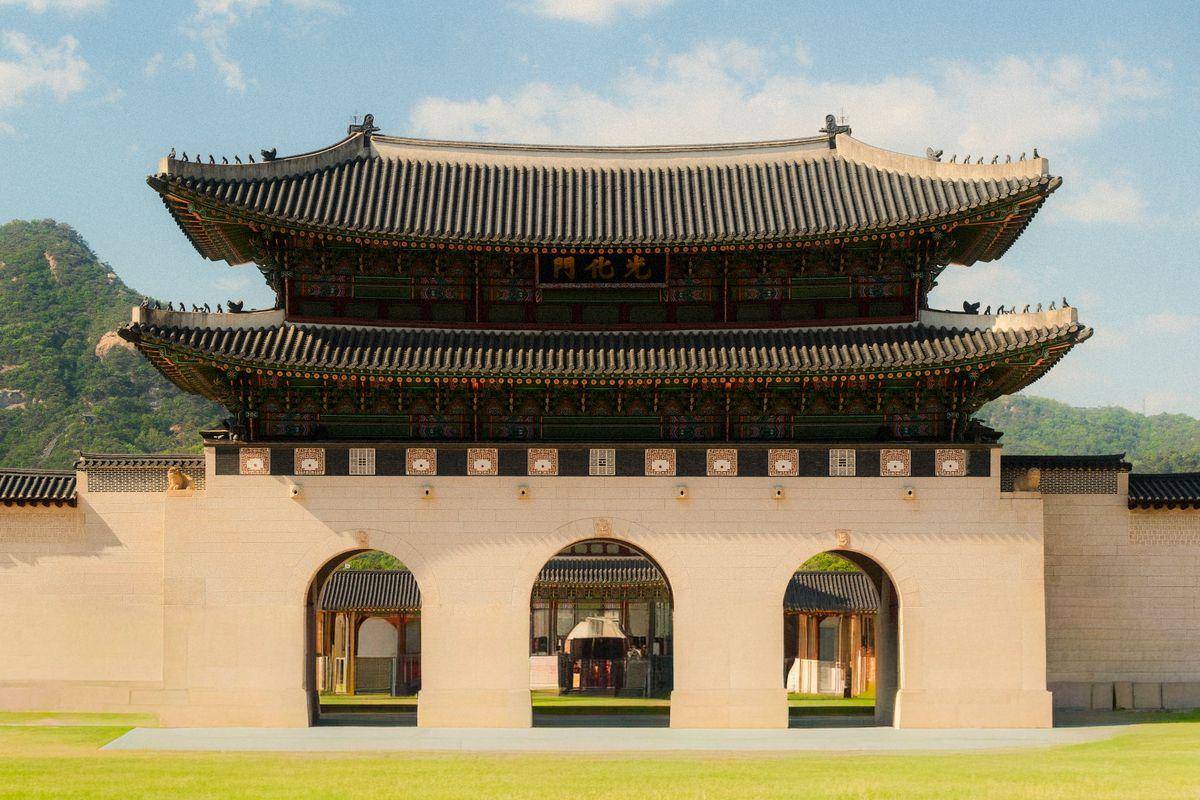
The palace sits at the northern end of Sejong-daero, Seoul's main ceremonial boulevard. The easiest way to arrive is by subway: take Line 3 (Orange Line) to Gyeongbokgung Station and exit from Exit 5 — you'll see the massive Gwanghwamun Gate straight ahead. Line 5 also stops at Gwanghwamun Station (Exit 2), putting you right beside the gate.
If you're driving, parking inside the palace grounds is limited. Your best options are the Sejong Center for the Performing Arts underground parking on the east side, or the Gyeongbokgung parking lot off Hyoja-ro near Exit 3 of Gyeongbokgung Station. Expect to pay around 1,000–2,000 KRW per 10 minutes. Most visitors find the subway far easier here — the roads around the palace get congested on weekends.
- Subway: Line 3 → Gyeongbokgung Station, Exit 5
- Alternative: Line 5 → Gwanghwamun Station, Exit 2
- Bus: Routes 109, 171, 272, 606 stop at Sejong Center
- By car: Gyeongbokgung parking off Hyoja-ro (arrive before 09:30 on weekends)
- Walking: 15 min from Gwanghwamun Square, 20 min from Insadong
Tickets & Opening Hours
Admission is very affordable by global standards. Adults pay 3,000 KRW (about $2 USD), youth ages 7–18 pay 1,500 KRW, and children under 7 enter free. There's also an Integrated Palace Ticket for 10,000 KRW that covers all five royal palaces plus Jongmyo Shrine — excellent value if you're palace-hopping across Seoul.
- Adults: 3,000 KRW | Youth (7–18): 1,500 KRW | Under 7: Free
- Integrated ticket (all 5 palaces + Jongmyo): 10,000 KRW
- March–October: 09:00–18:00 | November–February: 09:00–17:00
- Closed: Every Tuesday
- Summer night sessions: Extended to 21:00 in late July–August (book in advance)
- Tickets stop selling 1 hour before closing
The Hanbok Free-Entry Trick
Here's one of Seoul's best open secrets: wear a hanbok (traditional Korean dress) and you get into Gyeongbokgung completely free. The same rule applies at Changdeokgung, Deoksugung, and most other royal sites across Seoul — wearing hanbok anywhere in the palace complex opens the gates at no charge.
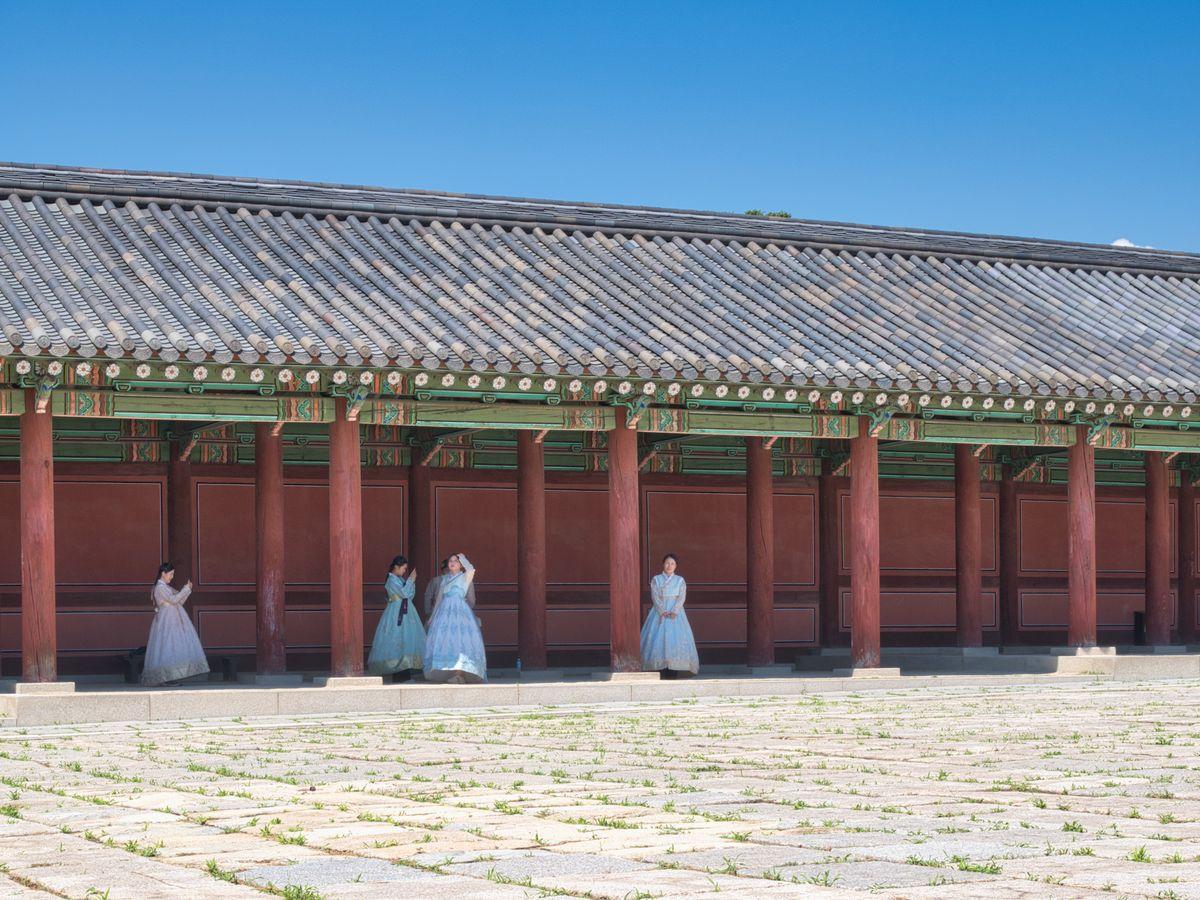
Hanbok rental shops cluster around Gyeongbokgung Station and through the Bukchon Hanok Village and Insadong neighborhoods. Rentals typically cost 10,000–20,000 KRW for 2 hours, which means you effectively get free entry plus some of the best photography of your trip. The colorful silk robes photograph beautifully against the palace architecture — couples and friend groups love this experience.
Main Highlights Inside the Palace
Gyeongbokgung covers about 410,000 square meters — roughly 45 football fields. You could walk through the central area casually in 2 hours, or spend a full half-day if you include the museums. Don't miss these key spots:
- Gwanghwamun Gate — The iconic triple-arched front gate, rebuilt in 2010 in its original 15th-century form
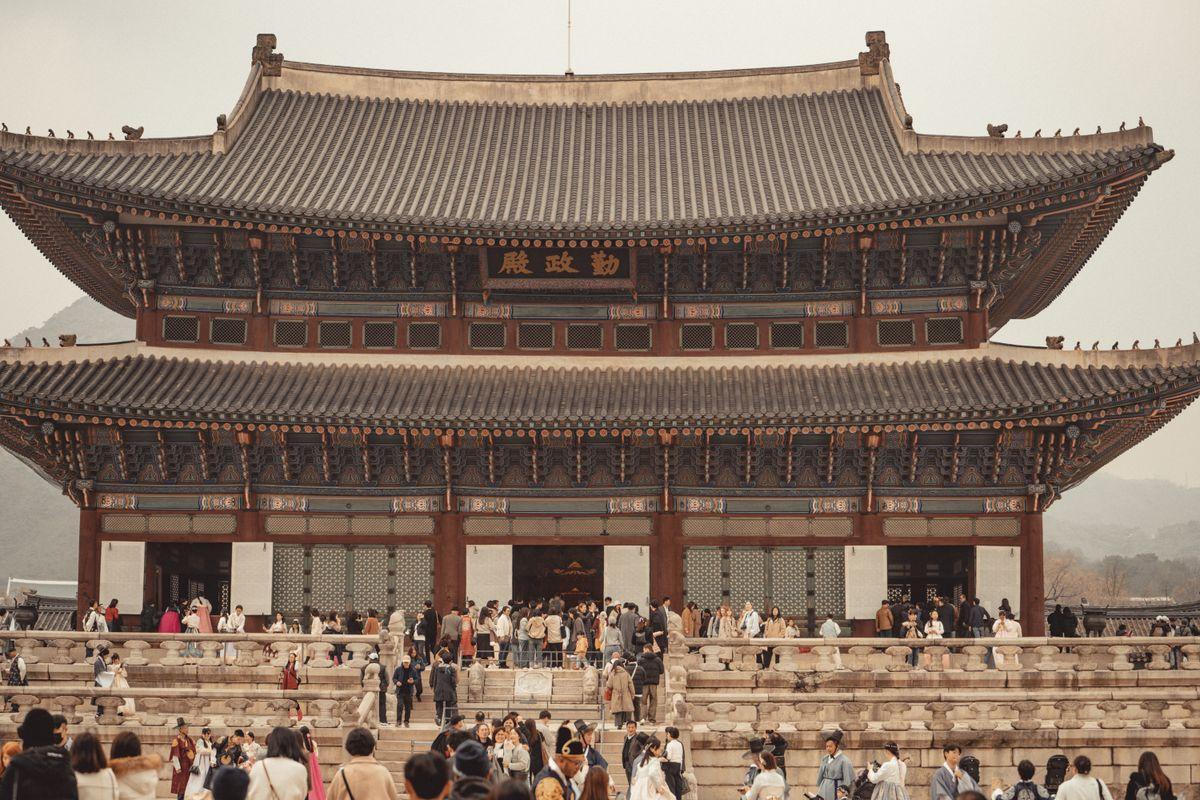
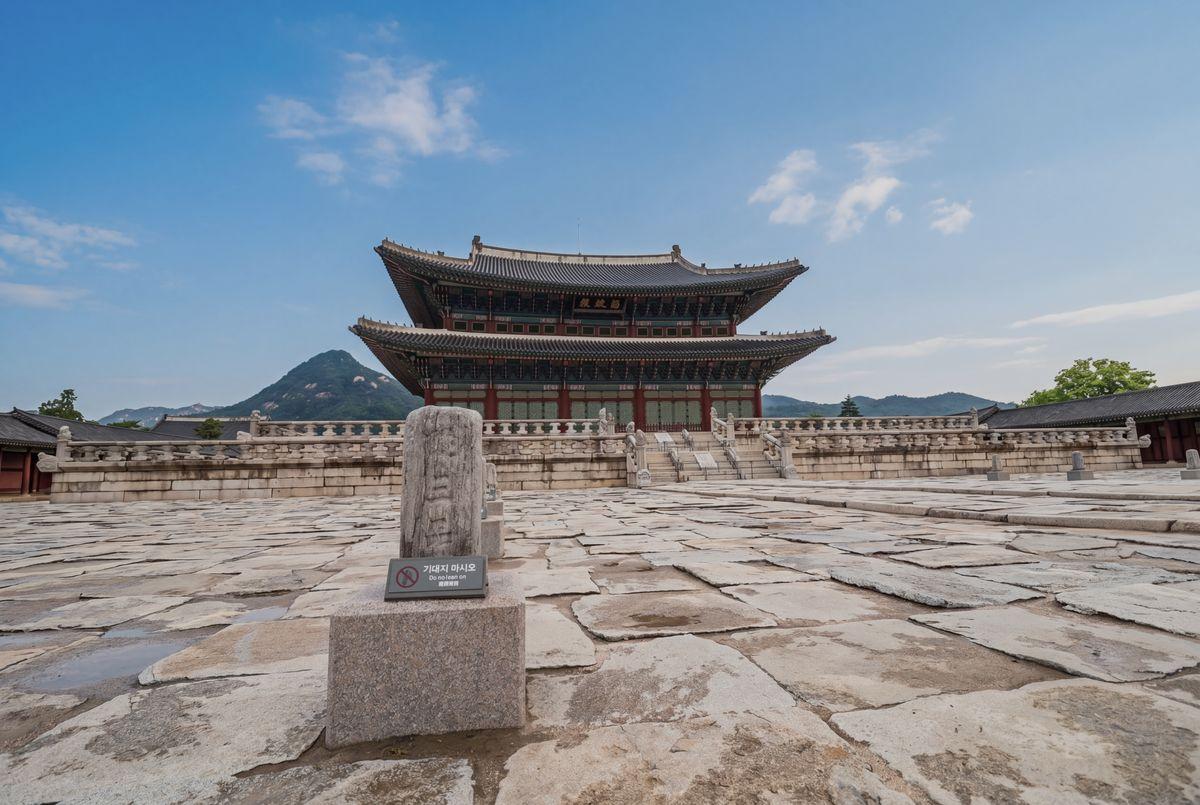
- Geunjeongjeon (근정전) — The main throne hall where state ceremonies were held; the stone courtyard in front is immense
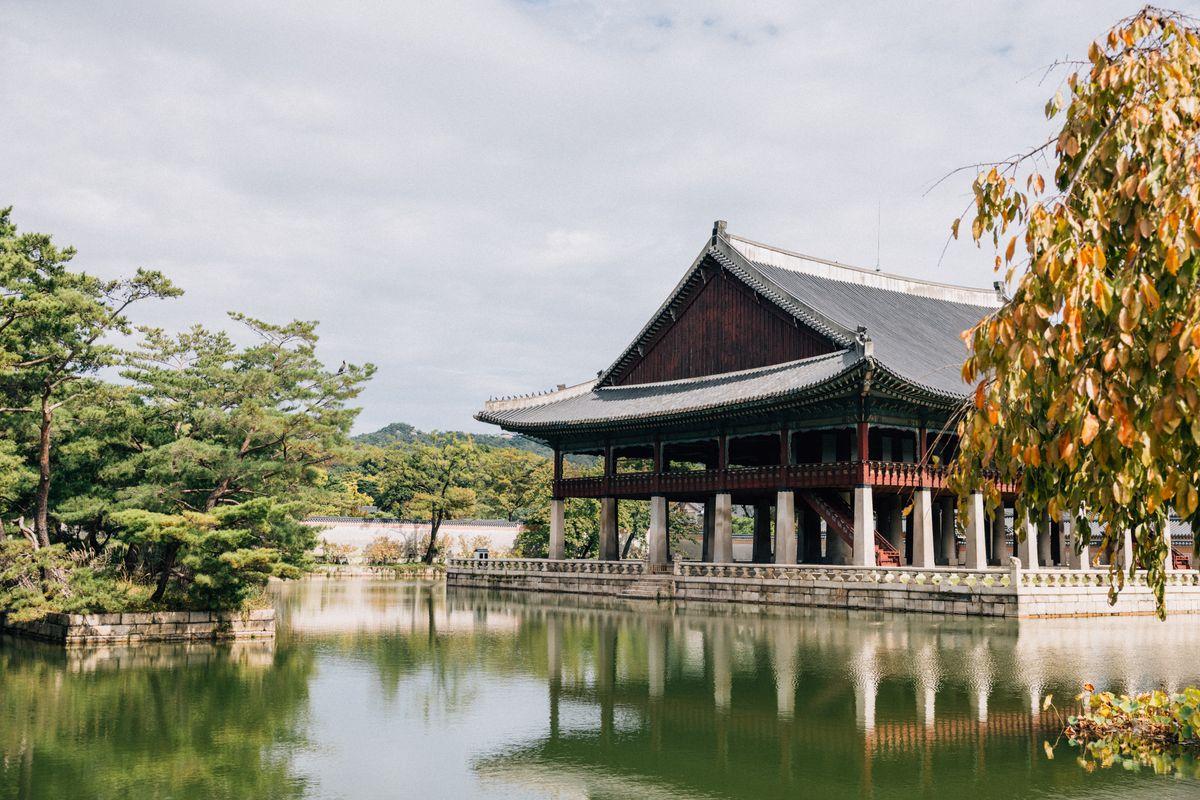
- Gyeonghoeru Pavilion (경회루) — A two-story banquet pavilion on an artificial island in a lotus pond; one of Korea's most photographed structures
- Hyangwonjeong Garden (향원정) — A serene hexagonal garden pavilion on an island in a circular pond near the northern section
- National Folk Museum of Korea — Inside the palace grounds, free admission; excellent exhibits on everyday Joseon-era life
- National Palace Museum of Korea — Just outside the main complex, also free; covers the palace's full history and royal artifacts
Royal Guard Changing Ceremony
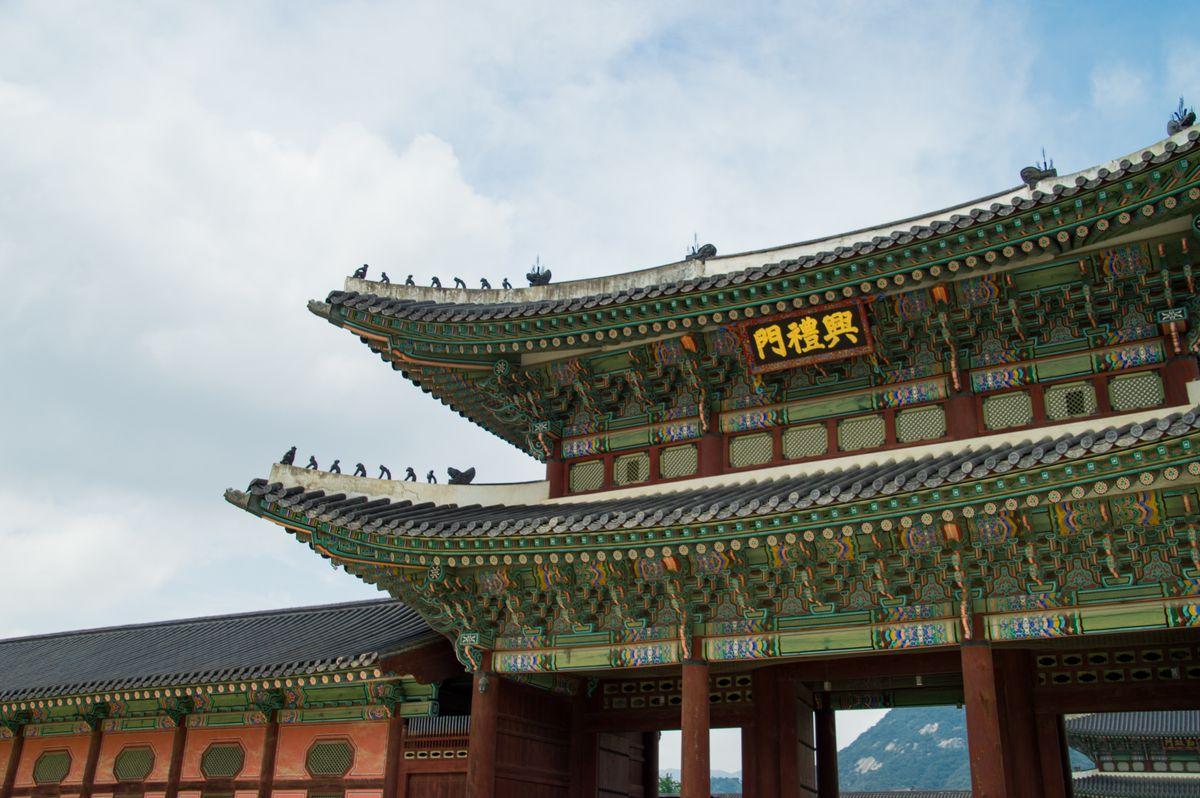
One of the most dramatic free shows in Seoul happens twice daily at Heungnyemun Gate, just inside Gwanghwamun. The Royal Guard Changing Ceremony (수문장 교대의식) features guards in full Joseon military regalia — armor, traditional weapons, and elaborate headdresses — performing a synchronized changing of palace sentries.
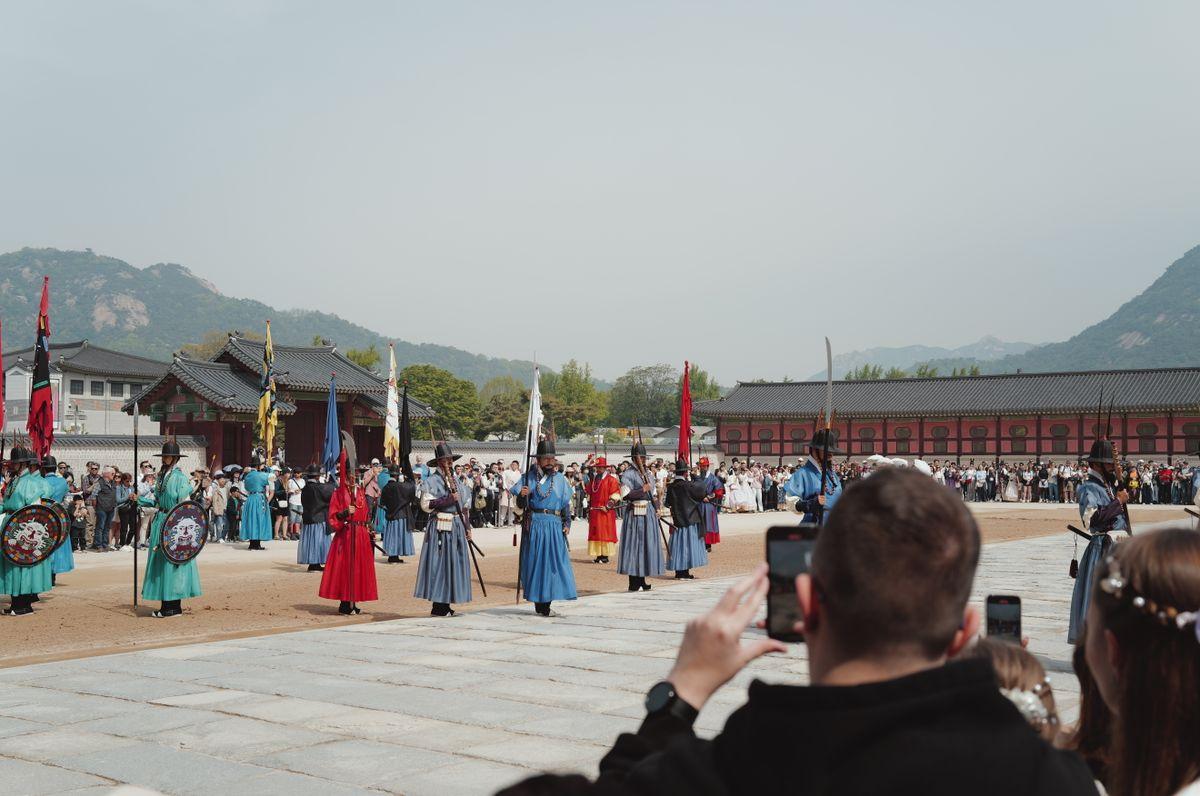
The ceremony runs at 10:00 and 14:00 Tuesday through Sunday from March through November (suspended on weekdays in winter). Each performance lasts about 20 minutes. Arrive 10–15 minutes early for a good viewing spot — it draws large crowds on weekends. The ceremony is completely free to watch even without a palace ticket, as it takes place before the inner entrance.
Gyeonghoeru Pavilion & The Northern Gardens
The Gyeonghoeru Pavilion (경회루) is arguably the most photographed structure in the palace. Built in 1412 on 48 stone pillars rising from a rectangular lotus pond, the reflections on calm water look like a classical ink painting. Visit before 10:00 for the calmest water and softest morning light — by midday the courtyard crowds obscure clean shots.
The far northern section of the grounds is quieter and more forested. Walk back past the throne hall toward Hyangwonjeong Garden and Jagyeongjeon, the queen dowager's residence. The detail in the painted eaves and carved stonework becomes more intricate the further north you go. This section adds 30–40 minutes but is often nearly empty on weekday mornings.
Quick Visitor Tips
- 1Visit on a weekday morning — the palace fills fast by 11:00 on weekends; arriving at opening (09:00) gives you 2 hours of comfortable space
- 2Wear comfortable walking shoes — cobblestone paths throughout, significant distances between highlights
- 3Bring water in summer — almost no shade in the central stone courtyard; temperatures feel 3–4°C hotter here than in the streets
- 4The 10,000 KRW integrated ticket covers Changdeokgung, Deoksugung, Changgyeonggung, Gyeonghuigung, and Jongmyo — ideal for a multi-day palace tour
- 5Audio guides are available at the entrance for 3,500 KRW (English, Chinese, Japanese, French, Spanish)
- 6Summer night sessions (late July–August) run until 21:00 and require advance booking on the royal palace website — beautiful lit-up atmosphere
FAQ
Frequently Asked Questions
Gyeongbokgung rewards visitors who take their time. Skip the rush, arrive early, and walk all the way to the back gardens — that's where you'll find the Korea that rarely makes it onto social media feeds. Rent a hanbok, catch the guard ceremony at 10:00, and pick up the integrated palace ticket if you want to keep exploring Seoul's extraordinary royal legacy.
Share this article
You Might Also Like


Get Travel Inspiration
Subscribe for new stories, route guides, and driving tips delivered to your inbox.