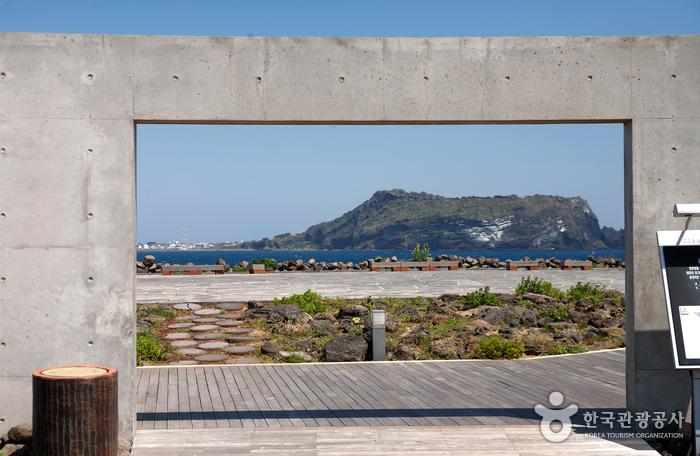
Seongsan Ilchulbong by Rental Car: How to Drive to Jeju's Iconic Sunrise Peak
Seongsan Ilchulbong (성산일출봉) — Sunrise Peak — is the kind of place that shows up in every Jeju Instagram feed, and for good reason. A 5,000-year-old tuff crater formed by an underwater volcanic eruption, it rises 182 meters straight from the ocean on Jeju's northeast coast. It's a UNESCO World Heritage Site. It's also one of the few places in Korea where timing your arrival by 30 minutes genuinely makes or breaks the experience.
Most tourists arrive by tour bus and shuffle through in the middle of the day. Driving yourself is different: you can be at the parking lot before sunrise, beat the crowds, and string together a full east coast day that includes Hamdeok Beach, Seopjikoji Cape, and Manjanggul Lava Tube — all within an easy hour's drive of the peak.
Getting There: Drive Routes and Parking
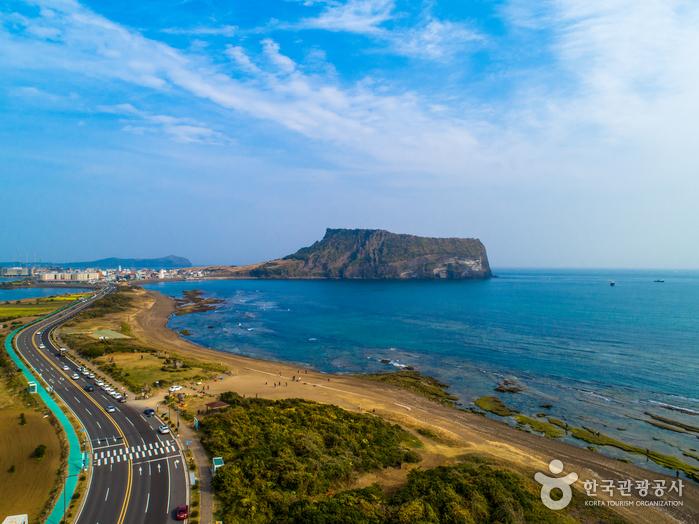
Seongsan sits in the far east of Jeju — about 55 km from Jeju City and 50 km from Seogwipo (Jungmun). From Jeju City, take Route 97 (Pyeonghwa-ro, 평화로) east and connect to Route 16 toward Seongsan. Budget about 50–60 minutes in normal traffic. If you're staying in Seogwipo, head north on Route 1132 along the south coast and continue east — again about 50–55 minutes.
The coastal Route 1132 is the slower, more scenic option if you have time: it hugs the east coast clifftops and gives you ocean views most of the way. For an early sunrise run, take the faster inland routes so you're not navigating dark cliff roads.
- From Jeju City: ~55 km via Route 97 → Route 16, about 50–60 min
- From Seogwipo/Jungmun: ~50 km via Route 1132, about 50–55 min
- Parking: Large paid lots at the main entrance (P1, P2) — 2,000–3,000 KRW per vehicle
- Parking opens: Around 5:00 AM on most days (lots open before the ticket booth for sunrise visitors)
- GPS: Enter '성산일출봉주차장' (Seongsan Ilchulbong Parking) or the address 제주 서귀포시 성산읍 일출로 284-12
Timing the Sunrise (And What to Do If You Miss It)
The 'sunrise' in the name is the real draw. On a clear morning, the sun rises directly above the crater rim from the ocean — the effect is dramatic enough that Jeju locals make the drive specifically for it on New Year's Day. The ticket booth opens around 6:30–7:00 AM (varies by season), but for sunrise you need to arrive earlier. The climb takes 20–30 minutes, so add that buffer.
Sunrise times vary significantly by season on Jeju. In June, the sun is up by 5:35 AM — you'd need to be at the trailhead by 5:00 AM. In December, sunrise is around 7:35 AM, making it far more civilized. March and October both sit around 6:10–6:40 AM. Check a Jeju sunrise time app or the Korea Meteorological Administration (기상청) the night before.
If you're not doing sunrise, that's completely fine. The views from the crater rim are spectacular any time before 10 AM, before the tour buses arrive. Entrance fee is 2,000 KRW for adults. The interior of the crater is off-limits (UNESCO protected), but the rim trail circles the edge and gives you 360-degree views of the coast and the ocean.
The Climb: What to Expect
The trail from the entrance to the rim is about 840 steps — a real staircase carved into the volcanic rock. It's steep in places but well-maintained, and most people manage it in 20–30 minutes. Wear proper shoes; the stone gets slippery when wet. No dogs, no food on the trail.
At the top, the crater drops away in a perfect bowl 90 meters below you. In good weather you can see Udo Island to the northeast and on clear days the southern coast all the way to Seogwipo. Take your time at the top — most visitors rush down too quickly. The descent takes about 15 minutes.
Near the base, a small seafood market outside the main gate sells grilled abalone and fresh seafood straight off the boats. If you're visiting in the morning, this is the best cheap breakfast on the east coast — a bowl of haemultang (seafood soup) runs about 8,000–12,000 KRW.
East Coast Add-Ons: Seopjikoji, Hamdeok, and Udo Island
Seongsan is the perfect anchor for a full east coast day. After the climb, you have several excellent options within short drives of the parking lot.
- Seopjikoji (섭지코지): 5 km south of Seongsan, 10 min drive. A narrow volcanic cape with walking trails, wind turbines, and film location fame (Goblin drama). Free entry.
- Udo Island (우도): Take the 15-min ferry from Seongsan Port (City Harbor). Ferries every 30 min, ₩8,500 round trip (foot passenger). Rent an e-bike on the island. Half-day excursion.
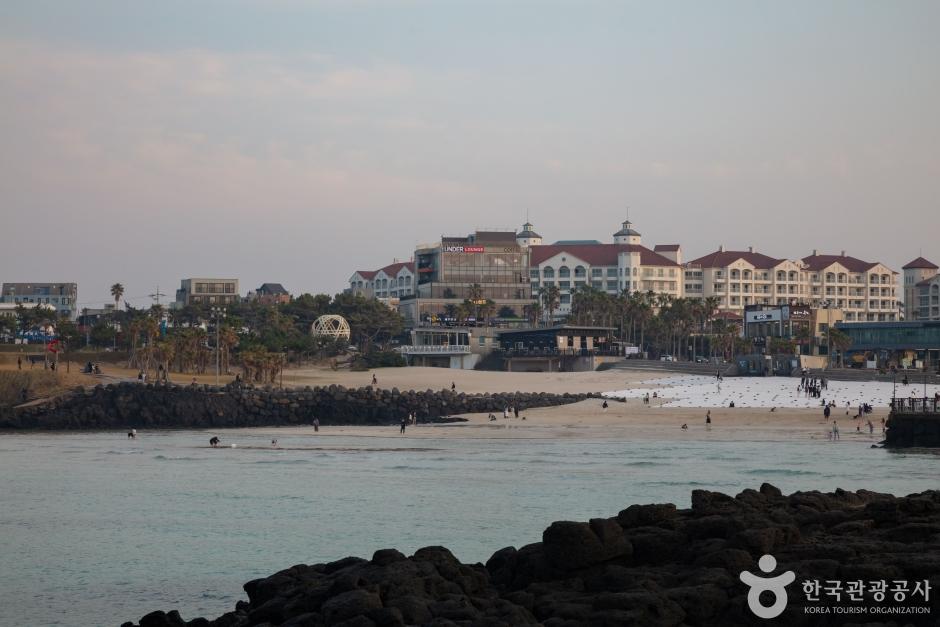
- Hamdeok Beach (함덕해수욕장): 30 km northwest, 30–35 min drive. Jeju's most popular swimming beach — shallow, turquoise, and backed by Seobongsan hill. Best in summer.
- Gimnyeong Maze (김녕미로공원): 25 km west, 25 min. Fun for families, near Manjanggul.
Manjanggul Lava Tube: Another UNESCO Site on the Same Day
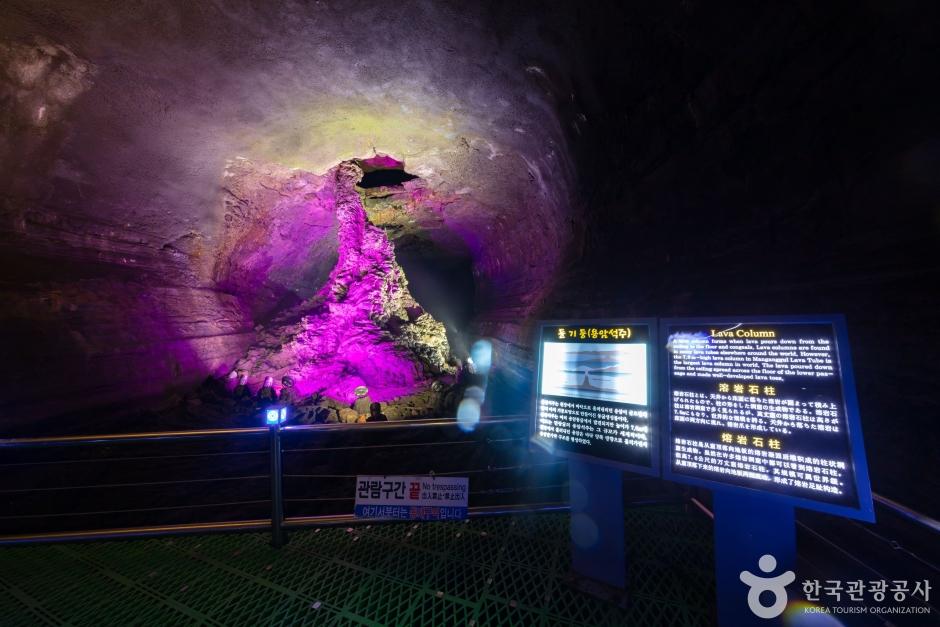
Manjanggul (만장굴) is one of the world's longest lava tubes — 7.4 km total, with 1 km open to visitors. It's about 20 km west of Seongsan (25–30 min drive) and also part of the same UNESCO inscription as Seongsan. The interior stays at 11–21°C year-round, making it a genuinely pleasant stop in the July–August heat.
The cave entrance fee is 4,000 KRW for adults. The walkable section ends at a 7.6-meter lava column — the world's largest of its kind. Bring a light jacket even in summer. The cave is paved and well-lit, so no special gear needed.
Quick Tips for Drivers
- 1Fuel up before heading east: Gas stations get sparse near Seongsan. Fill your tank at a major station in Jeju City or Seogwipo before you leave.
- 2Download offline maps: Cell signal can drop in the lava tube area and some cliff roads. Naver Maps or Kakao Maps offline downloads are recommended.
- 3Parking on arrival: In summer, P1 fills by 7 AM for popular sunrise days. P2 is a short walk but rarely full. Signs in Korean/English direct you.
- 4Combine north → west: If doing Seongsan + Manjanggul + Hamdeok, go Seongsan first (east), then Manjanggul (middle), then Hamdeok (northwest) — efficient loop back toward Jeju City.
- 5Weather check: The east coast gets more wind and cloud than the west. Sunrise views are not guaranteed — have a backup plan (like Seopjikoji or Udo).
FAQ
Frequently Asked Questions
Seongsan Ilchulbong is the kind of place that earns every photograph. Go early, drive yourself, and leave time for the coast heading back west — the east side of Jeju rewards unhurried exploration.
Share this article
You Might Also Like


Get Travel Inspiration
Subscribe for new stories, route guides, and driving tips delivered to your inbox.