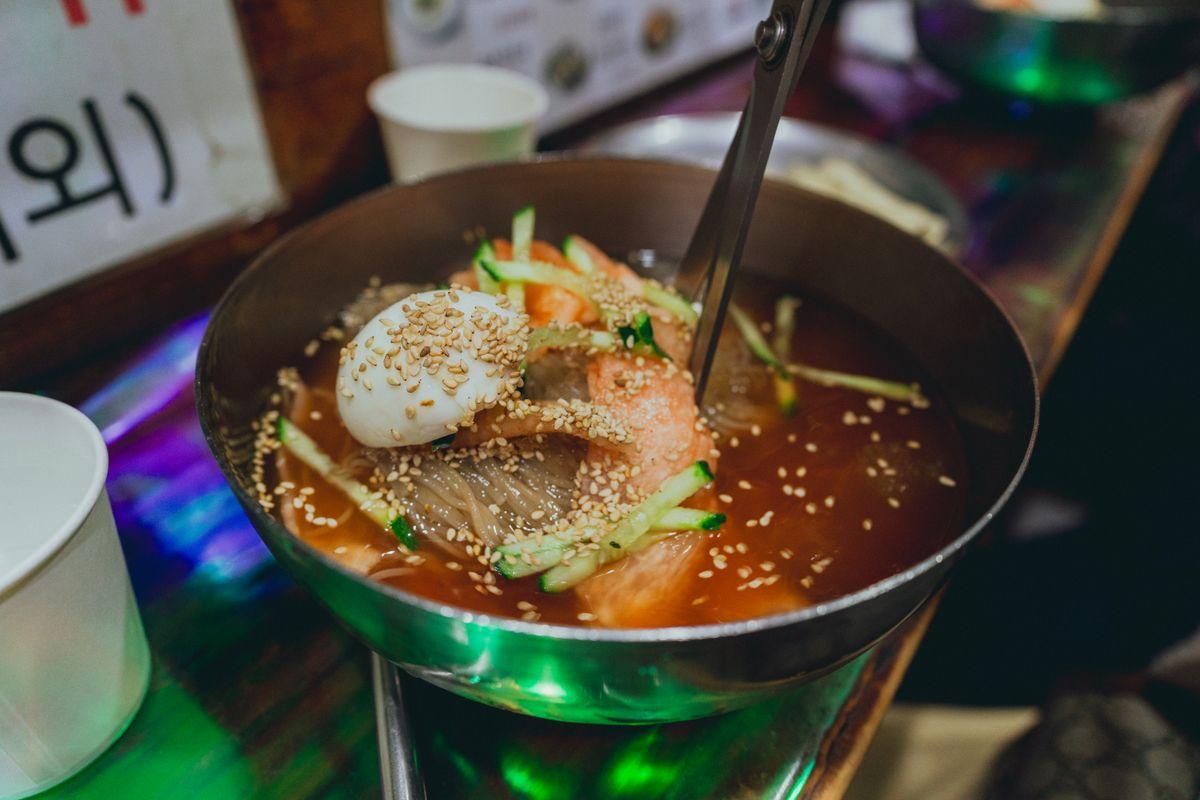
Korean Naengmyeon Guide: Cold Noodles to Beat the Summer Heat
When the summer heat in Korea hits — and it hits hard, often pushing past 35°C — locals turn to one dish above all others: naengmyeon (냉면), Korea's iconic cold noodles. Served in a chilled broth or tossed in spicy sauce, a bowl of naengmyeon is one of the most refreshing meals you'll find anywhere in Asia. Here's everything you need to know to order it like a pro.
Mul Naengmyeon vs Bibim Naengmyeon: Start Here
Every naengmyeon menu splits into two: mul naengmyeon (물냉면) and bibim naengmyeon (비빔냉면). 'Mul' means water or broth — these noodles arrive floating in a cold, lightly tangy beef or dongchimi (radish water kimchi) broth. 'Bibim' means mixed — no broth, just noodles tossed in a bright red gochujang sauce. Both are served ice-cold, often with actual ice chips in the bowl.
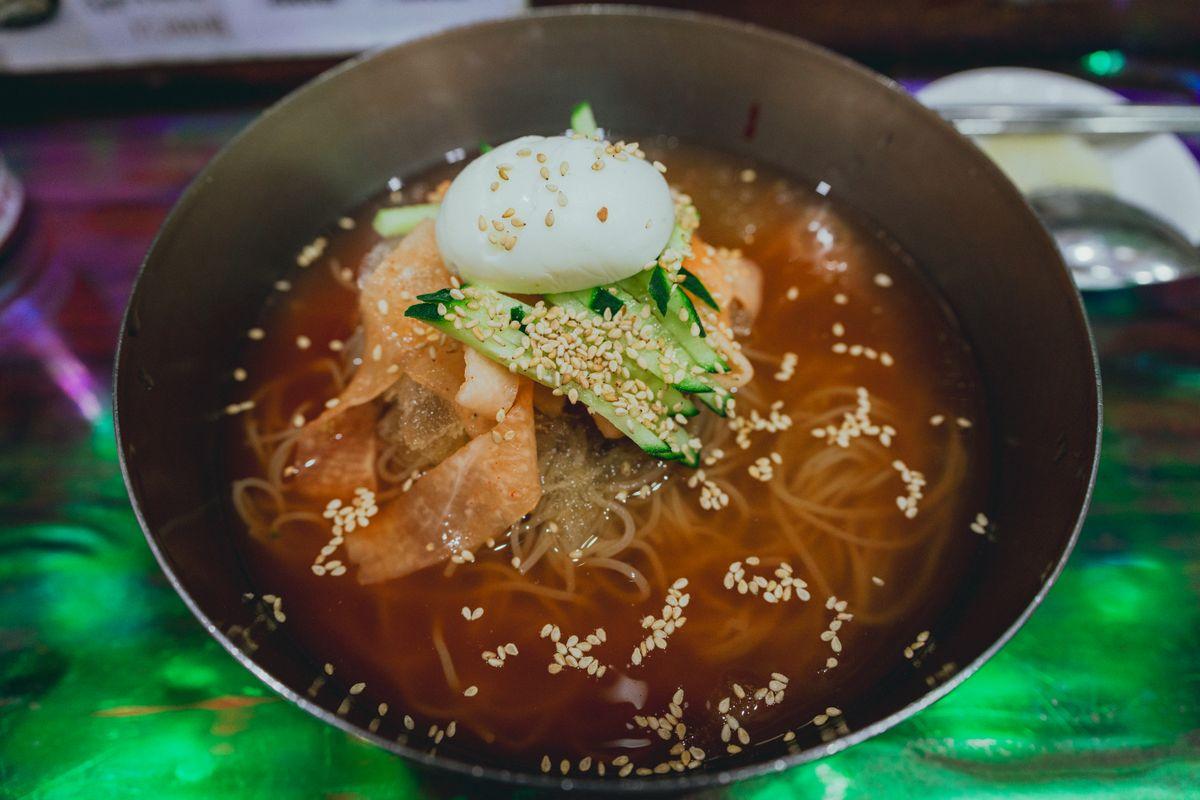
If you're not sure which to order, start with mul naengmyeon — it's more widely loved and a better introduction to the dish. The broth is the star: clean, cold, slightly sour, with a faint sweetness from the pear or radish. Bibim naengmyeon is better for chili fans who want something bolder. Both are served with thin-sliced Korean pear, cucumber, a boiled egg, and a strip of cold beef.
- Mul naengmyeon (물냉면): cold broth, subtle flavor — best for first-timers
- Bibim naengmyeon (비빔냉면): no broth, spicy gochujang sauce — for chili lovers
- Both come with egg, cucumber, Korean pear, and a slice of cold meat
- Price: roughly 10,000–16,000 KRW per bowl at most restaurants
Pyongyang Style vs Hamhung Style: The Big Debate
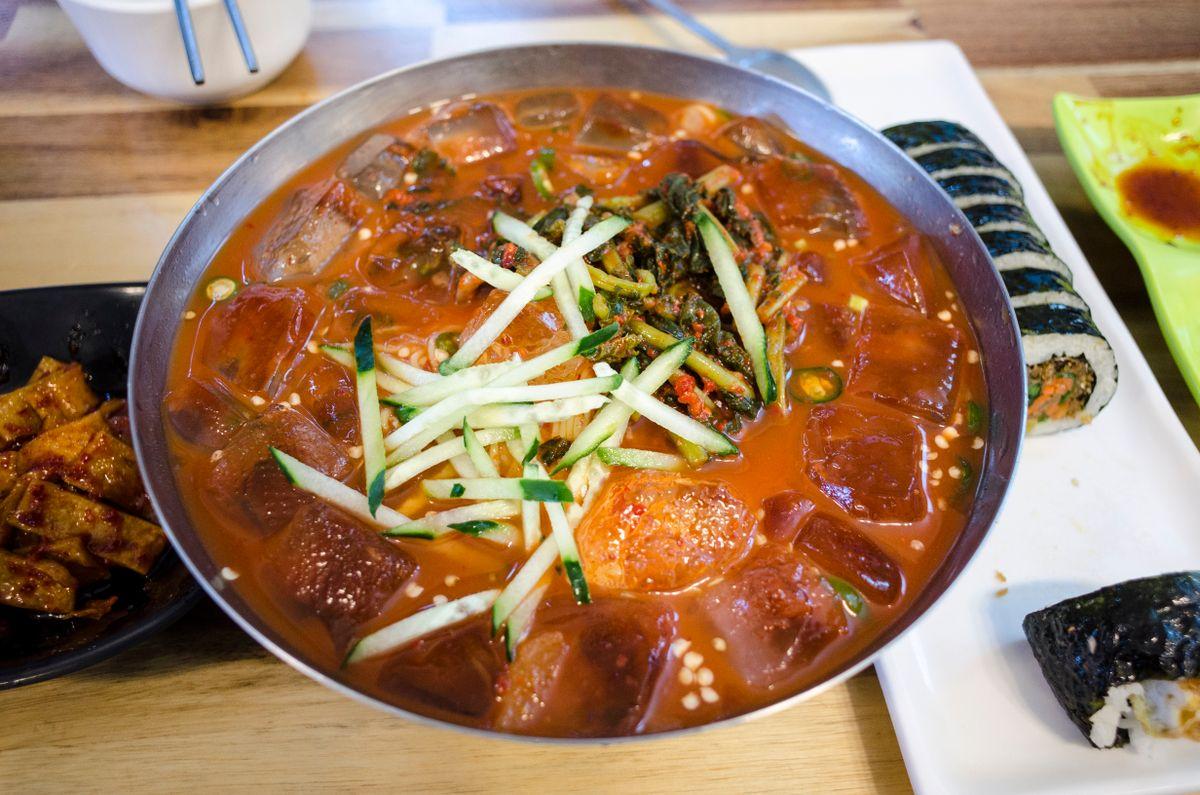
Within mul naengmyeon, there's a classic distinction that every Korean has strong opinions about. Pyongyang naengmyeon (평양냉면) uses thin buckwheat noodles and a very delicate beef-and-dongchimi broth — the flavor is subtle, almost austere, and the noodles break easily. Hamhung naengmyeon (함흥냉면) uses potato starch or arrowroot noodles that are much chewier and more elastic, typically served bibim-style (no broth) with a heavier gochujang paste.
| Pyongyang Style | Hamhung Style | |
|---|---|---|
| Noodle | Thin buckwheat | Thick potato starch |
| Texture | Soft, breaks easily | Very chewy, elastic |
| Serving | Cold beef-dongchimi broth | Usually bibim (dry, spicy) |
| Flavor | Subtle, light, clean | Bold, spicy, intense |
| Famous spot | 을밀대 (Eulmi-dae), Seoul | 오무라냉면, various cities |
Most restaurant menus simply say 평냉 (pyeong-naeng) for Pyongyang style and 함냉 (ham-naeng) for Hamhung style. If you love chili and chew, go Hamhung. If you want something more refined and cooling, go Pyongyang. Seoul has hundreds of dedicated naengmyeon restaurants — many have been serving the same recipe for 40+ years.
Bibim Guksu: The Quicker, Cheaper Alternative
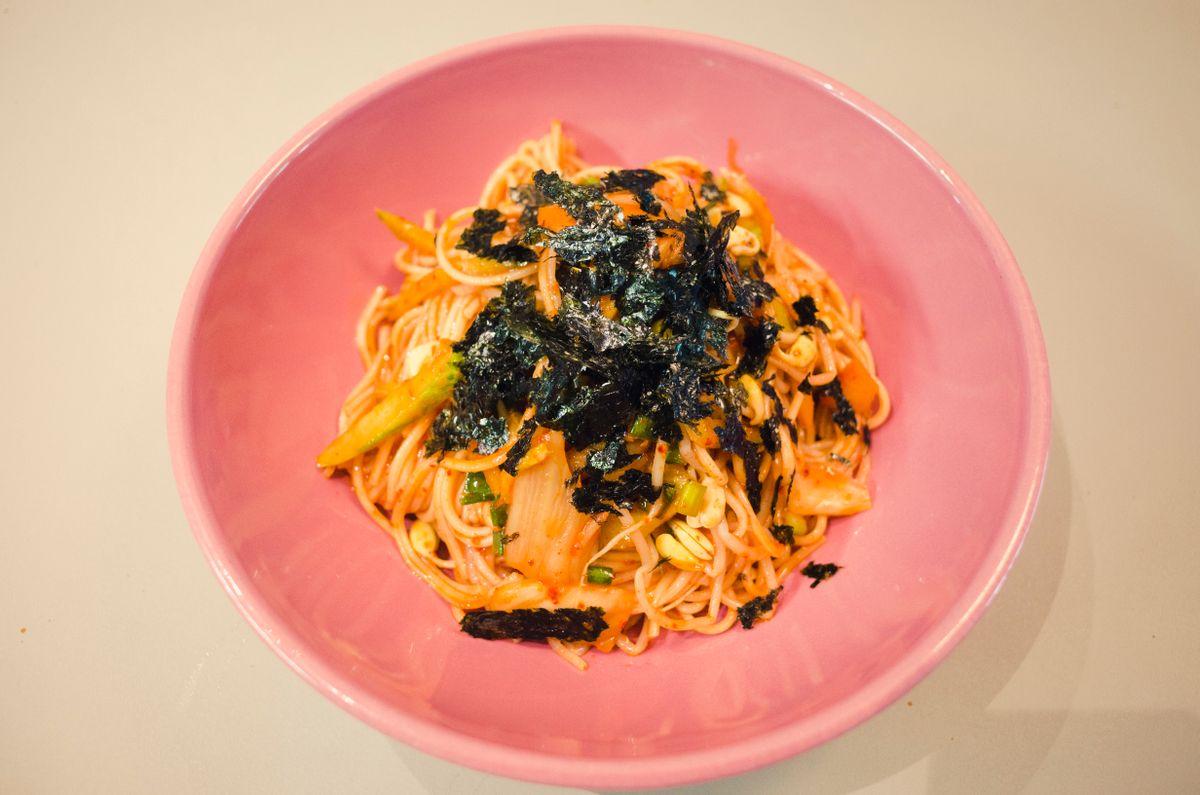
Bibim guksu (비빔국수) is naengmyeon's more accessible cousin. It uses thin wheat-flour noodles (somyeon, 소면) instead of buckwheat or starch noodles, tossed in a sweet-spicy gochujang sauce with cucumber, kimchi, and a sesame-dressed salad. It's lighter, cheaper (6,000–10,000 KRW), and served everywhere from restaurants to convenience stores. If naengmyeon feels too unfamiliar, bibim guksu is a great starting point.
How to Eat Naengmyeon: The Ritual
Eating naengmyeon properly is part of the experience. The noodles are extremely long by design — traditionally, long uncut noodles symbolize longevity. Most restaurants provide scissors (가위) for you to cut them. Snip the noodles a few times before eating; trying to slurp them uncut is a losing battle.
The table will have two condiment bottles: 식초 (sikcheok) — rice vinegar — and 겨자 (gyeoja) — Korean yellow mustard. Add a splash of vinegar to brighten the broth, and a small dab of mustard for a nose-clearing kick. Start with a little of each and adjust. These two additions transform a plain bowl into something complex and addictive.
- 1Snip the noodles with scissors (3–4 cuts) before eating
- 2Add a splash of vinegar (식초) to the broth
- 3Add a small dab of yellow mustard (겨자) for heat
- 4Mix everything together and sip the broth first
- 5For bibim naengmyeon: mix thoroughly before taking a bite
Where to Find Good Naengmyeon in Korea
Naengmyeon is available year-round in Korea, but you'll find the best selection and freshest preparations during June through September. In Seoul, the Mapo and Jongno districts have the highest concentration of old-school naengmyeon restaurants. Look for places with a long queue — Koreans will wait 30 minutes for a truly great bowl.
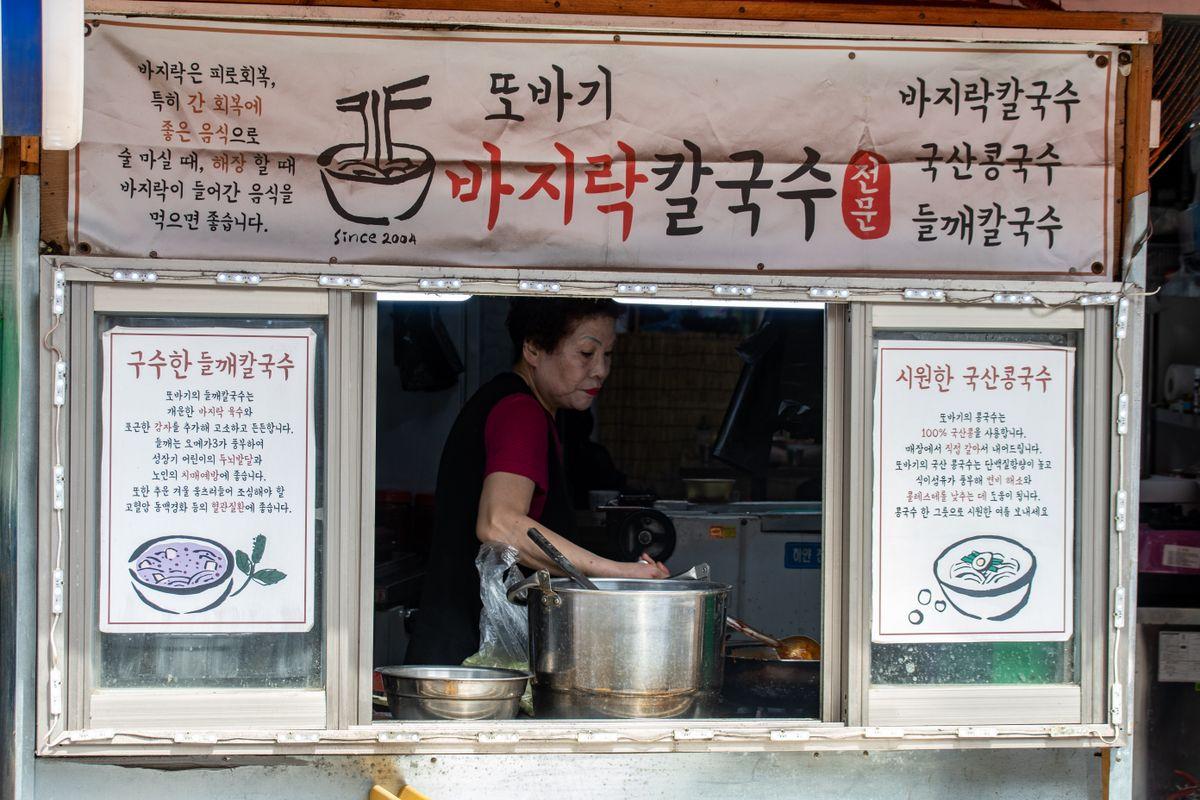
- Seoul: 을밀대 (Eulmi-dae, Mapo) for Pyongyang-style; 봉피양 (Bongpiyang, Jongno) for premium mul naengmyeon
- Busan: try naengmyeon as a side dish at any major galbi restaurant
- Gyeongju: local specialty is milmyeon (밀면) — a wheat-noodle cold noodle variant unique to the south
- Pyeongyang-style specialist restaurants: look for 냉면 전문점 signs (dedicated naengmyeon restaurants)
- Rest stops (휴게소): most highway rest stops serve basic naengmyeon — good for a quick road-trip meal
Ordering Without Korean
Most naengmyeon restaurants have picture menus or displays outside, and the two main items are always the same: 물냉면 (mul naengmyeon) and 비빔냉면 (bibim naengmyeon). Point and hold up fingers for the quantity. If you're in a Pyongyang-style specialist, the broth version is usually the default and the only real option — just say '물냉면 하나요 (mul naengmyeon hana-yo)' for one bowl. Staff at tourist-area restaurants often have basic English menus available.
Quick Tips
- 1Always cut the noodles with scissors — they're impossibly long by design
- 2Vinegar and mustard are on every table — use them to customize your broth
- 3Pyongyang naengmyeon tastes subtle at first; the depth grows with each bite — don't judge it in one sip
- 4Milmyeon (밀면) is a regional variant common in Busan — wheat noodles, slightly richer broth
- 5Naengmyeon pairs perfectly with galbi (beef ribs) — many BBQ restaurants serve it as a finisher
FAQ
Frequently Asked Questions
A bowl of naengmyeon is one of those rare dishes that makes summer heat feel like an occasion rather than an obstacle. Find a local spot with a queue, grab your scissors, add a dash of vinegar, and discover why Koreans have been obsessed with this dish for centuries.
Share this article
You Might Also Like


Get Travel Inspiration
Subscribe for new stories, route guides, and driving tips delivered to your inbox.