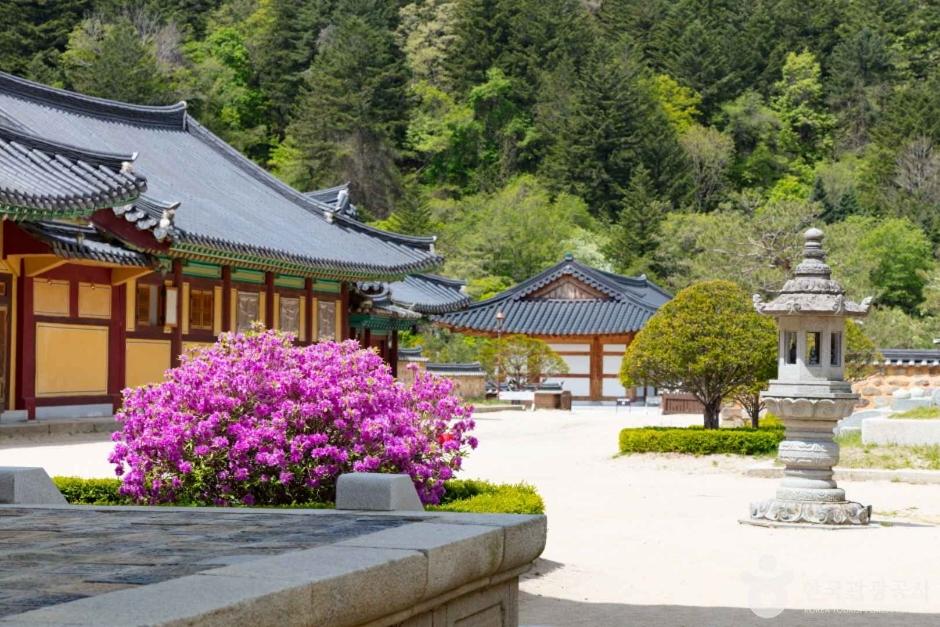
Odaesan & Woljeongsa Temple Drive: Gangwon's Fir Forest Cathedral
When Seoul hits 35°C in July, Odaesan National Park in Gangwon Province sits at a comfortable 22°C. The drive takes about two and a half hours from Seoul, and the payoff is one of the most atmospheric landscapes in Korea: a kilometer-long avenue of 1,700-year-old fir trees opening onto a 7th-century temple, followed by a narrow valley road climbing into peaks over 1,500 meters.
Woljeongsa Temple (월정사) and the Odaesan valley are famous across Korea but almost entirely absent from English travel content. That gap makes this one of the best drives in the country for foreign visitors who want something beyond the usual tourist circuit.
Getting to Odaesan from Seoul
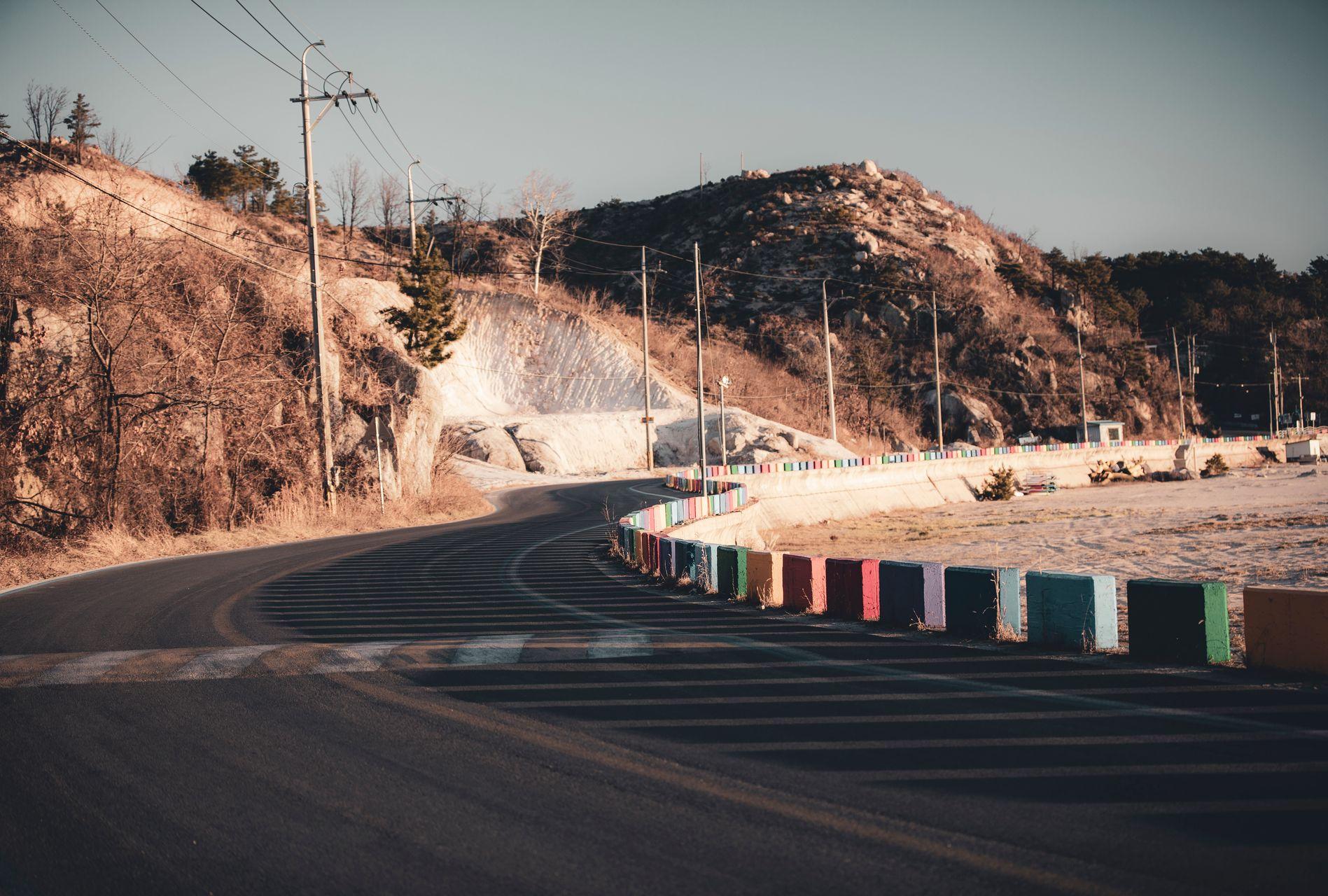
From Seoul, take the Gyeongbu Expressway (Route 1) south to Yeongdong Expressway (Route 50) east, then connect to the Jungang Expressway (Route 55) north toward Wonju. Exit at Jinbu IC and follow Route 6 (signs for Odaesan/Jinbu) into the national park. Total distance from central Seoul is about 175 km.
- From Seoul (Gangnam): ~175 km, 2.5–3 hours via Yeongdong + Jungang Expressways
- Tolls (one-way): ~10,000–13,000 KRW depending on route
- Parking: Free large parking lot at Woljeongsa entrance; separate lot at Sangwon Temple (9 km further)
- Navigation: Set Naver Map to '월정사' (Woljeongsa Temple) — it routes you directly to the park entrance
- Best departure: Before 7:30 to avoid weekend morning traffic through Wonju
- Fuel: Fill up before leaving the expressway at Jinbu — gas stations thin out in the valley
The Fir Tree Avenue — Woljeongsa's Living Cathedral
The moment you park and start walking toward Woljeongsa, the temperature drops and the light changes. The path from the entrance gate to the temple is lined with over 1,700 Korean fir trees (전나무), some growing for centuries, their trunks rising 30 meters before the canopy closes overhead. Koreans call it the 전나무숲길 — the 'fir tree forest path' — and it consistently ranks among the most beautiful forest walks in the country.
Woljeongsa Temple itself was founded in 643 CE by the Buddhist monk Jajang, who is said to have brought relics of the Buddha from China. The temple complex clusters around an elegant 9-story octagonal stone pagoda (국보, National Treasure) that has stood for over a thousand years. The main hall, rebuilt after being destroyed during the Korean War, frames the pagoda in a way that feels deliberately cinematic. Budget 1 to 1.5 hours here.
- Admission: 3,000 KRW adults, 1,500 KRW children
- Hours: Open daily from sunrise — no fixed closing, but visits after dark are discouraged
- Duration: 1 to 1.5 hours (fir tree walk + temple complex)
- Tip: Walk the fir tree path both ways — the light shifts dramatically between morning and afternoon
- Temple etiquette: Remove shoes before entering the main hall; dress modestly (shoulders and knees covered)
Further Up the Valley — Sangwon Temple
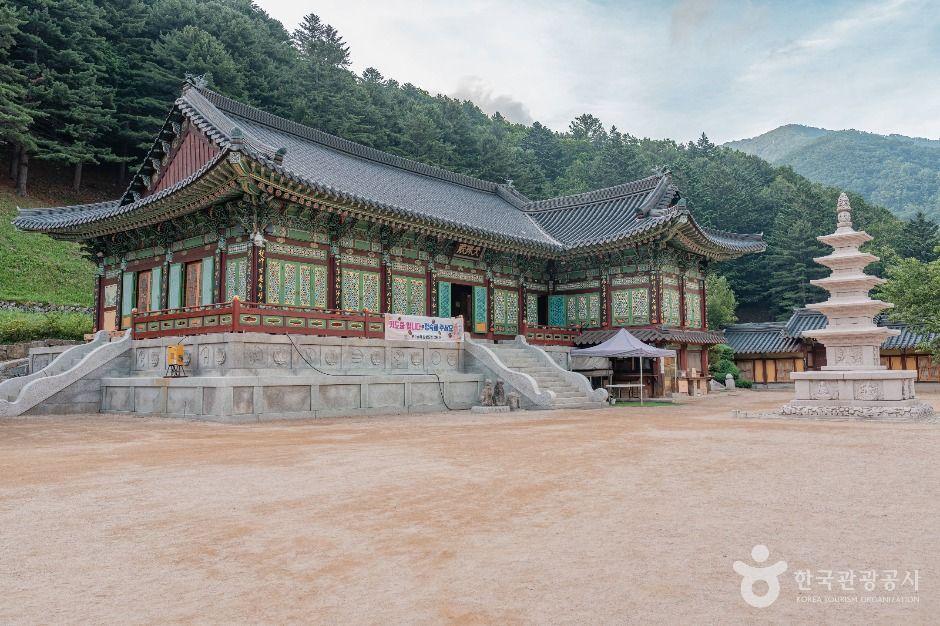
A paved but narrow road climbs 9 km beyond Woljeongsa to Sangwon Temple (상원사), sitting at 1,100 meters. The drive itself is worth it: the road follows the Odae Stream (오대천) through a valley where the forest closes in on both sides and the sound of the river follows you up the mountain. In summer this valley runs 8–10°C cooler than Seoul.
Sangwon Temple holds the oldest bronze bell in Korea, cast in 725 CE — it's housed under a separate pavilion and still rings on special occasions. From the temple, the hiking trail to Birobong Peak (비로봉, 1,563 m) takes about 2.5 hours one way. Even if you don't hike to the summit, the 30-minute walk from the parking lot to the temple through dense forest is deeply atmospheric.
- Admission: Included in the Woljeongsa entrance fee (3,000 KRW)
- Road: Narrow paved valley road — drive slowly, watch for hikers on blind corners
- Duration: 45 minutes to 1 hour for the temple visit; add 5 hours for the Birobong summit hike
- Birobong hike: Trail starts near Sangwon Temple; well-marked, strenuous in the upper section
- Tip: The valley road is one-way in sections during peak weekends — follow signs carefully
Mountain Vegetables & Where to Eat
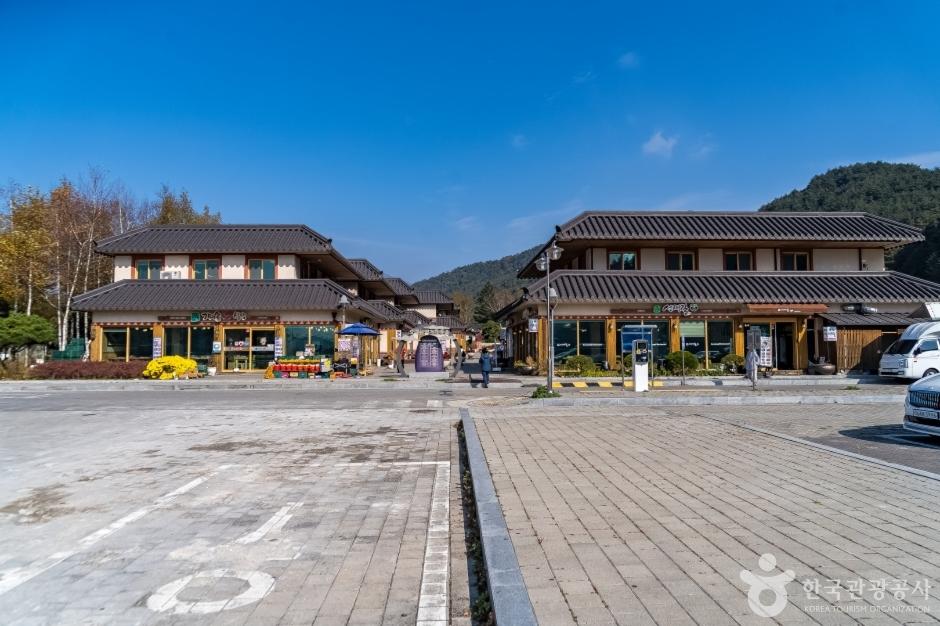
At the base of the park, a cluster of restaurants forms the Odaesan Meokkeo-ri Village (오대산먹거리마을), the traditional food village. The specialty here is 산채정식 (mountain vegetable set meal) — a parade of small dishes featuring ferns, wild greens, mushrooms, and roots foraged from the surrounding mountains. It's the kind of meal you won't find in Seoul restaurants, and the quality is high.
Set meals typically run 15,000–25,000 KRW per person and come with dooboo-jorim (spicy braised tofu), gondre rice (thistle-mixed rice), and various seasonal mountain greens. Most restaurants have photo menus and some staff speak basic English. Eat here after the temples rather than before — the drive back through the valley sharpens the appetite.
Quick Tips
- 1Leave Seoul by 7:30: The Yeongdong Expressway gets heavy weekend traffic from 8:30 — an early start puts you on the mountain road by 10:00.
- 2Walk the fir tree path first: Do Woljeongsa before Sangwon Temple — the fir tree avenue is best in morning light.
- 3Bring layers: Even in July, the valley runs 10°C cooler than Seoul. A light jacket is useful in the shade.
- 4Afternoon rain: Summer afternoons in Gangwon often bring brief showers — bring a compact umbrella or rain jacket for hiking.
- 5Weekday visits: Odaesan is significantly less crowded Monday to Thursday — the fir tree path feels almost private on a weekday morning.
- 6Return route via Jinbu: The Jinbu-myeon town (진부면) near the expressway exit has several good restaurants and a local market if you want to extend the day.
FAQ
Frequently Asked Questions
Odaesan doesn't offer Instagram spectacle or buzzy restaurants. What it offers is something harder to find near Seoul: genuine quiet, cool air, ancient trees, and the particular atmosphere of a mountain temple that has been functioning continuously for fourteen centuries. Drive up early, walk slowly through the fir trees, and let the valley do the rest. The drive back to Seoul in the late afternoon, windows down, smelling like pine and mountain air, is its own reward.
Share this article
You Might Also Like


Get Travel Inspiration
Subscribe for new stories, route guides, and driving tips delivered to your inbox.