
Sokcho & East Coast Drive: Mountains Meet Sea (2026 Guide)
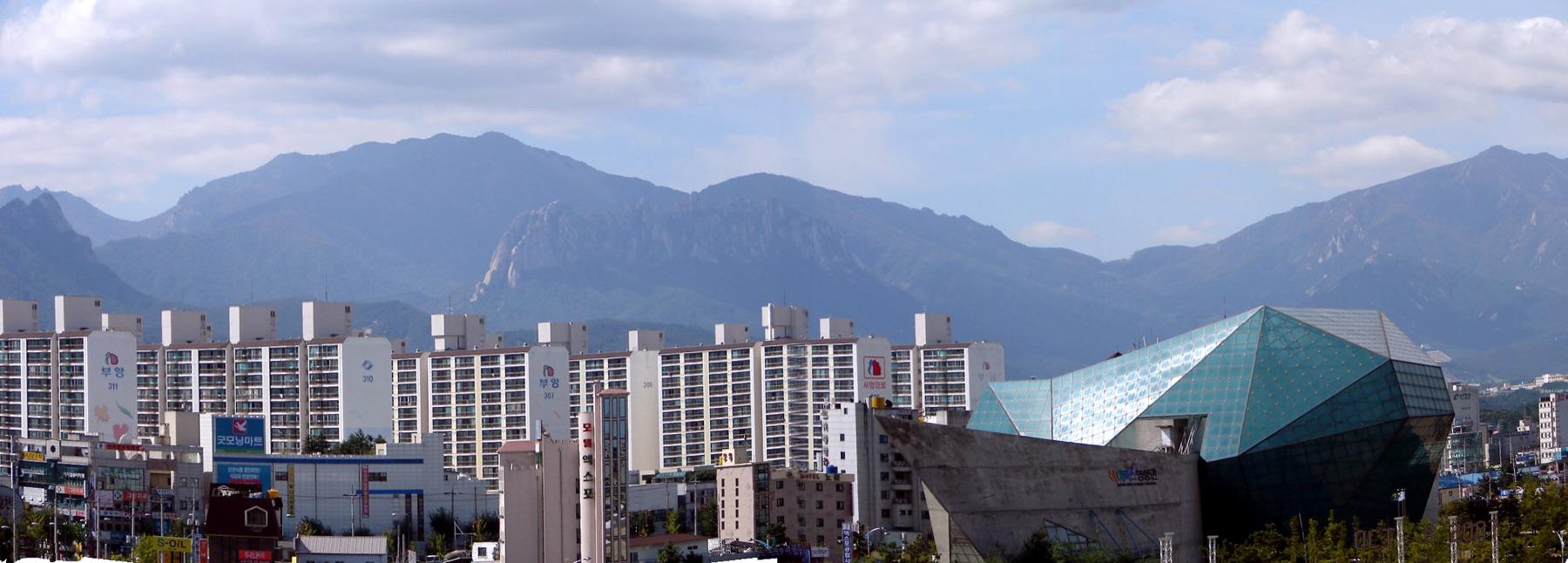
Sokcho is the rare Korean city where you can hike a 1,708-meter granite peak in the morning and eat raw squid pulled from the East Sea that afternoon. The town sits at the foot of Seoraksan National Park and on the edge of the Donghae (East Sea) — mountains and ocean colliding inside a 15-minute drive. Most foreign travelers fly to Incheon and never make it this far east. With a rental car, it's an easy 2 hr 30 min sprint up the Seoul-Yangyang Expressway.
This guide covers the whole East Coast Drive — pickup in Seoul, through the Misiryeong Tunnel into Sokcho, down Route 7 along the coast to Yangyang and Gangneung, and back. It's the route most Koreans take for a weekend; the difference is you'll know where to park, what to eat, and how to skip the lines. Two days is enough. Three lets you breathe.
Getting to Sokcho: The Drive from Seoul
Sokcho is 210 km east of Seoul. The fastest route is the Seoul-Yangyang Expressway (E60) — a modern tolled highway that punches through the Taebaek Mountains via a chain of long tunnels, including the 10.9 km Inje Tunnel, the second-longest road tunnel in Korea. From central Seoul, count on 2 hours 30 minutes with no traffic and 3 hours on summer weekends.
Tolls run about 13,000 KRW one-way with Hi-Pass, slightly more if you pay cash at the toll plaza. There's a single major 휴게소 (rest area) worth stopping at: Naelin-cheon Rest Area at roughly the 80 km mark, just before the long tunnel stretch — clean restrooms, decent bibimbap for around 9,000 KRW, and a viewing deck over a forested gorge.
- Seoul → Sokcho: ~210 km, 2h30m, tolls ~13,000 KRW (Seoul-Yangyang Expressway)
- Incheon Airport (ICN) → Sokcho: ~270 km, ~3h15m via the Second Yeongjong Bridge → E60
- Old route (free): National Route 44 via Misiryeong — slower (~4h) but scenic over Misiryeong Pass
- Avoid: Fridays after 17:00 and Sunday afternoons in summer — expressway crawls
- Rental tip: Pick up at Seoul Station or Yongsan; both have all major rental brands
Route 7: Korea's East Coast Highway
Once you reach the coast, the drive itself becomes the attraction. National Route 7 is Korea's east-coast highway, hugging the shoreline for nearly the entire length of the peninsula. Between Sokcho and Gangneung it runs 80 km south through fishing villages, pine groves, and beaches that empty out the moment summer ends.
The speed limit is 80 km/h on most stretches and 60 km/h through towns. There are several speed cameras — especially near beach access roads — so set your navigation to flag them. Naver Map and Kakao Map both warn before each camera with a voice cue, which Google Maps does not.
The scenic stretch worth slowing down for is between Sokcho and Yangyang — the road dips repeatedly to sea level past Naksan Beach and Jukdo Beach, with surf shops and roadside cafes spaced every few kilometers. There's no toll on Route 7; it's a free national road the entire way.
Seoraksan National Park: The Headline Stop
Seoraksan is Korea's third-highest mountain (1,708 m) and the most visited national park outside Jeju. The main entrance is 15 minutes by car from downtown Sokcho — a short drive that takes you from sea level to a granite cathedral of peaks, ravines, and centuries-old temples.
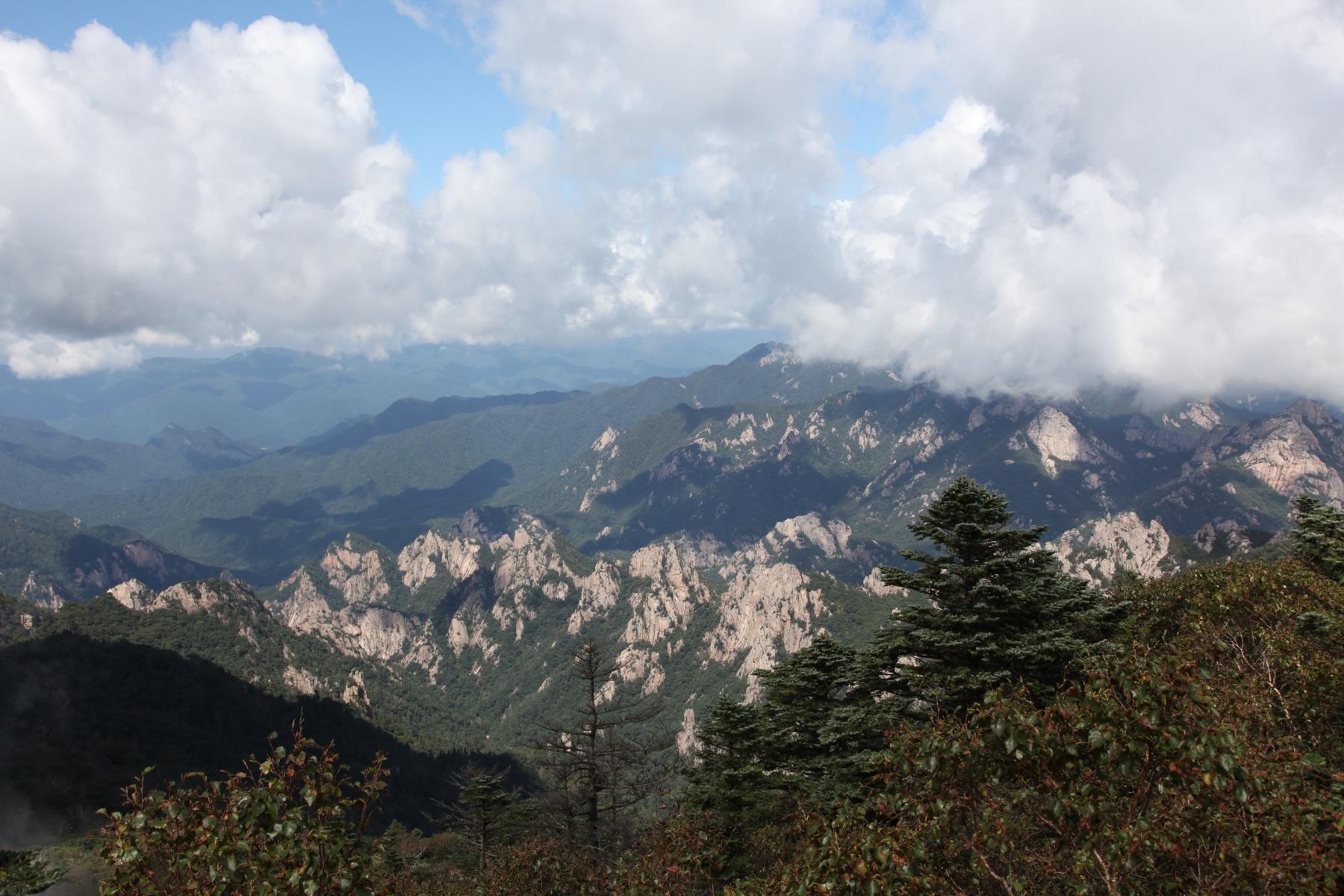
Park at the Sogongwon (소공원) main lot — large, paved, around 5,000 KRW for the day. From here you can reach the headline sights without a full hike: the Sinheungsa Temple and its bronze Tongil Daebul Buddha (a 14.6-meter Unification Buddha statue) are a flat 10-minute walk in.
- Park hours: 24h (visitor center 09:00–18:00)
- Entry: 4,500 KRW adults (5,000 KRW with the cable car)
- Parking: 5,000 KRW (Sogongwon lot)
- Best season: Late October to early November for autumn foliage
- Hiking tip: Wear proper shoes — Korean granite trails are surprisingly steep
Ulsanbawi Rock & the Gwongeumseong Cable Car
If you only have half a day in Seoraksan, choose between Ulsanbawi Rock and the Gwongeumseong cable car. They start from the same parking lot but lead in opposite directions.
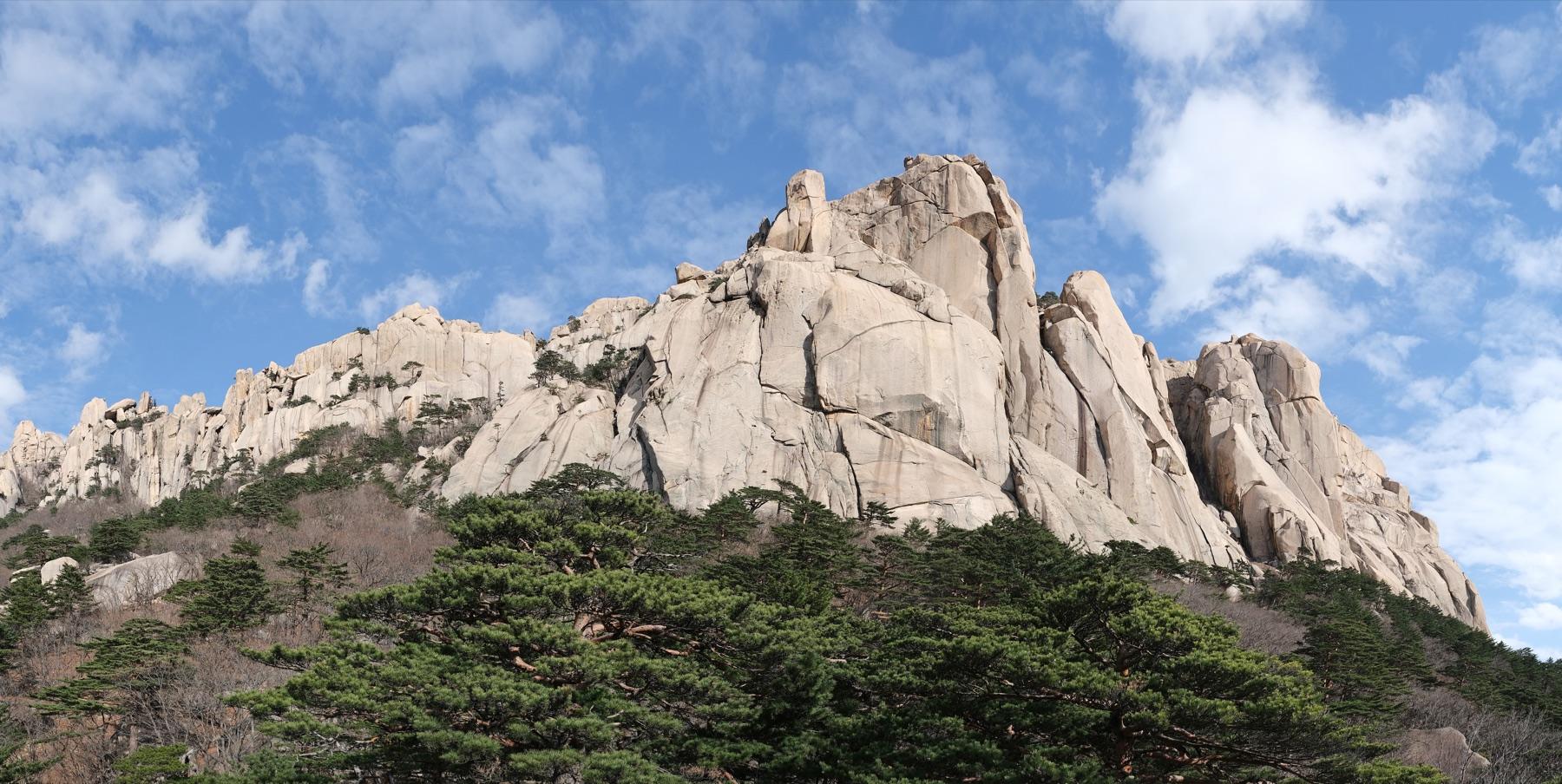
Ulsanbawi is the granite massif you see from anywhere in Sokcho. The hike is 3.8 km one-way with 808 metal stairs near the top — figure 4 hours round-trip at a steady pace. It's strenuous but not technical, and the summit views over the East Sea and the back peaks of Seoraksan are unmatched.
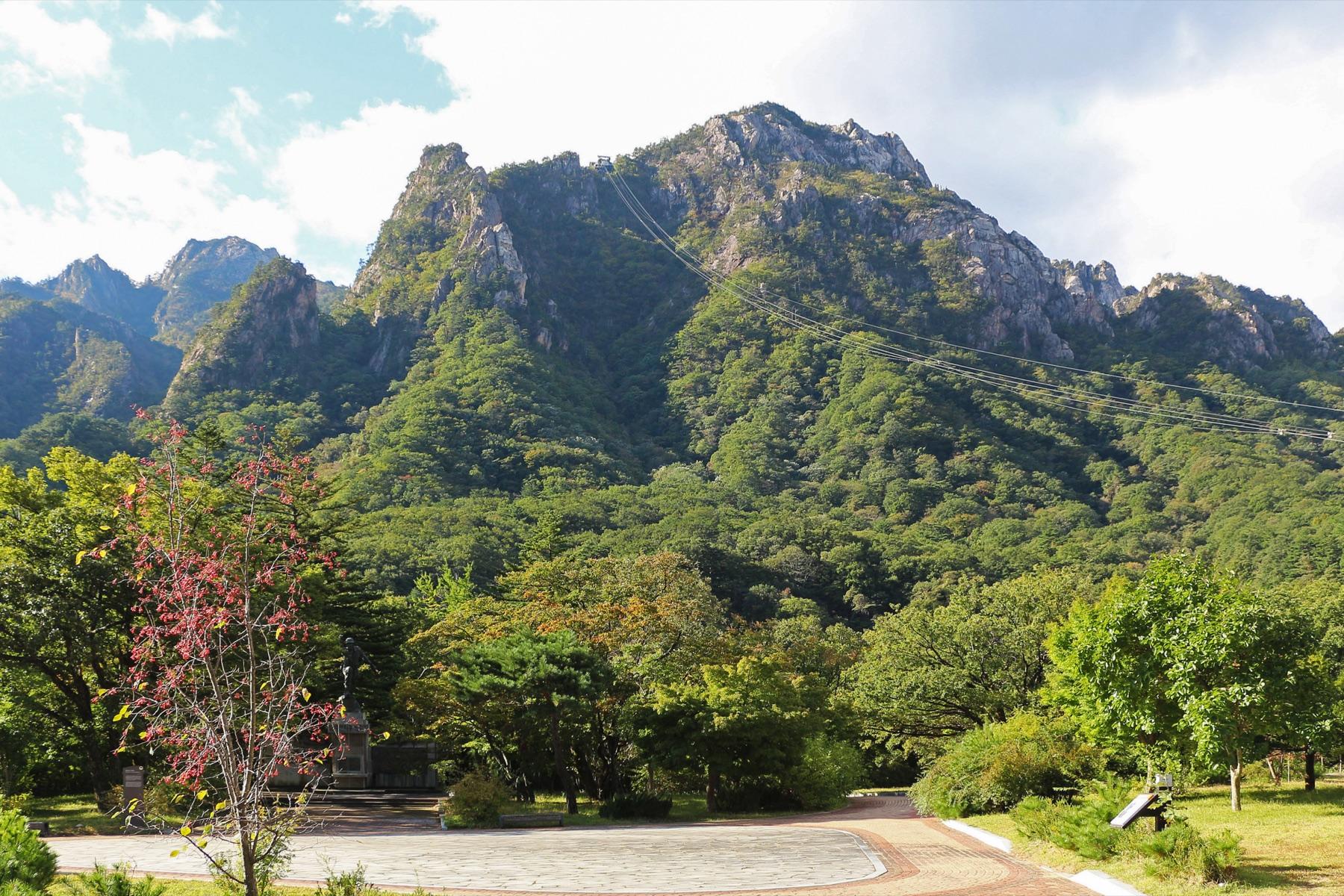
Not feeling the climb? The Seorak Cable Car runs from Sogongwon up to Gwongeumseong, a ruined fortress perched at 800 meters. The ride takes 6 minutes, costs 15,000 KRW round-trip, and dumps you onto a 10-minute clamber up to a stunning panorama — Sokcho, the East Sea, and Ulsanbawi all in one frame. Buy tickets in person at the bottom station; advance online booking isn't open to foreign cards.
Sokcho Port: Squid Boats, Mulhoe & Daepohang
Back in town, Sokcho is a working fishing port — the kind where boats unload squid (ojingeo), mackerel, and flounder straight onto tarps every morning. The two food hubs are Dongmyeong Port (동명항) on the north side, and Daepohang Port (대포항) on the south.
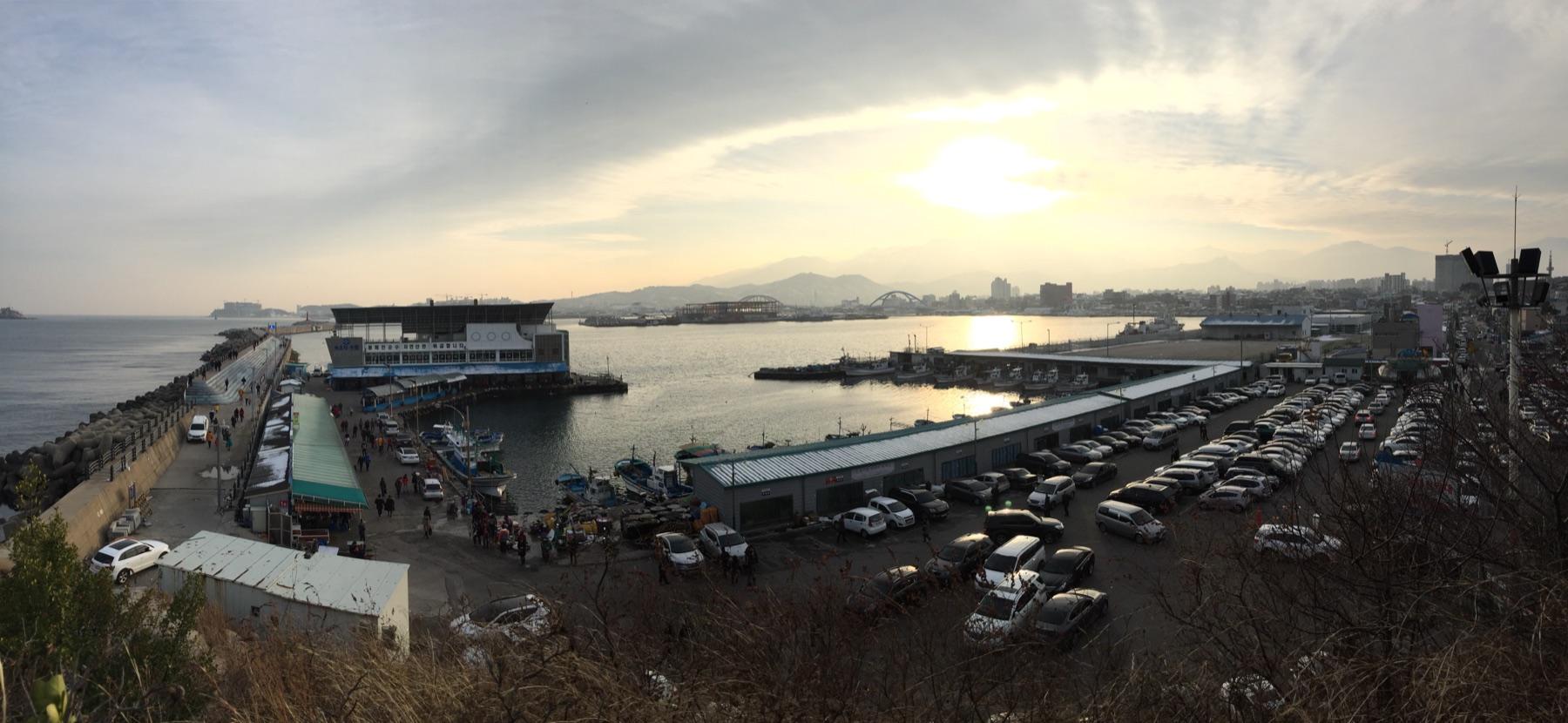
Daepohang is the bigger of the two — a full street of seafood restaurants where you pick your live fish from tanks out front. A medium flounder sashimi plate for two runs 40,000–60,000 KRW, served with banchan, soup, and rice. Skip the touts and look for places with packed local plates.
Sokcho's signature dish is mulhoe (물회) — raw fish in a chilled, spicy-sweet broth eaten with ice. It sounds odd; it's perfect after a hot hike. Order it at Hamheung Naengmyeon (함흥냉면) restaurants downtown for around 15,000 KRW. Another must-try is dakgangjeong (닭강정) — crispy sweet-and-spicy fried chicken from the Sokcho Jungang Market; Manseok Dakgangjeong is the famous stall, expect a line.
Naksansa: The Cliff-Top Temple in Yangyang
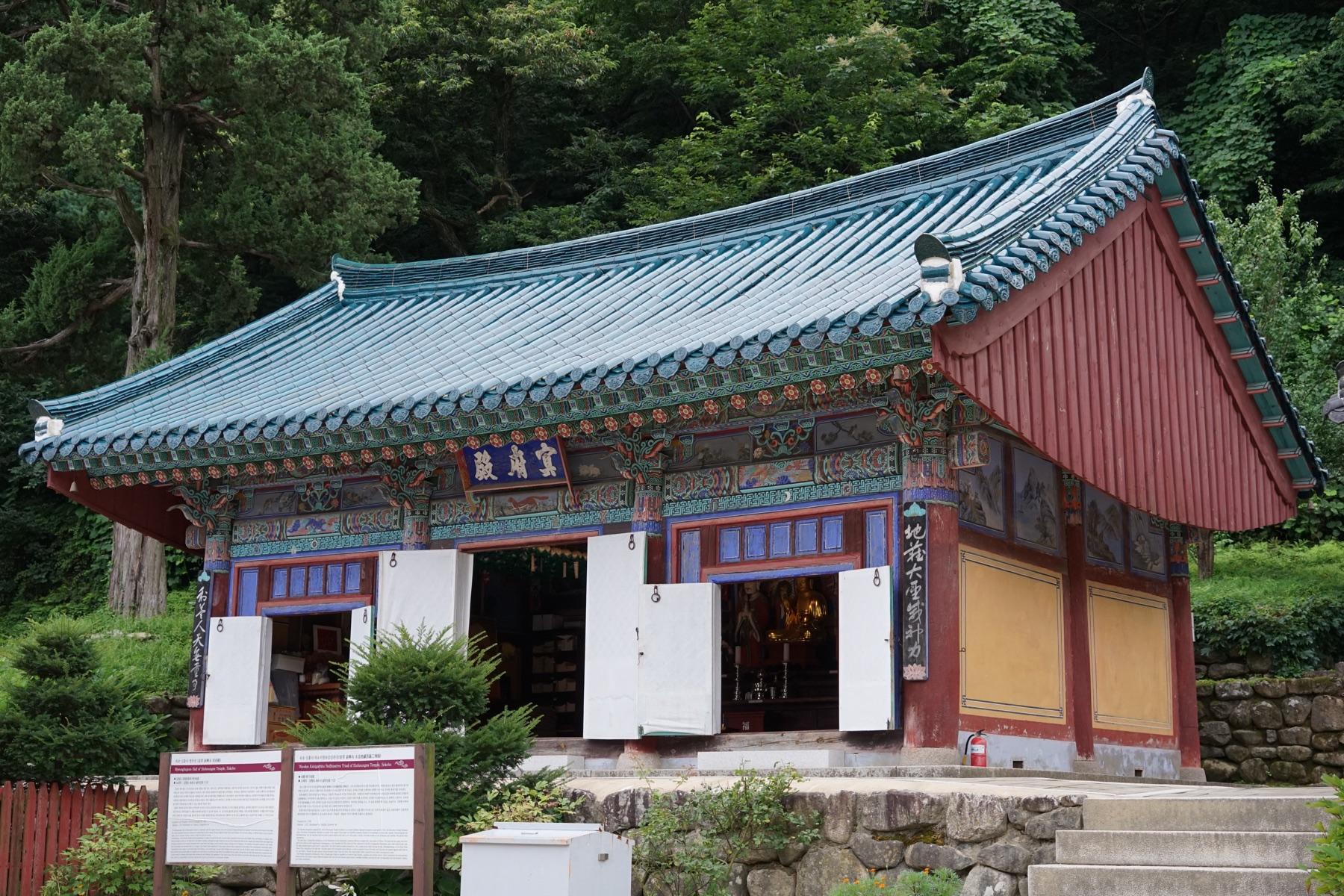
Drive 20 minutes south on Route 7 and you'll reach Naksansa, a 1,300-year-old Buddhist temple perched on a forested cliff over the East Sea. The temple was founded in 671 AD by the monk Uisang and is one of the Eight Great Temples of the Avalokitesvara Bodhisattva in East Asia.
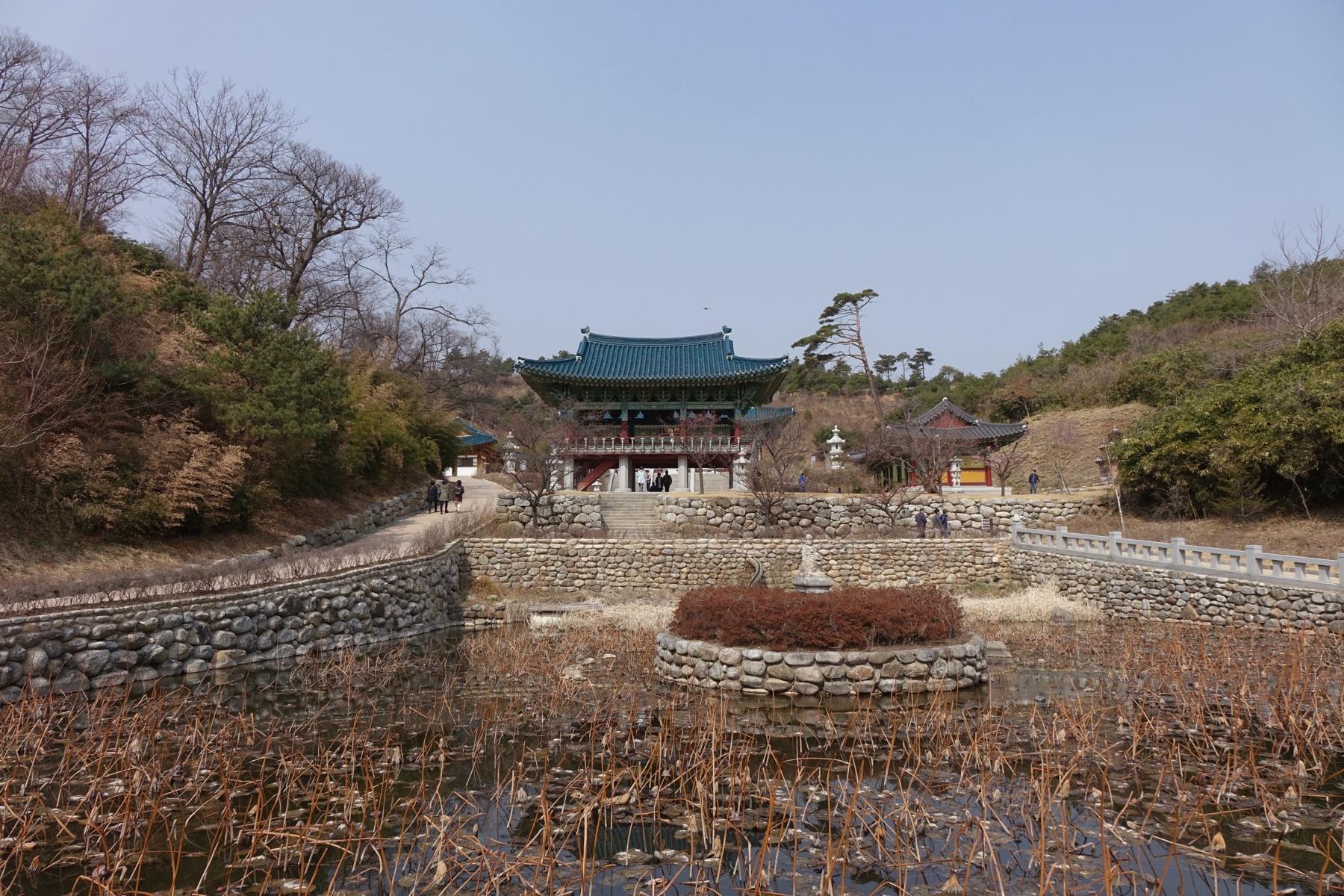
The headline sight is the 16-meter Haesu Gwaneum Sangam — a white granite Avalokitesvara statue standing on the cliff edge facing the sea. The walk from the parking lot to the statue takes about 15 minutes through temple grounds, gates, and a bamboo grove. Sunrise is genuinely spectacular here; most travelers don't realize the temple opens at 04:00 in summer specifically for early-morning visitors.
- Hours: 04:00–18:30 (summer), 06:00–17:30 (winter)
- Entry: 4,000 KRW adults
- Parking: 4,000 KRW
- Highlights: Haesugwaneum statue, Hongnyeonam Hermitage on the rocks
Continue South: Gangneung & Gyeongpo Beach
Another 45 minutes south on Route 7 brings you to Gangneung — the East Coast's second city, host of the 2018 Pyeongchang Winter Olympics ice events, and now famous nationwide for its Anmok coffee street. Gangneung has a real coffee culture: roasters lined along the Anmok Beach boardwalk, most opened by serious baristas in the early 2000s. A pour-over with an ocean view runs 6,000–9,000 KRW.
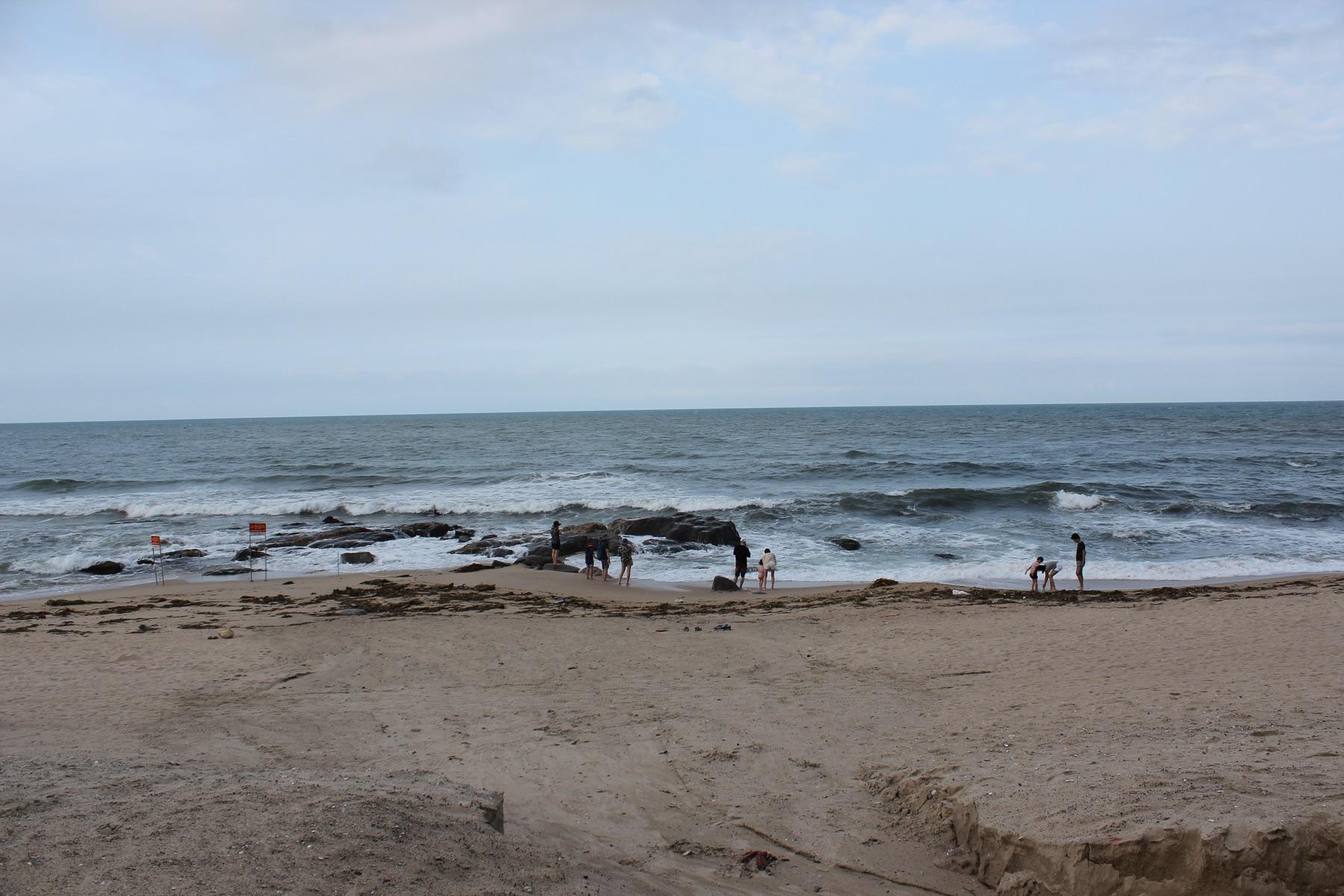
Gyeongpo Beach is the big swimming beach — 1.8 km of sand backed by Gyeongpo Lake and pine forest. Park along the lake (free in winter, 2,000 KRW in summer) and walk across. The lake circuit is 4.3 km flat, popular for cycling; rental bikes go for around 5,000 KRW an hour at stands near the parking lot.
For a quieter alternative, drive 10 minutes north to Jumunjin Breakwater (주문진 방파제) — yes, that's the bus-stop scene from Goblin, the K-drama. You'll see other tourists posing exactly where Gong Yoo and Kim Go-eun stood.
Where to Stay & Daily Itinerary
Most travelers base out of Sokcho for the mountain access. The Sokcho Beach side has chain hotels (Lotte Resort Sokcho, Kensington Hotel) from 180,000 KRW a night in shoulder season, jumping to 350,000+ KRW in peak summer and fall foliage week. Daepo Port has cheaper motels at 60,000–90,000 KRW within walking distance of the seafood streets.
A workable 3-day itinerary: Day 1 — drive Seoul to Sokcho, check in, dinner at Daepohang. Day 2 — Seoraksan all day (Sinheungsa + Ulsanbawi or cable car), dinner downtown. Day 3 — Naksansa at sunrise, drive Route 7 south to Gangneung, beach time at Gyeongpo, coffee at Anmok, return to Seoul.
FAQ
Frequently Asked Questions
Pick up your car in Seoul, point the GPS at the Inje Tunnel, and you'll be eating mulhoe by the sea before dinner. Drive safe, and enjoy the East Coast.
Share this article
You Might Also Like


Get Travel Inspiration
Subscribe for new stories, route guides, and driving tips delivered to your inbox.