Busan Beyond the Tourist Trail: A Local's Drive Through the City
Most visitors to Busan follow the same circuit: Haeundae Beach, Gamcheon Culture Village, Jagalchi Market, Gwangan Bridge at night. It's a solid itinerary, but it barely scratches the surface of what this coastal city offers drivers. The real Busan — the fishing villages, cliff-edge roads, and quiet viewpoints where locals actually go — requires a rental car and a willingness to veer off the main routes.
This guide covers four spots that most foreign visitors miss entirely: Cheongsapo, Igidae Cliff Walk, Oryukdo Island, and Amnam Park. Together, they make a logical driving loop you can complete in a full day from anywhere in the city.
Cheongsapo: Busan's Last Fishing Village
Cheongsapo (청사포) sits just northeast of Haeundae, but it feels like a different era. Where Haeundae is high-rises and beach clubs, Cheongsapo is a working fishing port with drying squid, wooden boats, and a small lighthouse perched on a rocky jetty. A narrow coastal railway line — now used by a tourist train — runs right through the village, making for some of the most photogenic scenes in Busan.
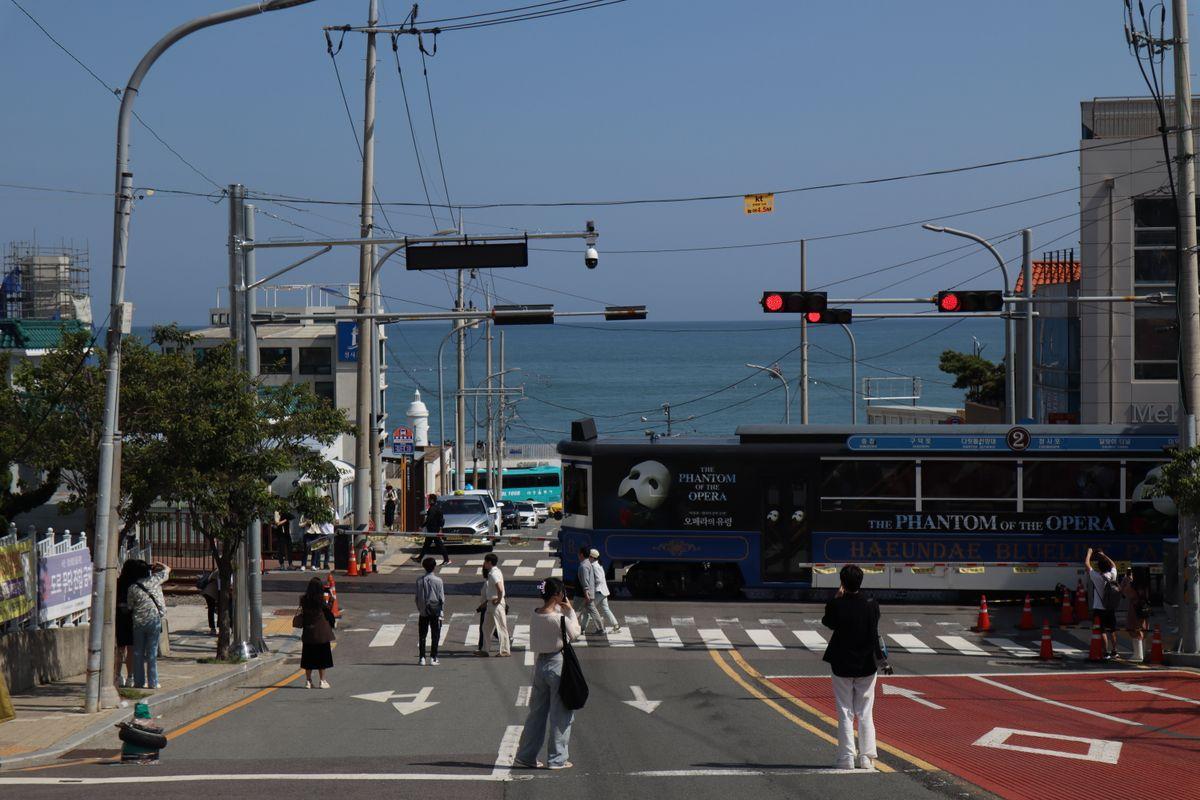
From Haeundae, take the coastal road south — it's a 10-minute drive. Parking near the port is free and plentiful early in the morning, but fills up quickly on weekends after 10am. Walk the stone breakwater to the twin lighthouses, grab grilled seafood from one of the small stalls along the port, and visit the Cheongsapo Daritdol Observatory (다릿돌전망대), a glass-floored walkway extending over the sea.
- Distance from Haeundae: 5 km, ~10 minutes by car
- Parking: Free street parking near the port (arrive before 10am on weekends)
- Best time: Early morning or late afternoon for golden-hour light on the boats
- Don't miss: The glass walkway observatory extending over the water
Igidae Cliff Walk: Busan's Wildest Coastal Road
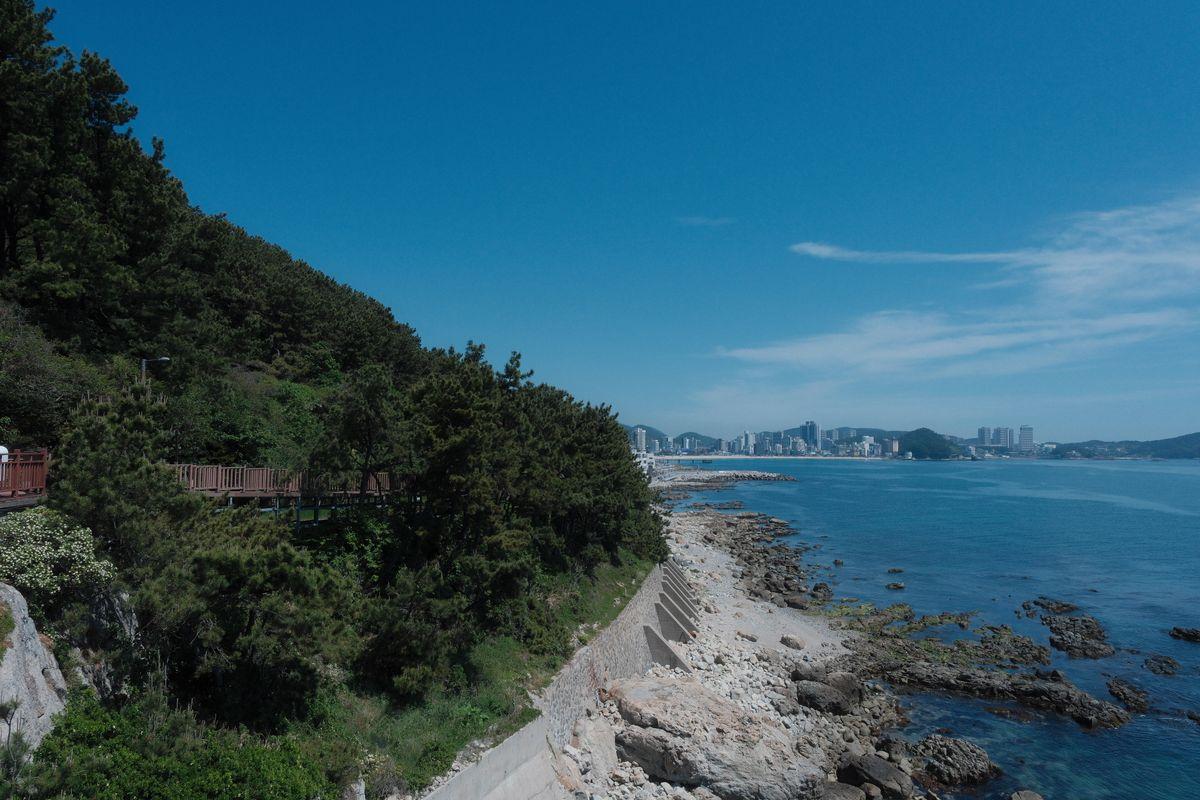
Igidae (이기대) is a 4.7km stretch of coastal cliffs on the south side of Busan, connecting Oryukdo to Gwangalli. The driving approach alone is worth it: the access road winds down through pine forest before opening onto a parking area above the sea. From there, trails cut along the cliff edge with views that rival anywhere in Korea.
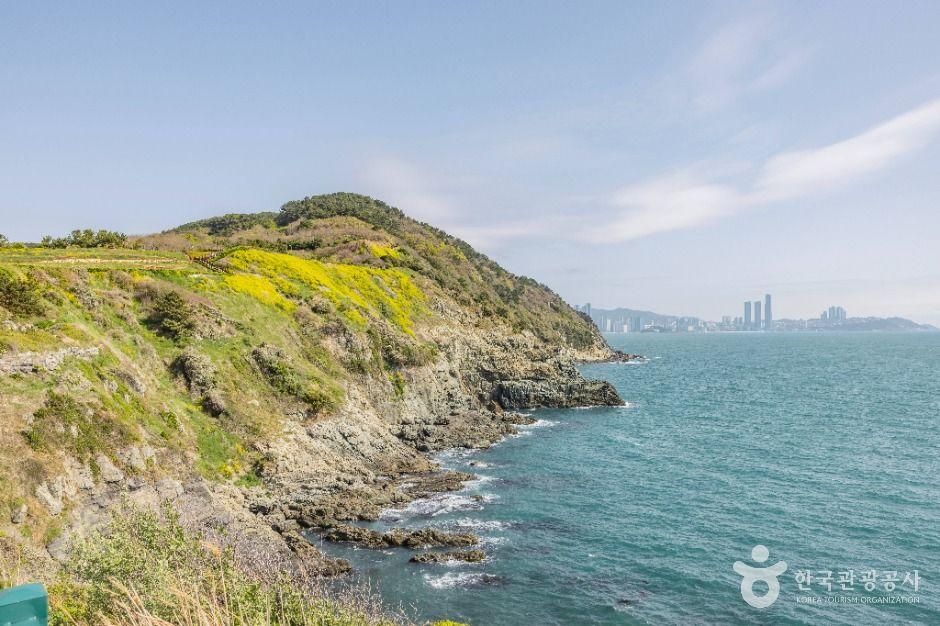
Drive south from Gwangalli along the coast road toward Yongho-dong and follow signs for 이기대공원 (Igidae Park). The road narrows toward the end, so take it slowly. The Dongseongmal Observatory (동생말전망대) at the southern tip offers a 180-degree view across the bay to Busan Port and the industrial southern shore — genuinely spectacular at dusk.
- Location: Yongho-dong, Nam-gu, Busan (from Gwangalli: ~20 minutes by car)
- Parking: Free lot at the main Igidae Park entrance
- Trail length: 4.7 km one way; most people walk the first 2 km to the main viewpoints
- Best view: Dongseongmal Observatory at the southern end of the trail
Oryukdo Skywalk: Five Islands at Land's End
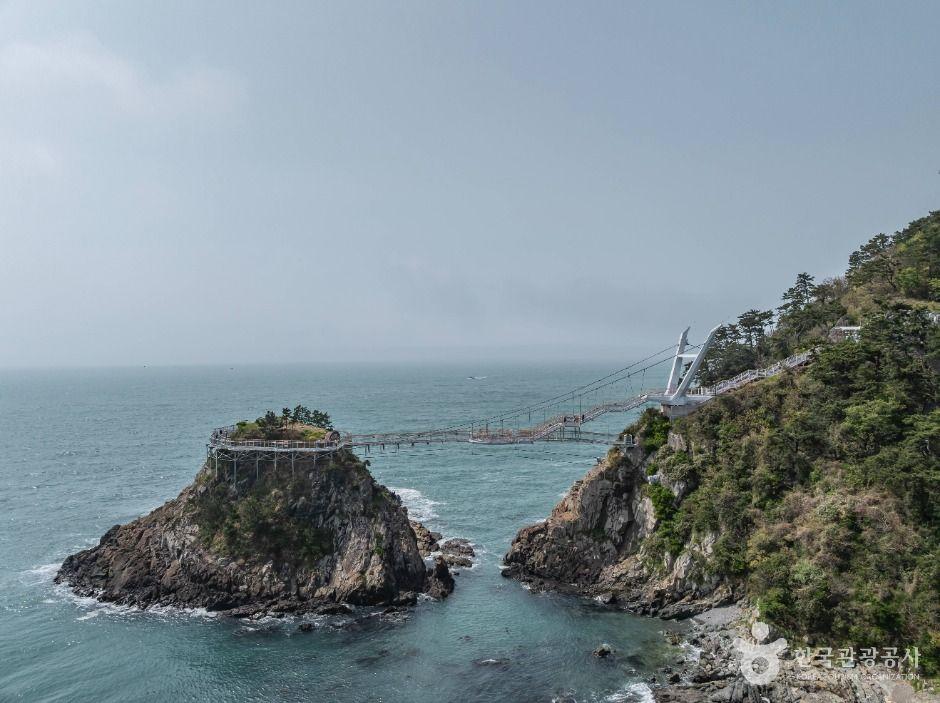
Oryukdo (오륙도) refers to a cluster of small rocky islands at the southeastern tip of the Busan peninsula. The name means 'five-six islands' because the count changes with the tide — sometimes five appear, sometimes six. The Oryukdo Skywalk (오륙도 스카이워크), a horseshoe-shaped glass bridge extending over the sea cliff, offers the most dramatic view of the islands.
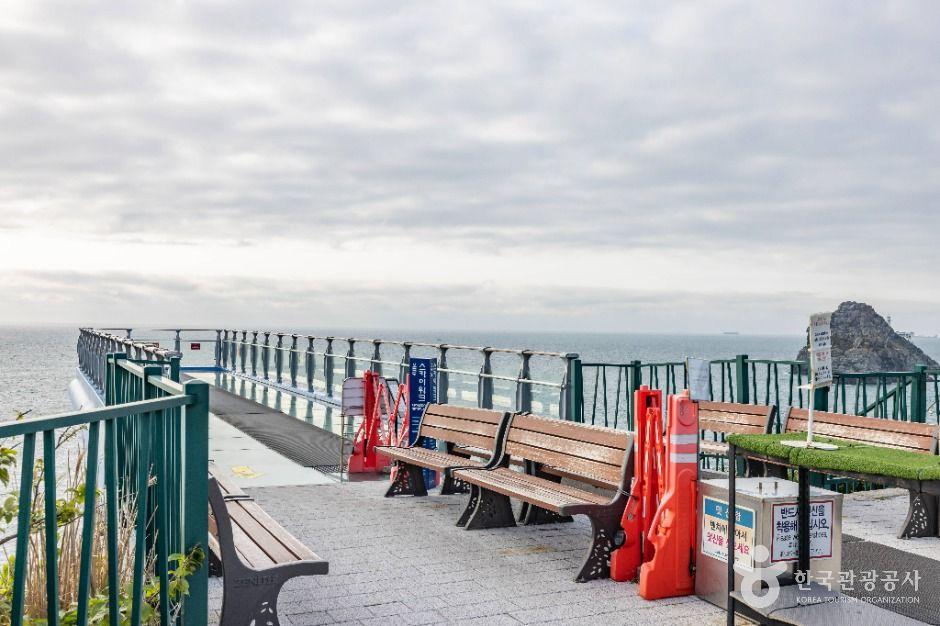
The skywalk is free, but you'll need to put on plastic shoe covers before stepping on the glass. Drive here directly from Igidae — it's just 5 minutes north along the coastal road. Arrive before 11am if you want it to yourself; tour groups start arriving around noon. The island views are best in morning light, with the rocky outcrops rising from a deep blue sea.
- Address: 137 Oryukdo-ro, Nam-gu, Busan (오륙도로 137)
- Hours: 09:00-18:00 (last entry 17:30), closed Mondays
- Entry: Free (plastic shoe covers provided at the entrance)
- Parking: Small free lot; arrive early or park on the street above
Amnam Park: The Cliff Drive at Busan's Western Edge
Most Busan visitors never make it to the western side of the city, which means Amnam Park (암남공원) remains almost entirely local. The park sits on a forested headland jutting into the sea near Songdo Beach, and the road through it is one of the better cliff drives you'll find in urban Korea. Pine trees, rock formations, and sea spray — it has the feel of a national park, not a city district.
From Igidae, drive west along Route 2 through the city center toward Seo-gu — the drive takes about 30 minutes. The park entrance is signposted off Amnam Park Road (암남공원로). Park for free at the main lot, then walk the coastal trail that loops around the headland. The route takes about 90 minutes at a relaxed pace, with multiple viewpoints looking back toward Namhae and across the harbor entrance.
- Address: 185 Amnam Park Road, Seo-gu, Busan (암남공원로 185)
- Parking: Free at the main park entrance lot
- Trail: 3.5 km loop, approx 90 minutes, mostly flat with some steps
- Nearest landmark: Songdo Beach is 10 minutes north by car
Doing the Loop: One Day Driving Itinerary
These four spots form a natural loop around the southern edge of Busan. Start early in the eastern part of the city (Cheongsapo) and work your way counterclockwise through Igidae and Oryukdo before finishing at Amnam Park in the west. Allow at least 7 hours to do it properly — more if you stop for seafood along the way.
- 108:00 — Cheongsapo (fishing village, lighthouses, morning seafood)
- 210:30 — Igidae Cliff Walk (2 km trail to Dongseongmal Observatory)
- 313:00 — Oryukdo Skywalk (30 minutes, then lunch at a nearby restaurant)
- 414:30 — Drive west through Busan city center (~30 minutes)
- 515:00 — Amnam Park (90-minute coastal trail)
- 617:00 — Songdo Beach for sunset and a cold drink
Quick Tips for Driving This Route
- 1Use Naver Maps (not Google) for this route — many of the access roads to Igidae and Amnam Park are only labeled correctly on Korean apps.
- 2Fill up before Igidae — there are no petrol stations on the southern cliff roads; the nearest are near Gwangalli or in central Nam-gu.
- 3Weekdays only if possible — all four spots get significantly busier on weekends, especially Cheongsapo and Oryukdo from late morning.
- 4Watch road widths — the access roads to Igidae and Amnam Park narrow significantly in places; larger SUVs should proceed slowly.
FAQ
Frequently Asked Questions
Busan rewards drivers who go beyond the obvious. Rent a car for the day, follow this coastal loop, and you'll see a side of the city that most visitors never find — quieter, wilder, and entirely worth the detour.
Share this article
You Might Also Like


Get Travel Inspiration
Subscribe for new stories, route guides, and driving tips delivered to your inbox.