Gochang Sunflower Festival Drive: Korea's Most Photogenic Summer Road Trip
Most summer road trips in Korea head for the coast — beach towns, harbor cities, or the breezy mountain passes of Gangwon. Gochang (고창) in North Jeolla Province takes a different angle. It's a small county, but it holds a jaw-dropping concentration of highlights for its size: a UNESCO World Heritage dolmen site, one of Korea's best-preserved Joseon-era fortresses, a thousand-year-old Buddhist temple, and the spectacle that draws more than a million visitors every summer — Hakwon Farm's sunflower fields (학원농장 해바라기).
The drive from Seoul takes about 2 hours 40 minutes on a clear day. A full day circuit covers all of the above and leaves you with a cooler, more memorable memory of Korean summer than any beach crowd.
Getting to Gochang
From Seoul, take the Seohaean Expressway (Route 15) south, then merge onto the Seohaean-seon toward Buan, exiting at Gochang IC. Total distance is roughly 270 km and, in moderate traffic, you're looking at 2 hours 40 minutes. Tolls are approximately 18,000–22,000 KRW one-way. Coming from Jeonju, it's only 55 km via Route 1 → Route 22, about 50 minutes with no expressway tolls. From Gwangju, take the Gwangju–Wanju Expressway toward Jangseong, then Route 22 north to Gochang — roughly 65 km, 55 minutes.
- From Seoul: ~270 km, 2 hrs 40 min via Seohaean Expressway (Route 15)
- Tolls (one-way): ~18,000–22,000 KRW
- From Jeonju: ~55 km, 50 min via Route 22 (no expressway toll)
- From Gwangju: ~65 km, 55 min via Jangseong → Route 22
- Parking at Hakwon Farm: On-site lot, ~3,000 KRW; gets full after 9 AM on weekends
Hakwon Farm Sunflower Festival
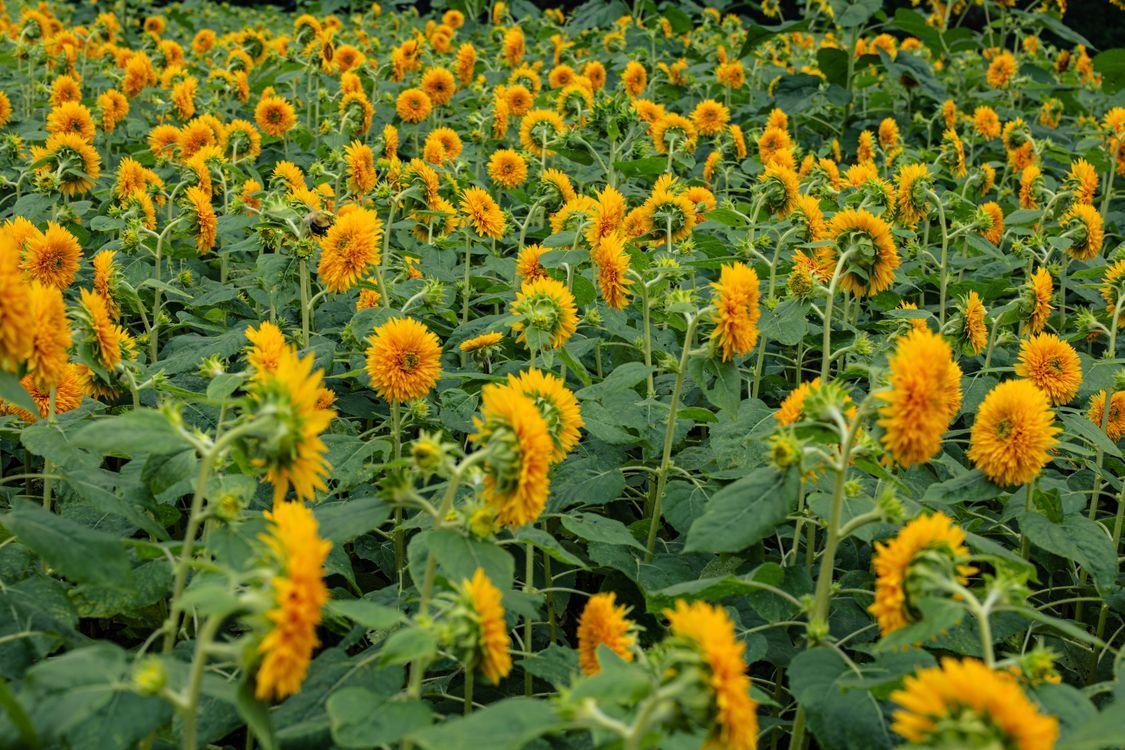
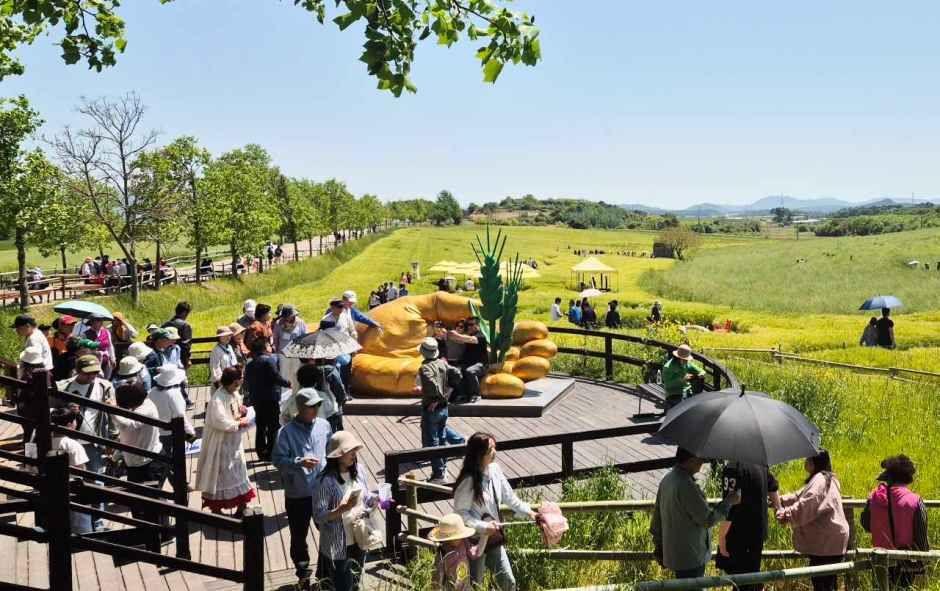
Hakwon Farm (학원농장) is a 300,000 m² private farm about 10 km south of Gochang town. It's best known for its spring Barley Field Festival (April–May), but the summer edition — when two million sunflowers turn the hillside gold — is even more dramatic. The festival typically runs from late July through mid-August, depending on flowering conditions. Rows of sunflowers stretch up a gentle slope with the forested hills of the Seonunsan Provincial Park as a backdrop. On clear mornings, the combination of blue sky, green hills, and sunflower yellow is relentlessly photogenic.
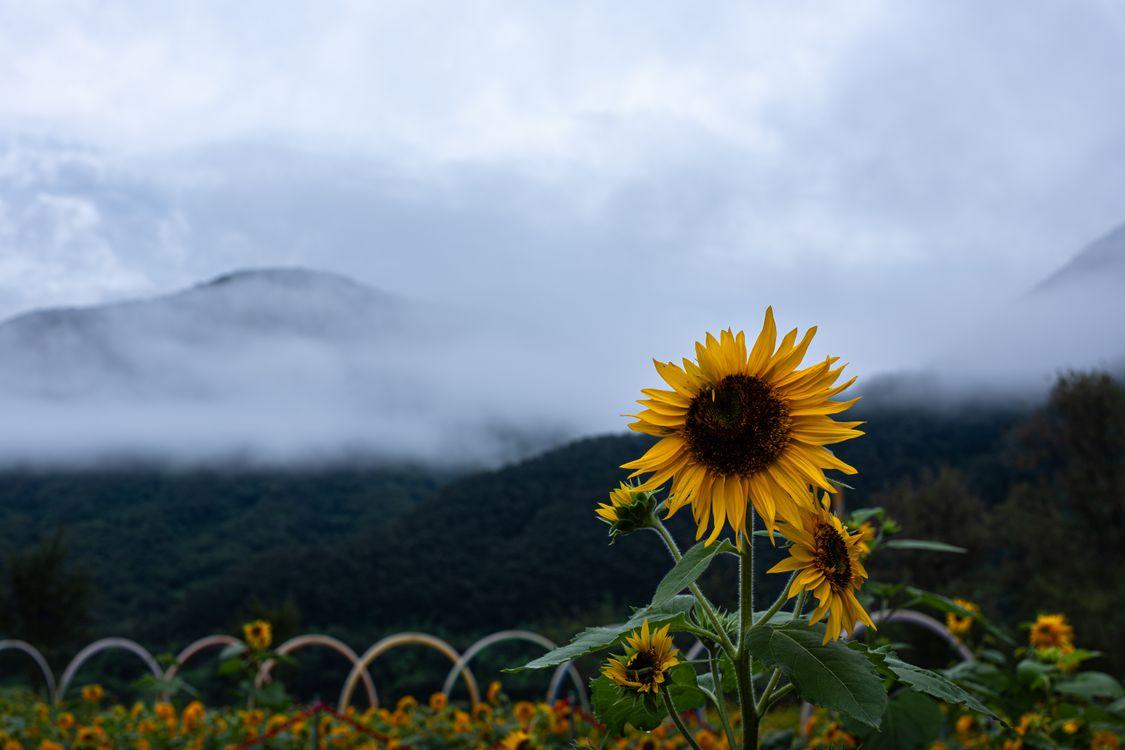
- Festival period: Late July – mid-August (varies by year; check official SNS for current dates)
- Entry: ~5,000 KRW per person (festival period); free at other times
- Address: Gochang-gun, Gongeum-myeon, Hagwon-ro 33 (학원로 33, 공음면, 고창군)
- Best time: Weekday mornings 7–9 AM; weekend crowds peak 10 AM–2 PM
- Phone: 063-564-9897
Gochang Fortress (Moyangseong): Walk the Walls
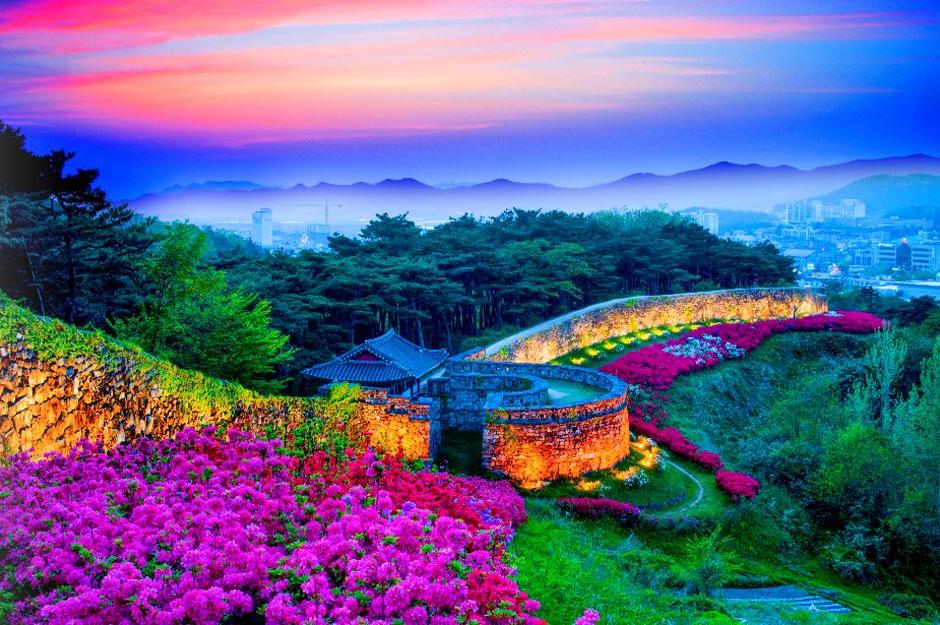
Gochang Fortress (고창읍성), also called Moyangseong (모양성), was built in 1453 during the Joseon Dynasty and is one of the best-preserved hilltop fortresses in Korea. The perimeter wall stretches 1.7 km around the hilltop and takes about 30–40 minutes to walk in full. The views over Gochang town and the surrounding countryside are simple but satisfying. The fortress is particularly famous for an old tradition: local women would carry flat stones on their heads while walking around the wall once for a long life, twice for health, and three times for entry to paradise. You'll still see visitors doing it today.
- Hours: Daily 9:00–18:00 (summer); closed Mondays
- Entry: 3,000 KRW adults, 2,000 KRW youth
- Parking: Free lot at the main gate
- Drive from Hakwon Farm: ~12 min via Route 22
- Allow: 45 minutes to 1 hour for a full wall circuit
UNESCO Dolmens: 2,000 Ancient Stones
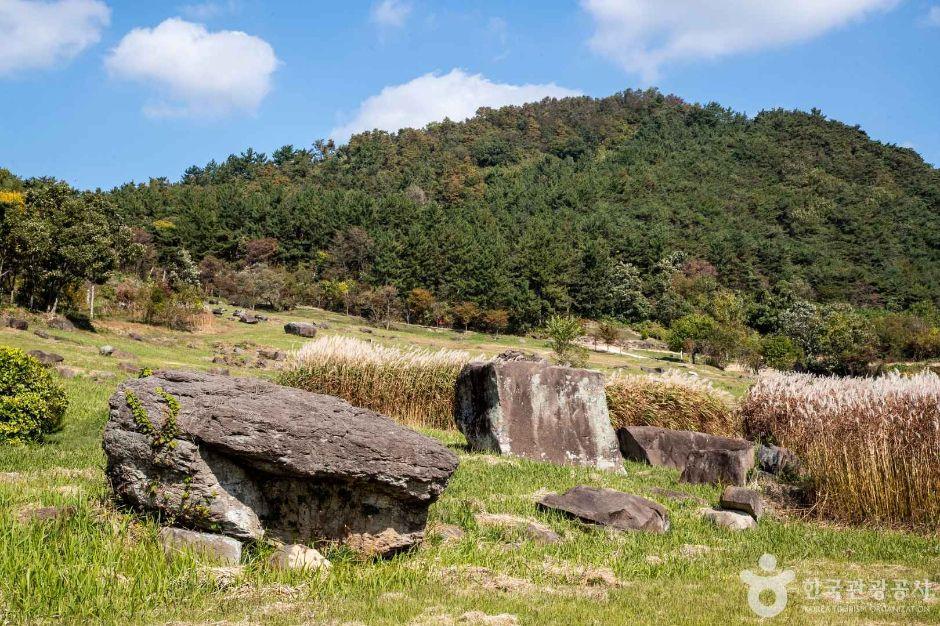
Gochang contains the world's highest concentration of dolmens — prehistoric megalithic burial monuments — with more than 2,000 individual stones scattered across the county. The main cluster at Gochang Dolmen Site (고창 고인돌 유적) is a UNESCO World Heritage Site (inscribed in 2000 alongside the dolmen sites at Hwasun and Ganghwa). A short walking trail winds past the largest examples, with an on-site museum explaining the Bronze Age culture that created them around 1000–600 BCE. It doesn't take long — 45 minutes covers the trail and museum comfortably — but the scale of the stones and the age of the site are genuinely humbling.
- Hours: Mar–Oct 9:00–18:00; Nov–Feb 9:00–17:00; closed Mondays
- Entry: 3,000 KRW adults (includes museum)
- Drive from Gochang Fortress: ~5 min (2 km north via Route 22)
- Trail: Easy flat loop, ~1.5 km, fully paved
Seonunsa Temple: Optional but Beautiful
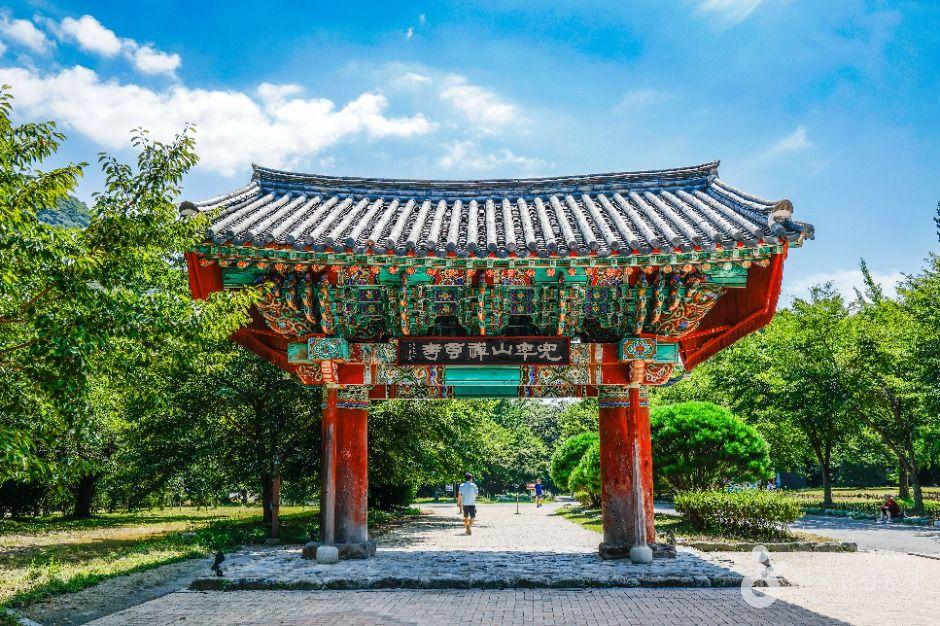
If you have an extra hour, the drive to Seonunsa Temple (선운사) — about 15 minutes southwest of Gochang town — is worth it. The temple was founded in 577 AD during the Baekje Kingdom and sits at the base of Seonunsan Provincial Park, surrounded by ancient ginkgo trees and a small river valley. It's most famous for camellia flowers in late spring and maple leaves in autumn, but in summer the deep shade of the forest approach road and the sound of the stream make it a genuinely cool and peaceful stop. Park outside the village and walk the forested path to the main gate — about 10 minutes each way.
- Entry: Free (parking ~3,000 KRW)
- Drive from Gochang Dolmen Site: ~20 min via Seonunsa-ro
- Allow: 1–1.5 hours including the forest walk and temple grounds
- Tip: The local makgeolli brewed near the temple entrance is excellent — pick up a bottle for the drive home
What to Eat in Gochang
Gochang has two must-eat specialties that you simply won't find as good anywhere else in Korea. First: bokbunjaju (복분자주) — a deep ruby-colored wine made from wild raspberries that grow abundantly in the hills around Gochang. The county is the top producer of Korean raspberry wine and juice, and small roadside shops sell bottles for 8,000–15,000 KRW. It's sweet and slightly tart, and best tried cold. Second: Pungcheon eel (풍천장어) — grilled freshwater eel from the streams feeding into the Seonun area. Pungcheon eel is prized across Korea for its fat, tender flesh, and the restaurants clustered near Seonunsa Temple specialize in it. Budget 25,000–35,000 KRW per person for an eel set meal.
Don't overlook Gochang watermelon (고창 수박) — the region's climate and soil produce noticeably sweeter, crisper watermelons than average, and every roadside stall in summer sells them by the slice for 2,000–3,000 KRW. It's the perfect midday snack between sites.
Quick Tips for Driving Gochang
- 1Leave Seoul before 6:30 AM on weekends to reach Hakwon Farm before the crowds. The sunflower fields are best photographed in morning light anyway.
- 2The loop — Farm → Fortress → Dolmens → Temple — flows clockwise from the farm. It's about 35 km in total and takes 6–8 hours including stops.
- 3Gochang town has very few English signs. Use Naver Map with Korean place names: 고창읍성 (fortress), 고창 고인돌 유적 (dolmens), 선운사 (temple), 학원농장 (farm).
- 4The Seohaean Expressway has a Hi-Pass lane — your rental car's transponder works at every toll booth on the route.
- 5Gochang in July and August is hot and humid. Carry water, wear sunscreen for the fortress wall walk, and retreat to temple shade during the 1–3 PM heat peak.
FAQ
Frequently Asked Questions
Gochang is easy to overlook on a Korea road trip map — it sits off the main expressway corridors and doesn't have the name recognition of Gyeongju or Jeonju. But it delivers something rare: a single day that moves from prehistoric history through medieval fortresses to summer spectacle and ends with a bottle of raspberry wine and grilled eel. That's a hard combination to beat anywhere in the country.
Share this article
You Might Also Like



Get Travel Inspiration
Subscribe for new stories, route guides, and driving tips delivered to your inbox.