
Gyeongju by Car: The Ancient Capital Road Trip Guide (2026)
Gyeongju is Korea's open-air museum. For nearly a thousand years it was the capital of the Silla kingdom (57 BC – 935 AD), and the city still wears that history out in the open — royal tomb mounds rising out of downtown parks, UNESCO World Heritage temples in the hills, and an 1,300-year-old stone observatory standing on a lawn between bike paths.
It's also a city that rewards driving. The major sights are spread across roughly 20 km between the historic downtown, the Bulguksa-Seokguram hills to the east, and the Bomun Lake resort area in between. Buses connect them but run on tourist time. With a rental car you can fit the headline temples, a night view of Wolji Pond, and the Hwangnidan-gil café street into a single, relaxed day. This guide covers how to get there, what to see, where to park, and the timing tricks that keep you ahead of the crowds.
Getting to Gyeongju: Routes from Seoul and Busan
Gyeongju sits in North Gyeongsang Province in southeastern Korea, about 370 km southeast of Seoul and 85 km north of Busan. There's no airport in Gyeongju itself — the closest is Gimhae International (PUS) near Busan, and most foreign visitors either fly into Busan, fly into Seoul and drive south, or pick up a rental car after the KTX train.
Driving from Seoul to Gyeongju is straightforward: take the Gyeongbu Expressway (Expressway No. 1) south, then exit at Geoncheon IC onto Expressway No. 20. The trip covers about 370 km and takes 3 hours 40 minutes to 4 hours without traffic. Tolls run around 22,000 KRW one-way with Hi-Pass. Friday evenings and Sunday returns are notably slower — leave Seoul before 9 a.m. on weekends if you can.
From Busan to Gyeongju the drive is much shorter — about 85 km and 1 hour via Expressway No. 7 (Donghae Expressway). This is the easier base if you only have a single day. Tolls are minimal (around 3,000 KRW), and the highway runs through coastal foothills that make a pleasant warm-up before the historic sights.
- Seoul → Gyeongju: ~370 km, 3h40m–4h, tolls ~22,000 KRW
- Busan → Gyeongju: ~85 km, ~1h, tolls ~3,000 KRW
- Daegu → Gyeongju: ~85 km, ~1h via Expressway No. 20
- Gimhae Airport (PUS) → Gyeongju: ~110 km, ~1h20m
- Rental tip: Pick up at Busan Station or Gyeongju Station to skip the long Seoul drive
Bulguksa & Seokguram: The UNESCO Headliners
Bulguksa Temple is the reason most travelers come to Gyeongju. Built in 774 AD on the slopes of Mt. Tohamsan, it's a working Buddhist temple and a UNESCO World Heritage site. The famous stone bridges, the Dabotap and Seokgatap pagodas in the main courtyard, and the wooden halls behind them have survived 1,300 years, fire, invasion, and twentieth-century restoration. Spend at least 90 minutes here.
- Hours: 9:00–18:00 (last entry 17:00), open daily
- Entry: 6,000 KRW adults
- Parking: ~1,000–2,000 KRW (large lot at the foot of the temple)
- Best time: Right at opening (9 a.m.) or after 16:00 — midday is packed
A few kilometers above Bulguksa, up a winding mountain road, sits Seokguram Grotto — an artificial stone cave with a single seated Buddha statue carved in granite, also from the 8th century. It's the second half of the same UNESCO inscription. The drive up is short but steep with hairpin turns, and the grotto interior is viewed through glass to protect the carvings. Bring layers; the mountain temperature drops several degrees from the city below.
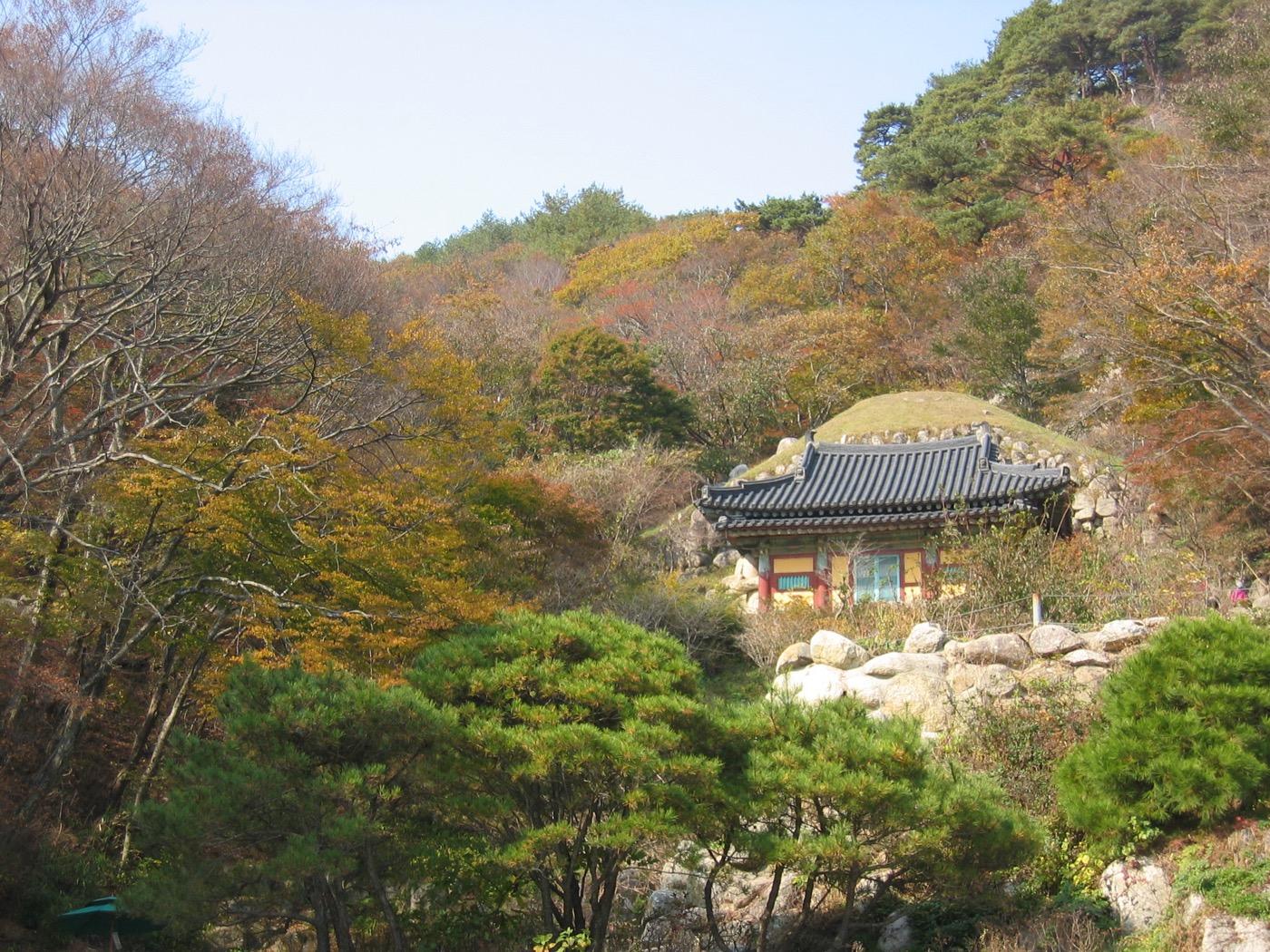
Practical detail most guides skip: Seokguram has a separate entry (6,000 KRW) from Bulguksa. You don't have to walk between them — there's a road, and you can drive up to a small parking lot near the entrance for about 2,000 KRW. From the lot you walk about 10 minutes uphill on a forested path to reach the grotto itself.
Daereungwon Royal Tombs: The Heart of Old Gyeongju
Right in the middle of downtown Gyeongju, Daereungwon Tomb Complex (대릉원) is what people mean by 'museum without walls.' Twenty-three massive grass-covered burial mounds, each between 1,500 and 2,000 years old, sit on a 38-hectare park crisscrossed with walking paths. It's free to enter the surrounding park; only the inner tomb cluster has a ticket booth.
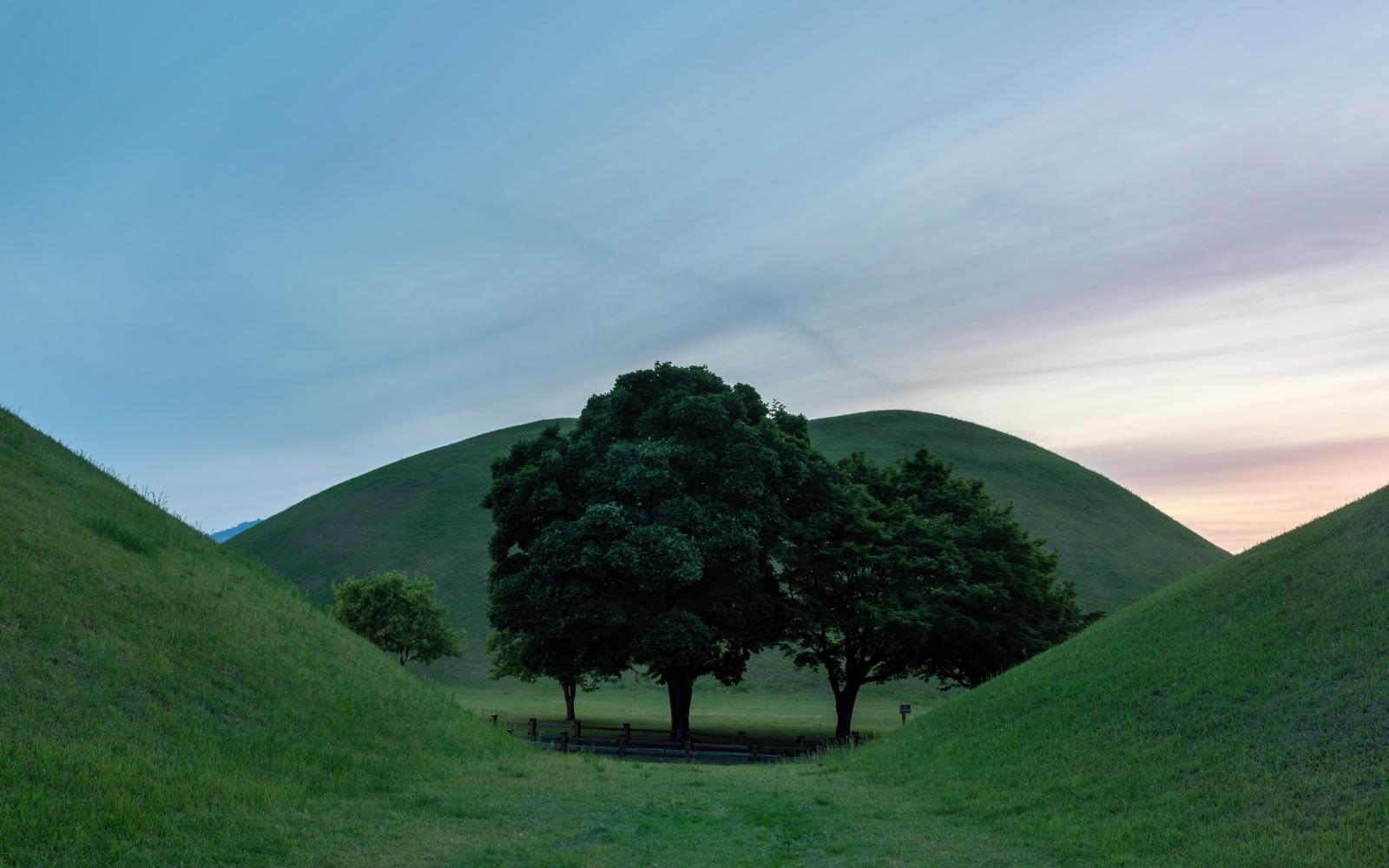
The standout inside the paid section is Cheonmachong (천마총, Heavenly Horse Tomb), the only tomb in Korea opened to the public. Excavations in 1973 recovered over 11,500 artifacts including a gold crown and a painted saddle flap that gave the tomb its name. The interior has been preserved as a walk-through exhibit with replicas of the major finds.
- Hours: 9:00–22:00 (Cheonmachong 9:00–18:00)
- Entry: 3,000 KRW for Cheonmachong; outer park free
- Parking: Free public lots along Wolseong Park
- Walking time: 60–90 minutes for the full loop
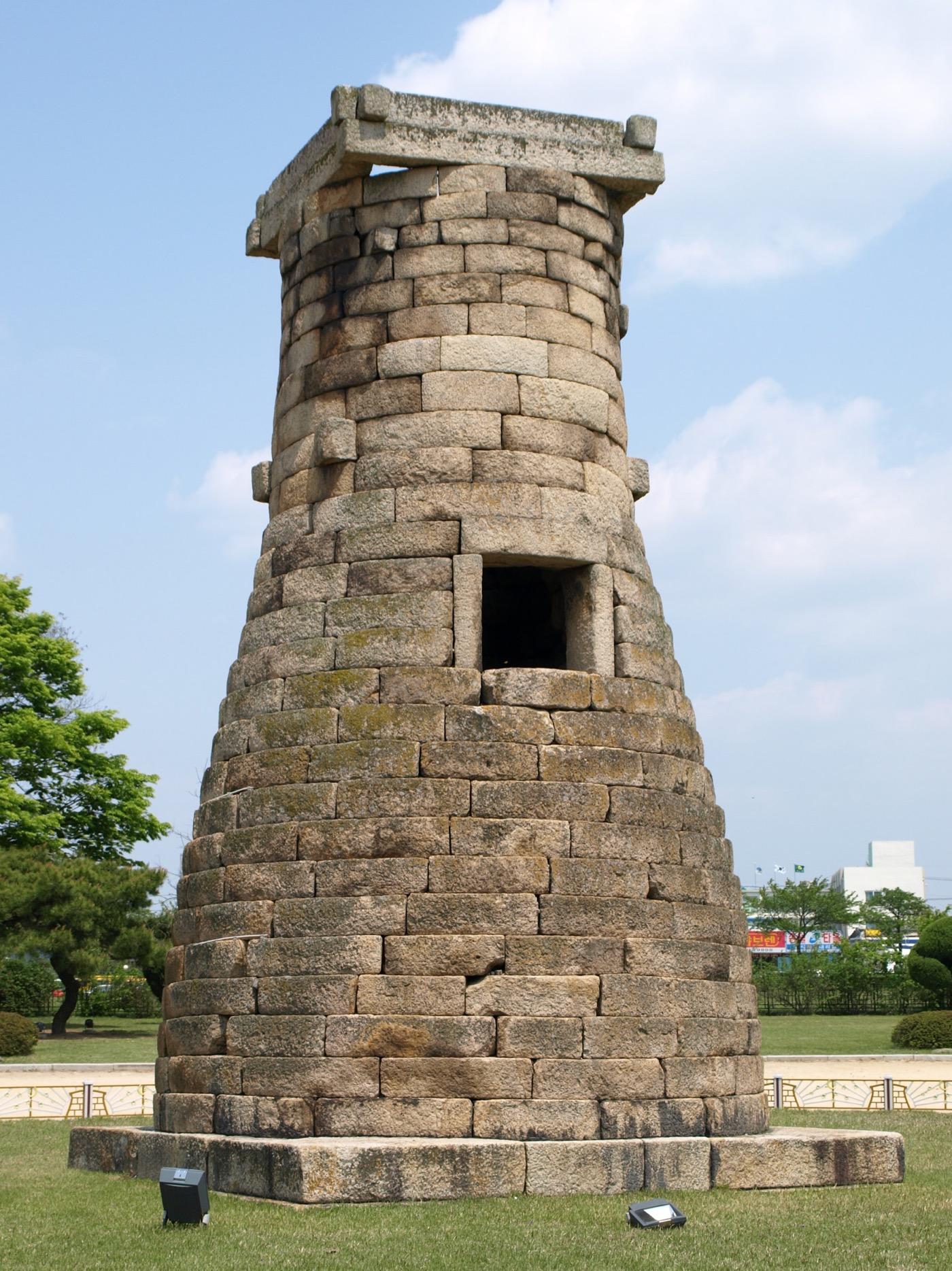
A 10-minute walk east of Daereungwon brings you to Cheomseongdae (첨성대) — a 9.4-meter stone observatory built in the 7th century during the reign of Queen Seondeok. It's the oldest surviving astronomical observatory in East Asia, and it sits on open lawn that's free to enter at any hour. Photos at sunrise or sunset, with the rapeseed or cosmos fields blooming depending on the season, are the postcard shots of Gyeongju.
Donggung Palace & Wolji Pond at Night
Donggung Palace and Wolji Pond (동궁과 월지) was the secondary palace and banquet garden of the Silla kings. The palace buildings are reconstructions, but the pond — historically called Anapji — is original, and the way it reflects the illuminated pavilions after sunset is the best night view in Gyeongju. Locals time their visit so they enter just before dusk and walk the loop as the lights come on.
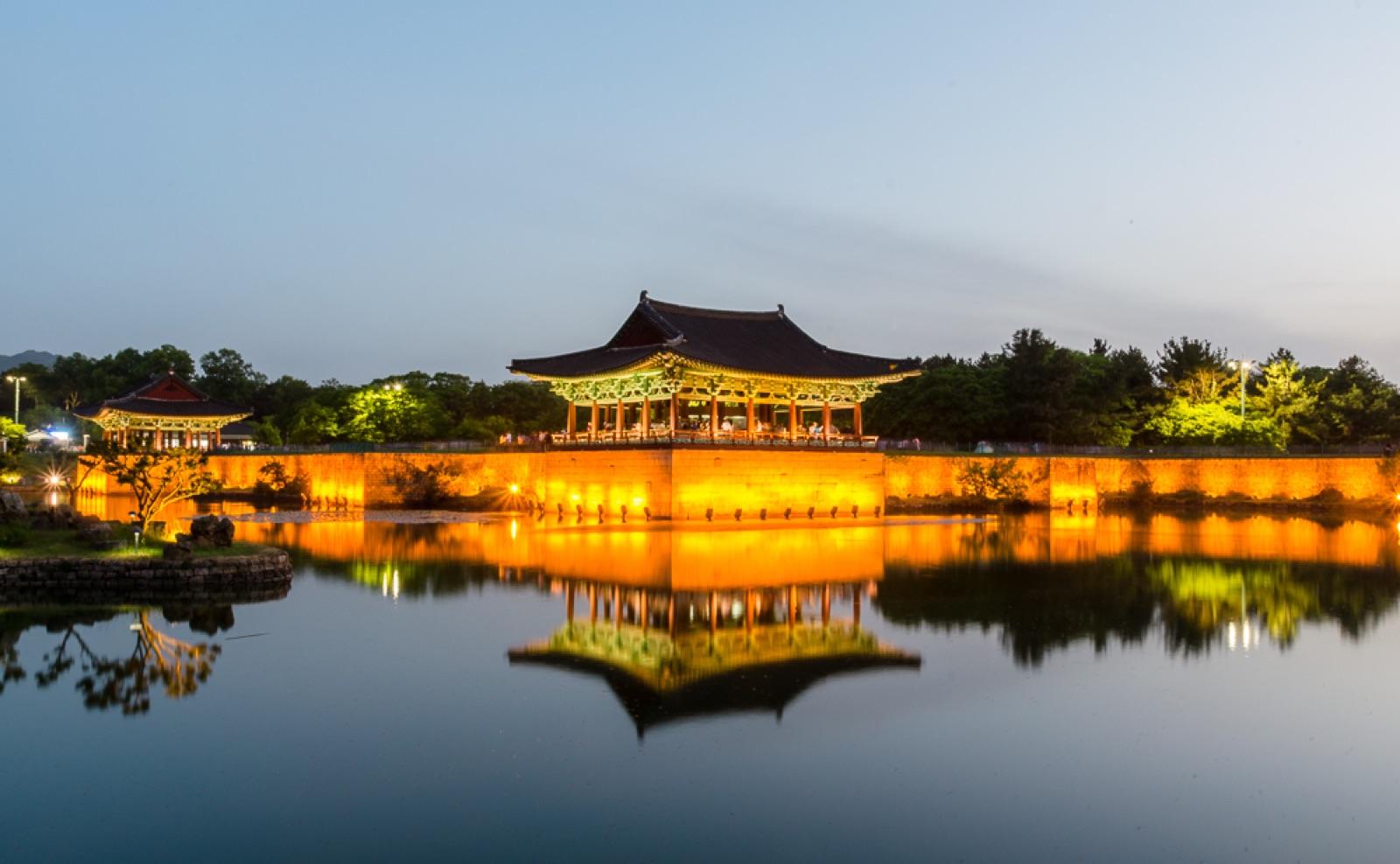
Practical timing matters here. The site stays open until 22:00, but the magic window is roughly 30 minutes before sunset to 90 minutes after. Tickets are 3,000 KRW, and the parking lot directly across the road costs about 1,000 KRW for the visit. Weekend evenings draw crowds; midweek nights are noticeably calmer. The site is a 5-minute drive from Cheomseongdae, so most visitors finish their afternoon at the tombs, eat dinner downtown, and arrive at Wolji around 18:30 in summer or 17:00 in winter.
Hwangnidan-gil & Bomun Lake: Modern Gyeongju
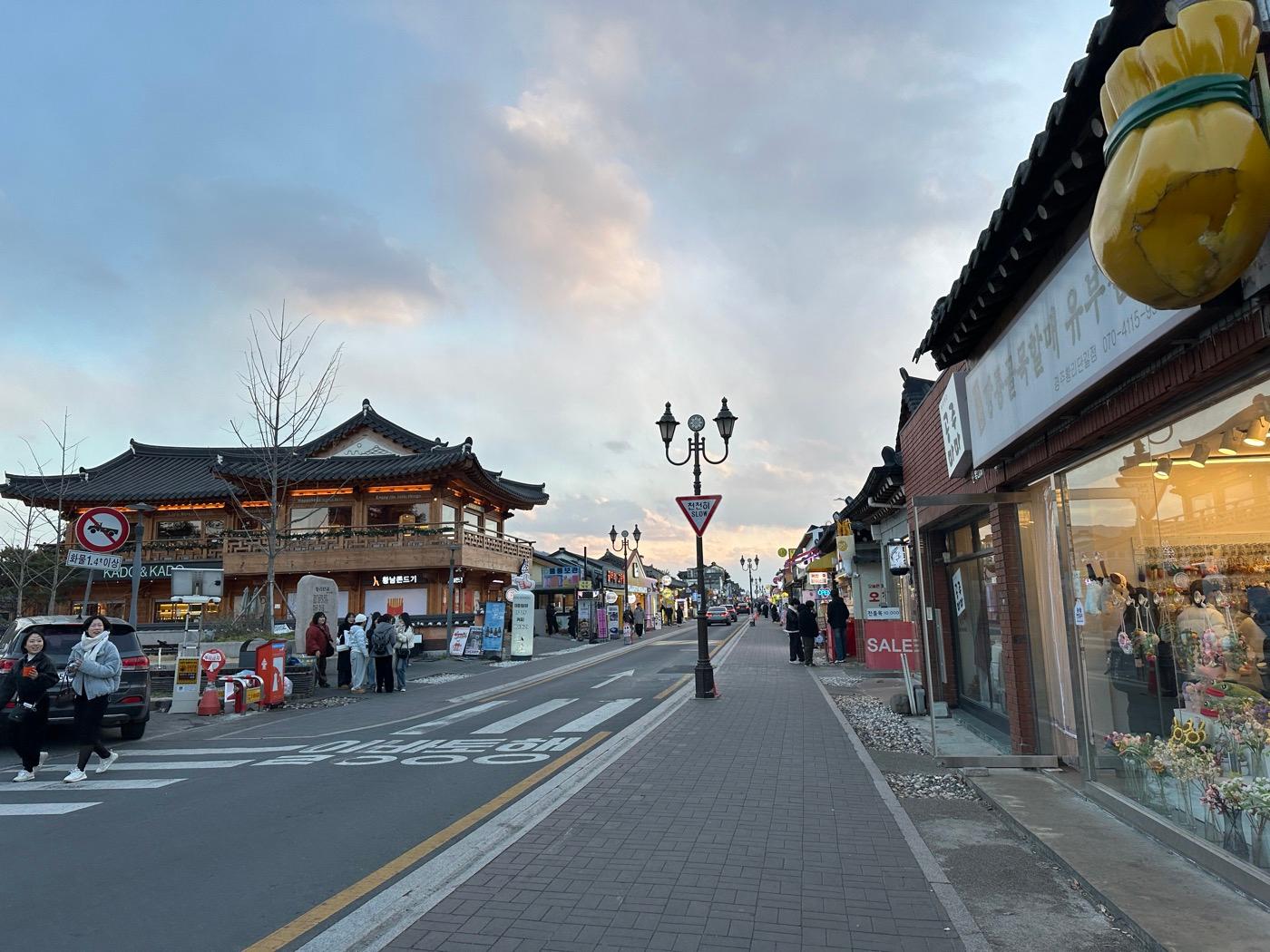
Gyeongju has changed quickly in the last few years. Hwangnidan-gil (황리단길) is the trendy café and restaurant street that grew up next to the tomb park, lined with renovated hanok houses turned into bakeries, photo studios, and dessert shops. The signature snack here is hwangnam-ppang (황남빵) — a small red-bean cake stamped with a flower pattern that's been baked in Gyeongju since 1939. Get it at the original Choi Yeong-hwa bakery on the main street.
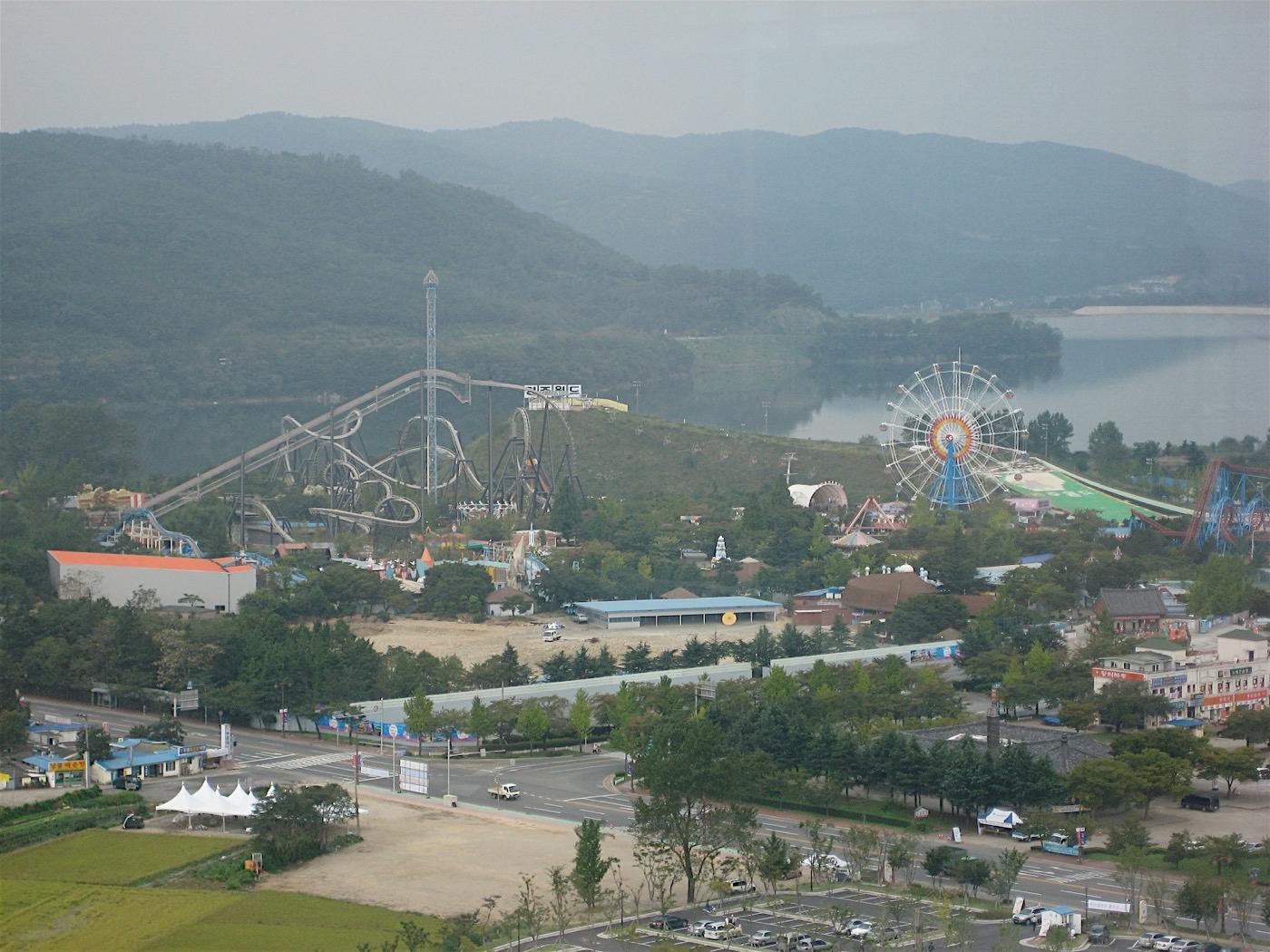
On the other side of the city, the Bomun Tourist Complex wraps around an artificial lake about 15 minutes' drive east of the historic downtown. This is the resort-and-conference zone — hotels, the Gyeongju World theme park, the Hwangnyong Wonji lotus pond, and a cherry-tree-lined lakeside drive that turns into a tunnel of pink blossoms in early April. Most large hotels and the Hilton Gyeongju are based here, which makes Bomun the easiest place to sleep if you're road-tripping with a family.
Parking, Driving & Foreign-Driver Tips
Driving in Gyeongju is genuinely easy by Korean standards. Traffic is light outside Hwangnidan-gil and the Bulguksa parking road, the speed limits inside the historic core drop to 30–50 km/h, and parking lots near major sights are well-signed in English. Use Naver Map or Kakao Map for navigation — Google Maps does not give turn-by-turn directions in Korea, so download one of the Korean apps before you arrive.
Parking at the headline sights is cheap but fills up. Bulguksa charges around 1,000–2,000 KRW per visit, Seokguram about 2,000 KRW, and the downtown lots near Daereungwon and Cheomseongdae are free if you arrive before 10 a.m. on weekends. Hwangnidan-gil is the worst — the street has no parking, and the small public lots fill by lunch. Park at Wolseong Park (free) or the Daereungwon main lot and walk 5 minutes.
One real warning: the road from Bulguksa up to Seokguram is narrow, winding, and has occasional buses coming the other way around blind curves. Drive slowly, use the pullouts, and avoid it after rain in winter — black ice on shaded sections of the climb has caused incidents. If you're nervous, you can park at Bulguksa and take the shuttle bus instead.
Best Time to Visit
April brings cherry blossoms to the Bomun Lake drive and the road around Daereungwon — easily the most photogenic week of the year, but also the most crowded. Late May has cleaner light and far fewer tourists. Autumn (October to mid-November) is the local favorite: ginkgo trees turn the Gyochon Hanok Village gold, and the Silla Cultural Festival runs in early October with reenactments and night lighting. Winter is quiet and cold but works well if you want the tomb mounds to yourself; just dress warmly for Seokguram, which is exposed on the mountain.
Quick Tips for Your Gyeongju Drive
- 1Drive Seoul → Gyeongju on a Saturday morning, return Sunday evening — avoids the worst expressway congestion.
- 2Hit Bulguksa at opening (9 a.m.) then drive up to Seokguram before tour buses arrive around 10:30.
- 3Time Wolji Pond for 30 minutes before sunset — you get both the blue-hour reflections and the lit-up pavilions.
- 4Buy hwangnam-ppang as a gift on Hwangnidan-gil — the original bakery (Choi Yeong-hwa) is the one to look for.
- 5Base yourself in Bomun for family travel, or Hwangnidan-gil if you want to walk to dinner.
FAQ
Frequently Asked Questions
Gyeongju is the only place in Korea where a one-day drive can put you next to a 1,300-year-old temple, a Silla queen's tomb, and a sunset over an 8th-century pond. Rent a car, leave early, and give yourself time to walk between the sights — that's how the ancient capital is meant to be seen.
Share this article
You Might Also Like


Get Travel Inspiration
Subscribe for new stories, route guides, and driving tips delivered to your inbox.