
Seoul to Busan by Car: The Ultimate Road Trip Guide (2026)
The drive from Seoul to Busan is Korea's most iconic road trip. Roughly 416 kilometers of mountain tunnels, riverside straights, and food-famous rest stops stretch between Korea's two biggest cities — and the Gyeongbu Expressway that links them is the country's main north-south artery.
It's also a surprisingly easy first road trip for foreign drivers. The expressway is well-signed in English, Hi-Pass tolling works automatically with your rental, and you're never more than 30 minutes from a clean, food-court-style rest area. This guide covers the route, the timing, the tolls, the rest stops worth stopping for, and the detours that turn a one-day drive into a proper trip.
The Route: Gyeongbu Expressway 101
Korea labels the Gyeongbu Expressway as Expressway No. 1 (경부고속도로). It opened in 1970, runs 416 km from the Hannam IC in southern Seoul to the Guseo IC in northern Busan, and passes through every major city in between — Suwon, Cheonan, Daejeon, Gimcheon, Daegu, and Ulsan-adjacent Gyeongju.

- Length: 416 km, Seoul → Busan
- Lanes: 4-8 lanes each way, widest in metro areas
- Speed limit: 100 km/h general, 110 km/h on designated upgraded stretches
- Operator: Korea Expressway Corporation (한국도로공사)
- Tolling: Distance-based, paid via Hi-Pass or cash/card at staffed gates
Set your rental's navigation to Busan Station (부산역) or your specific destination and let Naver Map or Kakao Map route you. Both apps will default to Expressway No. 1; if traffic spikes near Daejeon, they'll offer the alternate Jungbu Expressway (중부고속도로) route, which is slightly longer but often emptier on holidays.
How Long Does It Really Take?
Google says 4 hours 30 minutes. Reality is closer to 5-6 hours once you account for rest stops, the Daejeon bottleneck, and the inevitable bathroom break. If you leave Seoul at 6 AM on a Tuesday, you'll arrive in Busan in time for lunch. Leave at 9 AM on a Saturday, and you're looking at 7-8 hours with traffic.
| Departure | Day | Expected Drive Time | Notes |
|---|---|---|---|
| 5:00-7:00 AM | Weekday | 4h 30m - 5h 15m | Best case scenario |
| 7:00-9:00 AM | Weekday | 5h 30m - 6h 30m | Rush hour out of Seoul |
| 10:00 AM-2:00 PM | Weekday | 5h - 5h 45m | Solid pick for relaxed pace |
| 8:00-11:00 AM | Weekend | 6h 30m - 8h | Holiday weekends worst |
| 9:00 PM-2:00 AM | Any | 4h 15m - 5h | Quiet, but you miss rest stop food |
Typical Seoul → Busan drive times by departure window
The two worst windows are Friday 5-8 PM (Seoulites heading south for the weekend) and Sunday 3-9 PM (everyone returning). If your itinerary is flexible, drive south on a Tuesday or Wednesday and return mid-week.
Tolls and Hi-Pass — What to Expect
The full Seoul-to-Busan toll is about 22,800 KRW for a standard sedan (Class 1) and a bit more for SUVs (Class 2). Tolls are calculated by distance — roughly 50 KRW per kilometer. Pay at a staffed booth with cash or card, or — much better — use the Hi-Pass transponder that comes pre-installed in most rental cars.
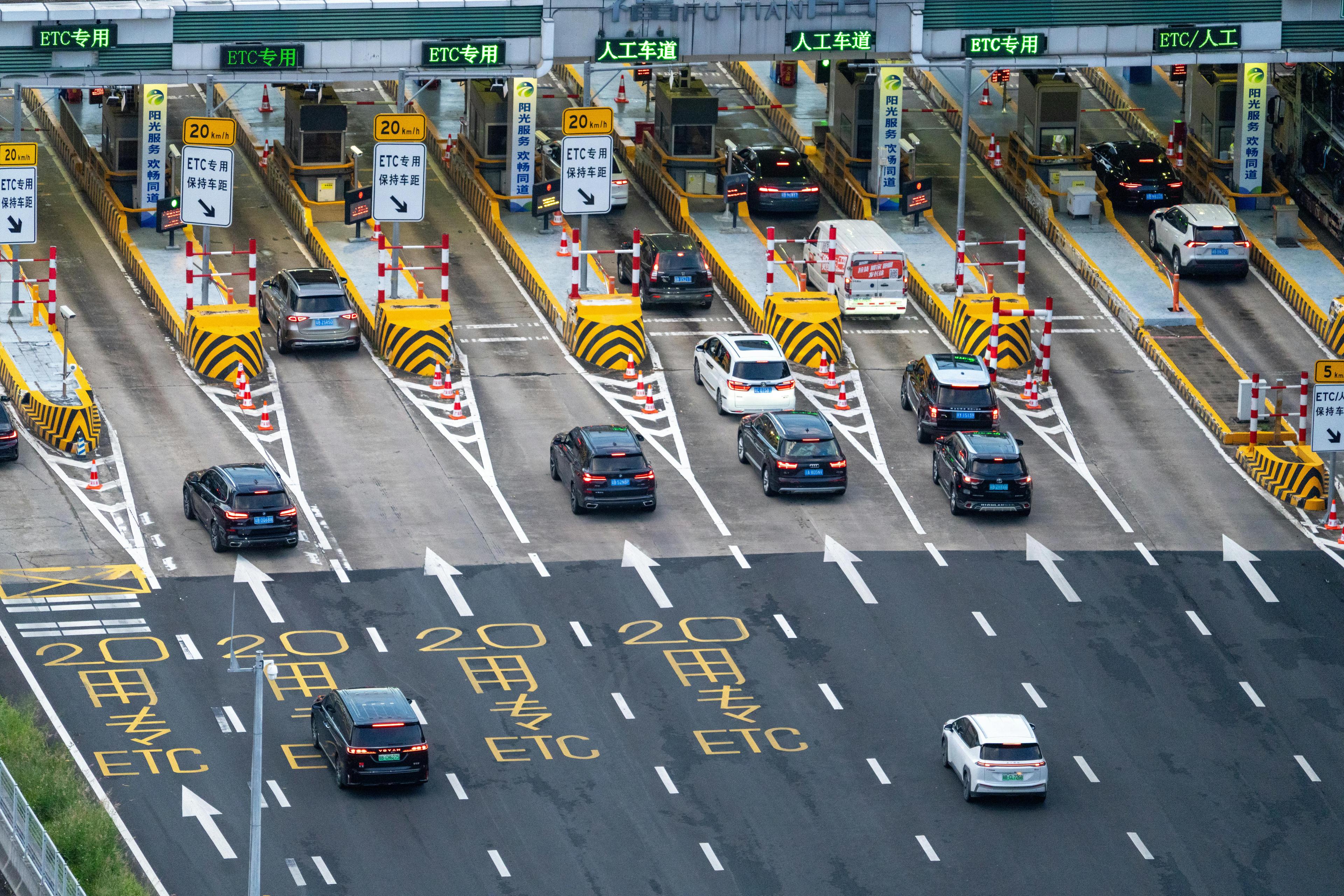
- Full-route toll (Class 1 sedan): ~22,800 KRW
- Class 2 SUV/van: ~23,500 KRW
- Hi-Pass discount: ~5% off, more during off-peak hours
- Speed through Hi-Pass lanes: 30 km/h max
- Lost ticket fee: Full-route toll regardless of where you actually entered
Ask the rental counter to confirm the Hi-Pass is active before you leave the lot. If it isn't, you'll need to take cash lanes (slower) and the rental company will bill you for any unpaid passes plus an admin fee. For a full breakdown, see our [Hi-Pass and toll guide](/journal/korea-hipass-toll-guide).
Must-Stop Rest Areas Along the Way
Korean expressway rest areas (휴게소, hyugaeso) are destinations in themselves. Think clean toilets, gas stations, EV chargers, convenience stores, and food courts with 10-20 vendors plating regional specialties. The Korea Expressway Corporation runs an EX-FOOD certification program — certified stops have passed strict quality audits.

Top 5 Rest Stops Heading South
- 1Anseong Rest Area (안성휴게소) — KM 67 — Famous for hanwoo (Korean beef) bibimbap and a huge outdoor lawn. First major stop south of Seoul.
- 2Cheonan-Samgeori Rest Area (천안삼거리휴게소) — KM 99 — Home of the original hodugwaja (walnut cookies), a Korean road-trip classic since 1934.
- 3Hwanggan Rest Area (황간휴게소) — KM 223 — The mid-point. Known for olgaengi-guk (freshwater snail soup) and excellent mountain views.
- 4Geumgang Rest Area (금강휴게소) — KM 134 — Riverfront views over the Geum River. Walnut sweets and old-school highway diner vibes.
- 5Chilgok Rest Area (칠곡휴게소) — KM 320 — Last big stop before Daegu. Try the Daegu napjak-mandu (flat dumplings).
You don't need to plan ahead — just pull off when you're hungry. Inline tip: rest stops have EV charging for electric rentals and accept foreign credit cards at gas pumps and food vendors, which isn't always the case off the highway. Bring a water bottle; the refill stations are free.
Best Detours Worth Adding
If you have two days instead of one, build a detour into the trip. The Gyeongbu Expressway runs past several of Korea's best stop-overs, and most add only 30-60 minutes to the total drive.

- Suwon Hwaseong Fortress (KM 30) — A 5.7 km UNESCO-listed fortress wall. Add 2-3 hours.
- Daejeon Hanbat Arboretum & Yuseong Hot Springs (KM 160) — Mid-trip soak and stretch. Add 2 hours.
- Mungyeongsaejae Provincial Park (KM 200, side road) — Three historic mountain passes and a sageuk-drama filming village. Add 3-4 hours.
- Gyeongju (KM 350, exit east) — Korea's 1,000-year-old Silla capital. Worth a full overnight.
- Andong Hahoe Folk Village (KM 250, exit east) — Joseon-era village. Add 3-4 hours plus the side-trip drive.
Gyeongju is the most-recommended overnight: park your car, walk the Tumuli Park burial mounds at sunset, and continue to Busan the next morning. The drive from Gyeongju to Busan takes only 1 hour, so you arrive fresh, well-rested, and with a stomach full of Gyeongju bread — the city's famous walnut-filled red-bean pastry. Hanok guesthouses around Hwangnidan-gil start around 70,000 KRW per night and put you within walking distance of Bulguksa Temple shuttles, Cheomseongdae (Asia's oldest observatory), and Donggung Palace and Wolji Pond, which is especially photogenic after dark when the pavilions are lit up against the water.
If Gyeongju feels like too much of a detour, Daejeon is the easiest mid-route break. Exit at the Daejeon IC around the 160 km mark, grab lunch in the old downtown, and you're back on the expressway in 90 minutes. The classic move is a bowl of kalguksu (handmade knife-cut noodles) near the old train station — try Sinsegye Kalguksu or Gwangcheon Sundae — followed by a quick walk through Hanbat Arboretum for the kids' legs to stretch. Daejeon's location at the convergence of multiple expressways makes it Korea's logistics hub, and it's also where most rental cars will pick up another 2,000-3,000 KRW of tolls if you exit and re-enter the highway.
When to Drive (and When Not To)
Korea's road network handles 50 million people in a country smaller than the US state of Indiana. On normal days it works beautifully. On Lunar New Year (Seollal), Chuseok (Korean Thanksgiving), and Korean summer vacation peak (late July to mid-August), it crawls. A 5-hour drive can take 10-12 hours during the worst holiday returns.

- Best months: April-May (mild weather, dry roads) and September-October (autumn foliage)
- Worst windows: Seollal week (Jan/Feb), Chuseok week (Sep/Oct), early August vacation peak
- Avoid: Friday 5-8 PM and Sunday 4-9 PM year-round
- Winter (Dec-Feb): Generally fine, but mountain sections south of Cheongju can ice up — check Naver Weather for road advisories
Quick Tips for the Drive
- 1Fuel up before leaving Seoul — expressway gas is 50-80 KRW per liter more expensive than city stations.
- 2Set Naver Map's voice to English in settings before you leave the parking lot; Korean-only TTS is hard to follow at 100 km/h.
- 3Speed cameras are everywhere and they don't care about rental cars — tickets follow you. Stay within +10 km/h of the posted limit.
- 4Average-speed (구간단속) zones measure your speed across a long stretch — slowing down right before the second camera doesn't work.
- 5Don't use the bus lane — the leftmost lane on weekends/holidays is restricted to buses and vans with 6+ passengers. Fines start at 70,000 KRW.
- 6Download Papago for offline translation in case you need to ask a rest-stop attendant for help.
FAQ
Frequently Asked Questions
Pick a low-traffic weekday, set Naver Map to Busan Station, and treat the rest stops as part of the trip rather than interruptions. The drive itself is the experience — Busan is the reward.
Share this article
You Might Also Like


Get Travel Inspiration
Subscribe for new stories, route guides, and driving tips delivered to your inbox.