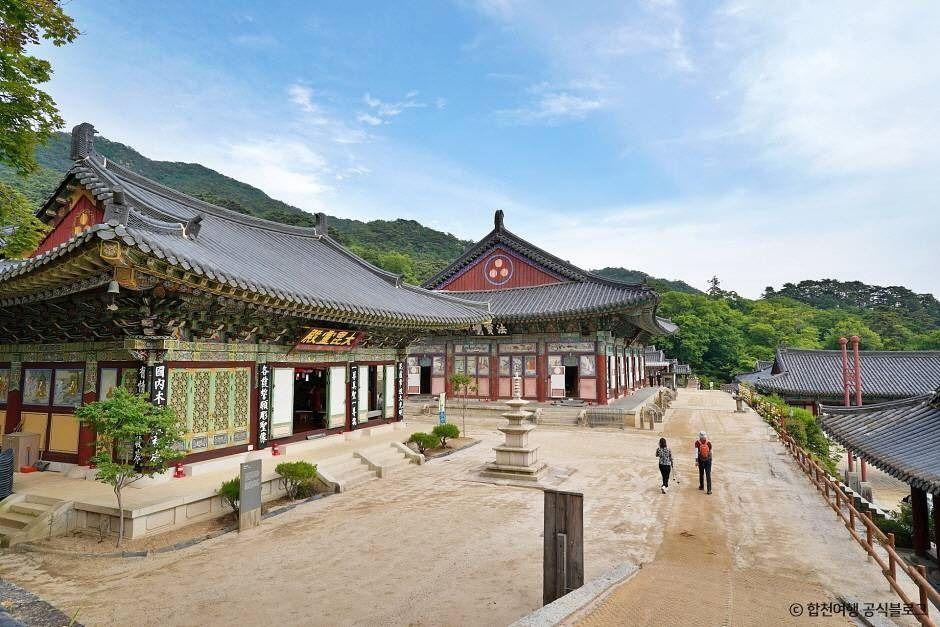
Haeinsa Temple Drive: Korea's UNESCO Buddhist Treasure and the Mountain Road That Takes You There
Most travelers to Korea stick to Seoul or make a quick hop to Busan. Very few make it to Haeinsa Temple — and that's exactly what makes it so special. Hidden in the southern mountains of Gayasan National Park, Haeinsa is home to the Tripitaka Koreana: 81,258 wooden printing blocks carved in the 13th century and still so well-preserved they could be printed from today. It's a UNESCO World Heritage Site, a living monastery, and one of the most serene places you'll find anywhere in East Asia.
Getting there by rental car is the best way to do it — the mountain roads through Gayasan are half the experience. This guide covers the drive from Daegu or Busan, what to see at the temple, and how to make a full day of it.
The Drive: Getting to Haeinsa
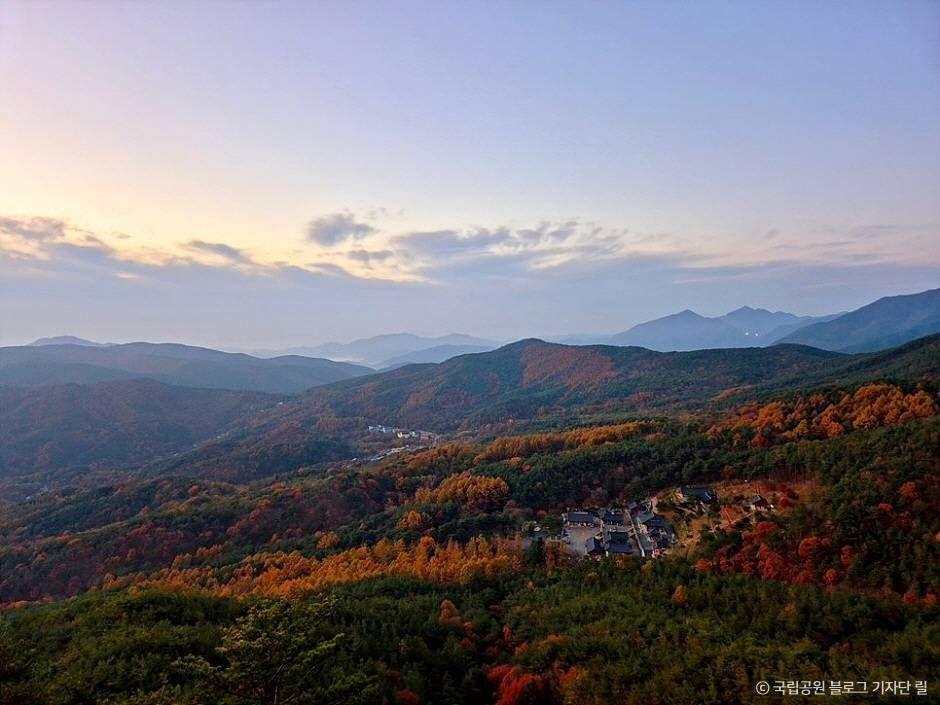
Haeinsa sits in Hapcheon County in South Gyeongsang Province, roughly 80 km west of Daegu and 120 km northwest of Busan. From Daegu, the drive takes about 1 hour on the Jungang Expressway (중부내륙고속도로, Route 45) — exit at Haeinsa IC and follow Route 59 up into the mountains. The last 12 km through the national park is a winding forest road lined with pine and oak trees, especially beautiful in summer when the canopy closes overhead.
From Busan, take the Namhae Expressway (Route 10) northwest to the Hapcheon IC, then head north through Hapcheon town to reach the temple approach road. Budget about 1.5–2 hours depending on traffic in Busan. Toll fees run approximately 3,000–6,000 KRW from Daegu or 5,000–9,000 KRW from Busan.
- From Daegu: ~80 km, ~1 hour via Route 45 → Haeinsa IC → Route 59
- From Busan: ~120 km, ~1.5–2 hours via Namhae Expressway → Hapcheon IC
- From Seoul: ~250 km, ~2.5–3 hours via Gyeongbu Expressway to Daegu, then Route 45
- Parking: Large paid lot at the temple entrance (3,000 KRW/day)
- Tip: Arrive before 10 AM to beat tour groups — temple opens at 8:30 AM
The Tripitaka Koreana: 81,258 Woodblocks That Survived Everything
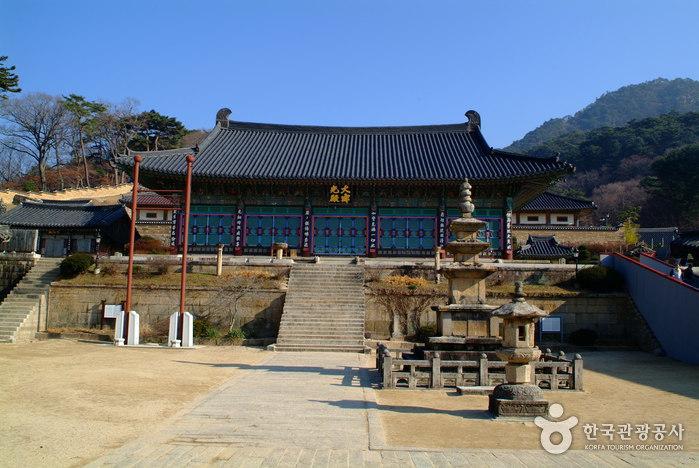
The Tripitaka Koreana was carved between 1237 and 1251 during the Goryeo dynasty, when the Korean people prayed for divine protection against Mongol invasions by committing the entire Buddhist canon to wood. The project took 16 years and involved carving over 52 million Chinese characters across 81,258 blocks — each block measuring about 70 cm long and 24 cm wide. The result is the most complete and accurate version of the Tripitaka in the world.
What makes Haeinsa extraordinary is not just the blocks themselves, but how they've survived 800 years in pristine condition. The Janggyeong Panjeon (장경판전) — the four wooden halls that house the blocks — were built in the late 15th century using an ingenious passive ventilation system. The windows are different sizes on the north and south walls, creating airflow that regulates temperature and humidity without any technology. The floors contain layers of charcoal, salt, calcium oxide, and sand that absorb moisture and prevent insects. No other system has ever been needed.
Visitors can walk up to the Janggyeong Panjeon and peer through the latticed windows to see the woodblocks stacked inside, but the buildings themselves are not open to the public — a wise preservation choice. The UNESCO designation covers both the blocks (1995) and the storage buildings independently.
Exploring the Haeinsa Temple Grounds
Haeinsa is a working monastery — monks live and practice here year-round. As you climb through the temple's tiered courtyards, you'll pass the Iljumun Gate (일주문, the single-pillar gate that marks the entrance to sacred space), the Cheonwangmun (천왕문, Guardian Kings Gate), and a series of pavilions and prayer halls ascending the mountain. The main hall, Daejeokkwangjeondaegwangmyeongjeon, sits at the top of the complex.
If you time it right, you may hear monks chanting — morning and evening prayer services create an atmosphere unlike anything else in Korea. The walk from the parking lot to the Janggyeong Panjeon takes about 20–30 minutes and involves a fair number of stone steps. Comfortable shoes are essential.
- Entry fee: Adults 3,000 KRW / Teens 1,500 KRW / Children 1,000 KRW
- Hours: 8:30–18:00 (last entry 17:30)
- Time needed: 2–3 hours for the full complex including Janggyeong Panjeon
- Dress code: No specific restrictions, but cover shoulders out of respect
- Photography: Allowed in most areas; always ask before photographing monks
The Gayasan Forest Trail (소리길)
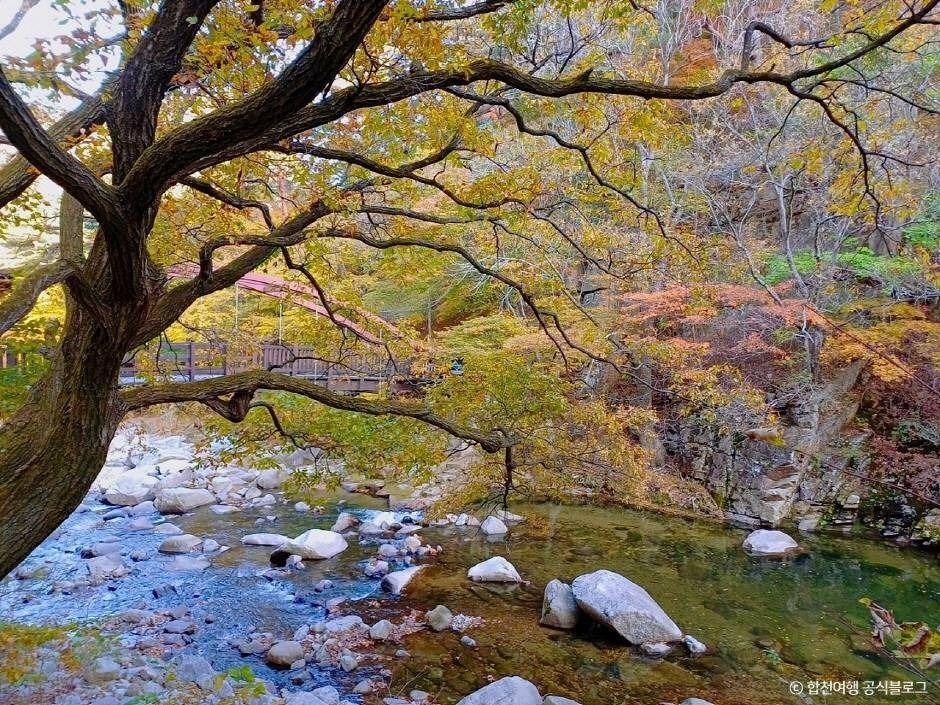
If you have extra time or want a walk before hitting the temple, the Sorigil (소리길, 'Sound Road') is a 6 km forest trail that follows the 홍류동 stream from the village of Chiin-ri up through old-growth forest toward the temple entrance. The trail is almost entirely flat, following the valley floor under a dense canopy — perfect for hot summer days. The name comes from the sound of wind, water, and birdsong that fills the air.
The trailhead starts near the parking lot. Give yourself about 1.5 hours one-way (or 3 hours round trip) at a relaxed pace. In spring, wild azaleas color the hillsides; in summer, the shade makes it one of the coolest walks in the south. If you only want a taste, the first 20 minutes along the stream are the most scenic.
Where to Eat: Temple Food and Mountain Vegetables
The village at the bottom of the temple approach has a cluster of restaurants specializing in 산채비빔밥 (mountain vegetable bibimbap) — a fitting meal after a morning in a Buddhist monastery. Wild greens foraged from Gayasan's slopes are served fresh with rice, chili paste, and sesame oil. Portions are generous and prices reasonable at 10,000–15,000 KRW per person.
For something more substantial, look for 사찰음식 (temple food) restaurants serving the traditional Korean Buddhist vegetarian cuisine — no meat, no garlic, no onion, no eggs, no alcohol. The flavors are subtle and the ingredients impeccably fresh. It's a very different dining experience and worth trying at least once.
Quick Tips
- 1Arrive early: The temple is busiest 10 AM–2 PM with tour groups. Beat them by arriving at opening (8:30 AM).
- 2Combine with Hapcheon: The nearby Hapcheon Space Center and Hwangmaesan Mountain are worth an afternoon detour if you stay overnight.
- 3Weather: The mountain approach can be foggy in early morning — this actually makes for dramatic photos. In summer, carry water; the climb is humid.
- 4Autumn timing: Gayasan's fall foliage (late October–mid November) is among the most spectacular in Korea. The approach road turns completely red and gold.
- 5Navi tip: Set your GPS to '해인사' (Haeinsa) or use coordinates 35.8028° N, 128.0987° E — some older GPS units struggle with the mountain road name.
FAQ
Frequently Asked Questions
Haeinsa isn't a quick stop — it rewards the time you give it. The drive through Gayasan sets the tone, the temple's layered courtyards tell 1,200 years of history, and the woodblocks in their ancient halls are genuinely awe-inspiring. Rent a car, take the mountain road, and give yourself a full day.
Share this article
You Might Also Like


Get Travel Inspiration
Subscribe for new stories, route guides, and driving tips delivered to your inbox.