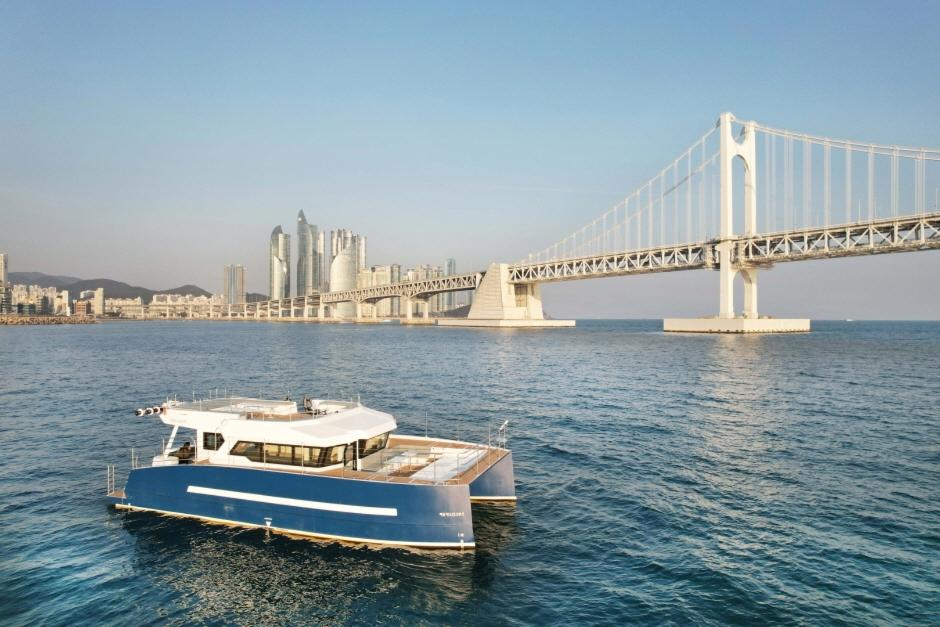
Haeundae Beach Busan: Complete Guide for Visitors in 2026
Haeundae Beach (해운대해수욕장) is the number one beach destination in Korea, drawing nearly 10 million visitors every summer. Located in Busan, Korea's second-largest city, it combines a long stretch of white sand with a buzzing seafood market, an iconic island walk, and one of the best hotel strips in the country. Here's everything you need for a great visit.
Getting to Haeundae
From central Busan, the easiest option is Busan Metro Line 2 — exit at Haeundae Station (Exit 3 or 5) and walk about 7 minutes to the beach. The journey from Seomyeon Station takes roughly 25 minutes. If you're arriving from Seoul or another city, the KTX to Busan Station takes about 2.5 hours, then the subway gets you to Haeundae in another 30–40 minutes.
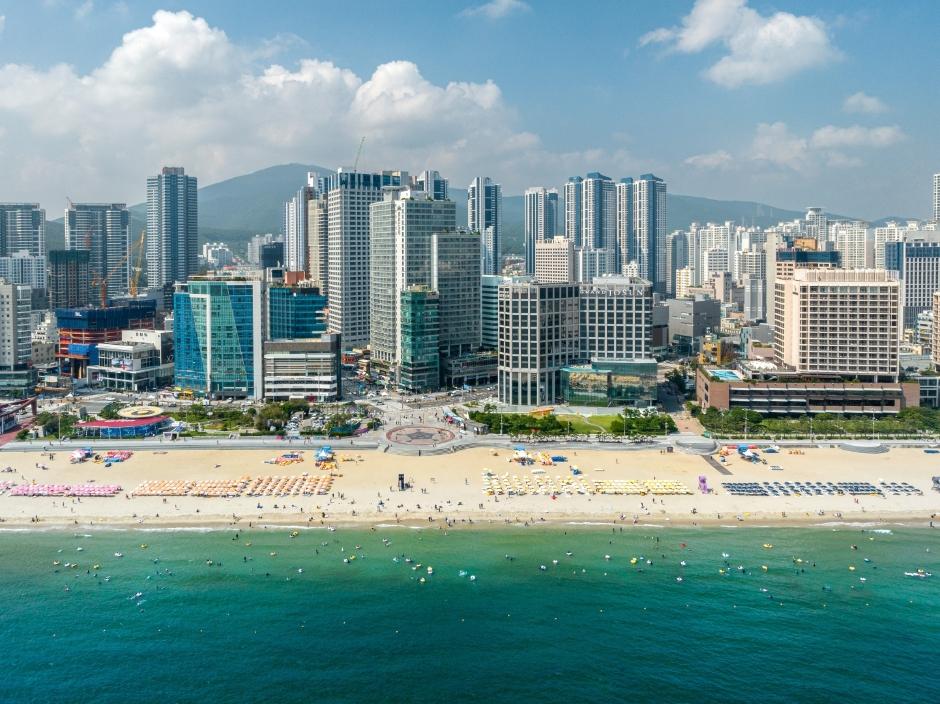
Driving from Seoul takes about 4–4.5 hours via the Gyeongbu Expressway (1) toward Busan. Once in the city, follow signs for 해운대구. Parking around the beach is scarce and expensive on summer weekends — the Haeundae Blueline Park parking lot and the Haeundae Culture Center underground lot are your best bets. Budget around 2,000–3,000 KRW per 10 minutes in high season.
- Subway: Line 2 → Haeundae Station, Exit 3 or 5 (7-min walk)
- From Seoul KTX: Busan Station → Line 1 to Seomyeon → transfer Line 2 to Haeundae
- By car from Seoul: ~4.5 hrs via Gyeongbu Expressway; arrive before 09:00 on summer weekends
- Taxi from Busan Station: ~25 min, ~15,000–18,000 KRW
The Beach: What to Expect
Haeundae Beach stretches 1.5 km in a gentle crescent, backed by a boulevard lined with luxury hotels, seafood restaurants, and convenience stores. The sand is soft and relatively clean, the water temperature peaks at around 25°C in late July and August — warm enough for comfortable swimming. Lifeguards are on duty from late June through August, and designated swimming zones are clearly marked with buoys.
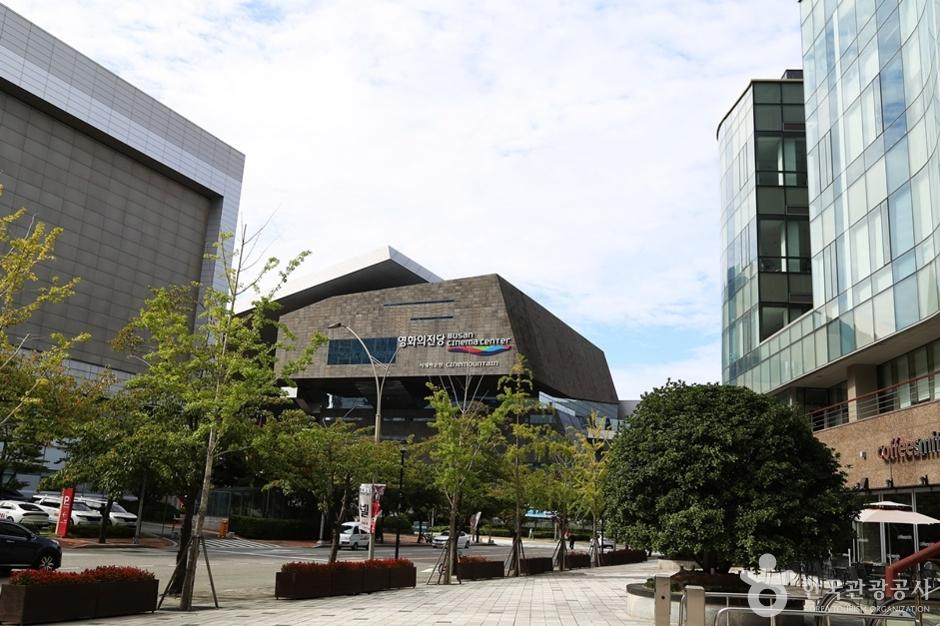
Peak season is late July and early August when the beach gets genuinely packed — expect to share the sand with hundreds of thousands of visitors on a summer weekend. If you prefer a quieter experience, early June and September offer pleasant weather with far smaller crowds. The beach is open year-round; winter walks along the shore are surprisingly peaceful.
- Best swimming: July 15 – August 31 (official season with lifeguards)
- Quieter visits: June, September — warm enough but far fewer people
- Facilities: showers, changing rooms, umbrella rentals (~10,000 KRW/day), food stalls
- Sunbed + umbrella set: ~20,000–30,000 KRW per day in peak season
Dongbaek Island & APEC House
At the western end of the beach, a short causeway leads to Dongbaek Island (동백섬) — technically a peninsula now that it's connected to the mainland. The walking trail around the island takes about 30 minutes and rewards you with views of the entire Haeundae bay, the Gwangan Bridge in the distance, and the striking Nurimaru APEC House, where the 2005 APEC summit was held. Entry to the island and APEC House grounds is free.
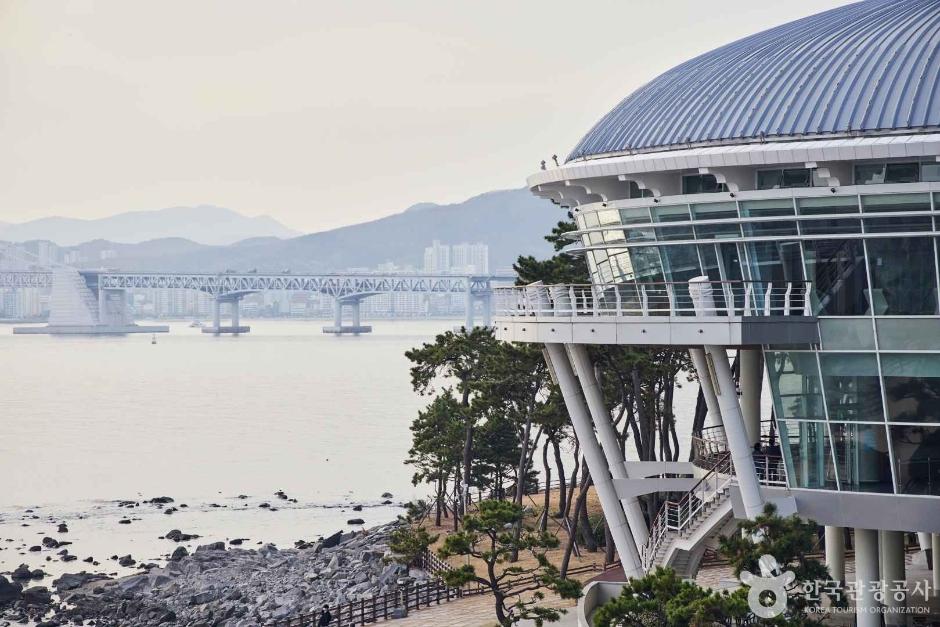
The island is named for its camellia trees (동백꽃, dongbaek), which bloom in vivid red from November through March — a spectacular contrast to the winter sea. In summer the canopy provides welcome shade. Photographers love the spot just beyond the APEC House where you get a clean shot of the Gwangan Bridge over the bay.
Haeundae Market & Seafood
Haeundae Traditional Market (해운대전통시장) sits just a few minutes' walk from the beach and is one of the best places in Busan to eat affordably. The market is famous for ssiat hotteok (씨앗호떡) — a thick pancake filled with seeds, honey, and brown sugar that's become a Busan street-food icon. Budget around 1,500–2,000 KRW per piece and expect a queue.
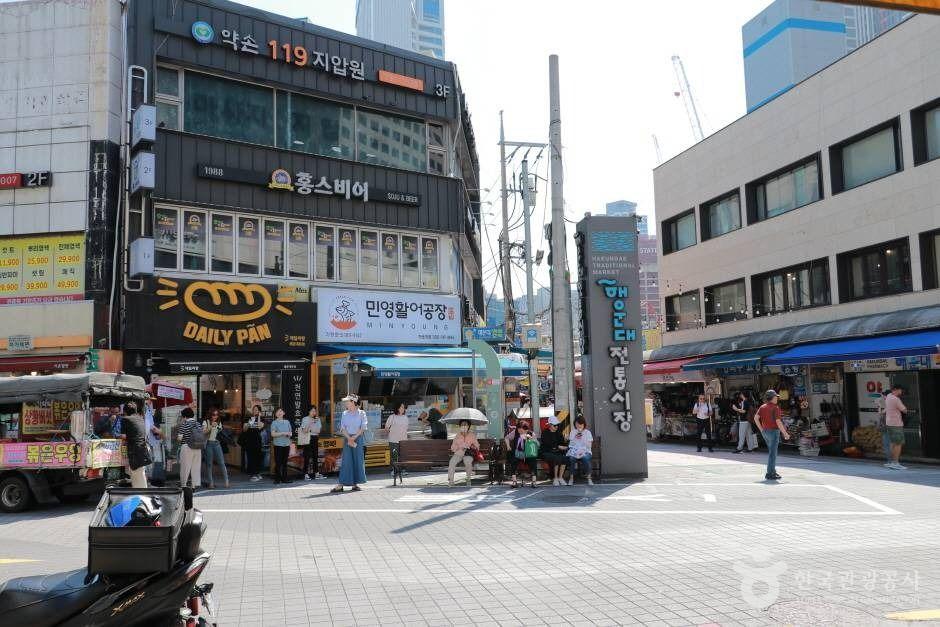
For a sit-down seafood meal, the Haeundae Raw Fish Town (해운대횟집거리) near the east end of the beach specializes in hweh (회, Korean-style sashimi). A fresh mixed platter for two people typically runs 40,000–70,000 KRW depending on the fish and season. Don't miss haemul pajeon (seafood pancake) — crispy, loaded with octopus and green onion, and perfect with a cold bottle of makgeolli.
- Ssiat hotteok: 1,500–2,000 KRW (market stalls, queue expected)
- Hweh (sashimi) platter for 2: 40,000–70,000 KRW at Raw Fish Town
- Haemul pajeon: ~8,000–12,000 KRW per pan
- Convenience stores: GS25 and CU on every block — beer, kimbap, ice cream
Haeundae Blueline Park
Just east of the main beach, the Haeundae Blueline Park (블루라인파크) follows a former railway line along the cliffs for about 4.8 km to Songjeong Beach. You can ride it in two ways: by sky capsule (a colorful glass cabin suspended above the track, ~35,000 KRW per capsule for 2) or on a beach train (a slow heritage tram, ~5,000 KRW). Both offer incredible views of the East Sea and access to smaller, less crowded beaches along the route.
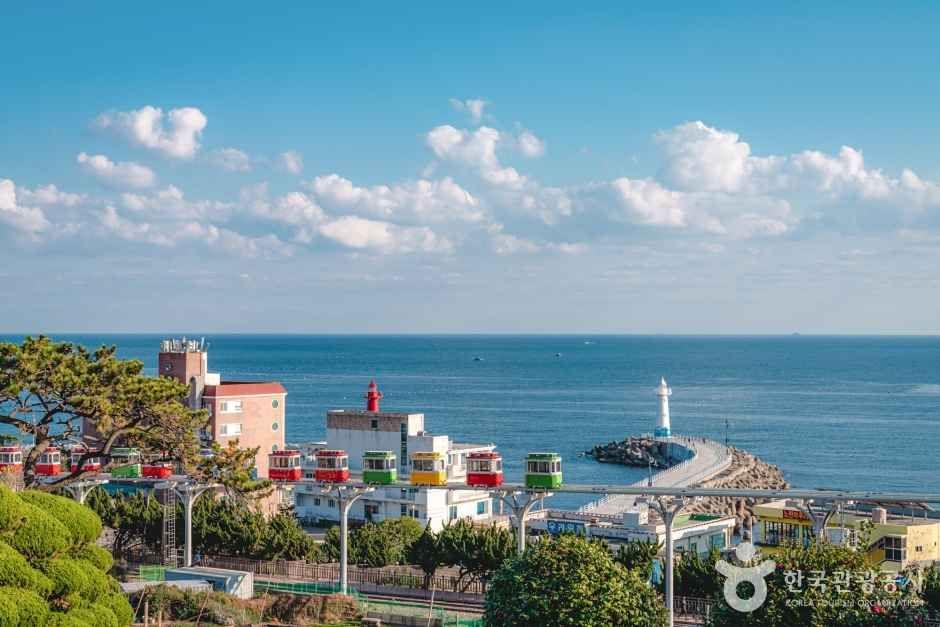
Sky capsule tickets sell out fast in summer. Book through the Blueline Park official website at least 3–7 days ahead for July and August weekends. The park also has a small café and lookout near Cheongsapo midway along the route, where twin lighthouses stand on a rocky headland — a great photo stop.
Dalmaji Hill
Dalmaji Hill (달맞이 고개) is a winding wooded ridge road connecting Haeundae to Songjeong Beach. It's famous for cherry blossoms in April, but the real year-round draw is the cluster of art galleries, cafés, and restaurants perched along the hillside with sea views. The walk from the beach takes about 20 minutes uphill — or you can drive the scenic loop road and park near one of the cafés.
Quick Tips
- 1Book accommodation early. Haeundae hotels fill up weeks in advance for July–August. Budget guesthouses in nearby Gwangan are cheaper and only one subway stop away.
- 2Go early or late. The beach is manageable before 09:00 and after 18:00 even in peak summer — midday is the crush.
- 3Bring cash for the market. Most traditional market stalls don't take cards. Nearest ATM is inside the GS25 near Haeundae Station.
- 4Check the water quality flag. A red flag means no swimming — Busan gets occasional jellyfish blooms in August.
- 5Gwangan Bridge night view. After dark, walk 20 minutes east along the shore to see the Gwangandaegyo (Diamond Bridge) lit up — or grab a seat at a beachfront bar in Gwangalli.
FAQ
Frequently Asked Questions
Haeundae has a well-deserved reputation as Korea's premier beach destination. Whether you're after a full day of swimming, a seafood feast, or just a coastal stroll, it delivers. Pair it with a Busan road trip — Gamcheon Culture Village is 30 minutes by car — and you've got an easy weekend sorted.
Share this article
You Might Also Like


Get Travel Inspiration
Subscribe for new stories, route guides, and driving tips delivered to your inbox.