Juwangsan National Park by Car: Korea's Most Dramatic Canyon Drive
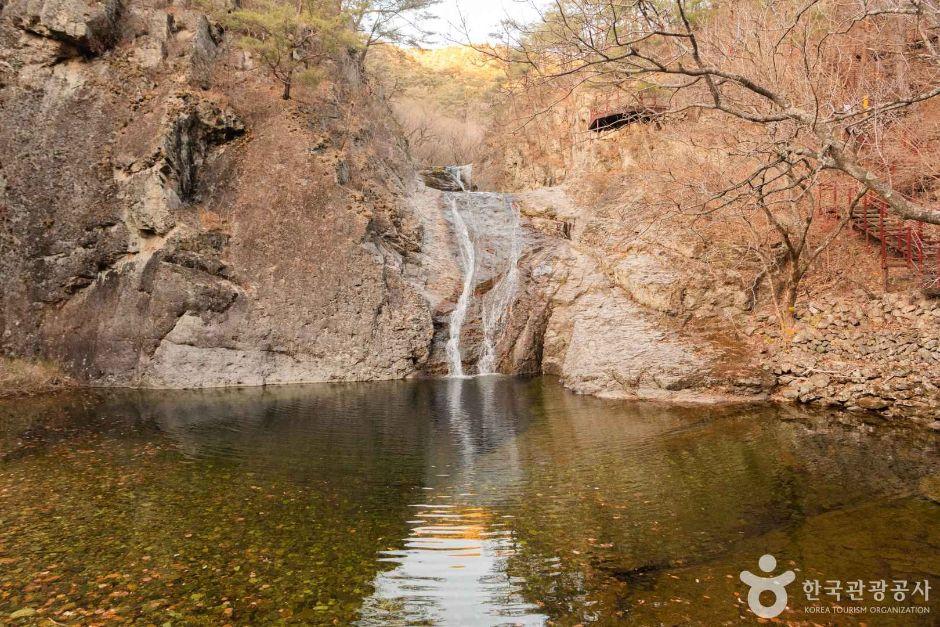
Most visitors to Korea's national parks head straight to Seoraksan or Jirisan. That leaves Juwangsan National Park (주왕산) almost entirely to Koreans — which is exactly why you should go. Deep in Cheongsong County (청송군) in North Gyeongsang Province, this park is a canyon carved through ancient volcanic rock, with narrow gorges, sheer basalt cliffs, and three consecutive waterfalls you can reach on a single flat trail. Add the mystical Jusan Pond (주산지) — where century-old weeping willows grow directly out of the water — and you have one of the most photogenic day drives in the country.
Juwangsan was designated as Korea's 12th National Park in 1976 and sits within the Cheongsong UNESCO Global Geopark, recognised for its extraordinary volcanic rhyolite formations. The park is compact enough to explore in a single day, but it rewards those who combine it with nearby Jusan Pond and a stop in Cheongsong Town for the region's famous apples and mountain herb cuisine.
Getting to Juwangsan: Routes from Seoul, Daegu, and Pohang
Juwangsan has no nearby train station and no public bus from Seoul — this is genuinely a drive-only destination. The standard approach from Seoul is to take the Jungang Expressway (Route 35) south past Wonju and Yeongju, then exit toward Andong and continue east on local roads into Cheongsong. The total distance is about 280 km and takes roughly 3 hours without traffic. Budget 20,000–22,000 KRW in expressway tolls one way.
From Daegu the park is about 100 km northeast, with a drive time of around 1 hour 30 minutes via the Jungang Expressway north to the Cheongsong area. From Pohang on the east coast it's a similar 80 km and 1 hour 20 minutes heading inland. If you're on a wider North Gyeongsang road trip, Juwangsan pairs naturally with Andong Hahoe Village (60 km west) and Gyeongju (100 km south) for a two-day loop.
- Seoul → Juwangsan: ~280 km, ~3 hours, tolls ~20,000 KRW one-way
- Daegu → Juwangsan: ~100 km, ~1h30m via Jungang Expressway
- Pohang → Juwangsan: ~80 km, ~1h20m inland
- Andong → Juwangsan: ~60 km, ~1 hour via National Road 34
- Parking: Large free lot at Daejeongsa Temple entrance (대전사 주차장)
- Naver Map search: 주왕산국립공원 또는 대전사 (청송군)
Daejeongsa Temple: The Canyon Gateway
You enter Juwangsan through the Daejeongsa Temple (대전사) complex, a working Buddhist temple with roots tracing to the Silla dynasty in the 7th century. The three main halls — Bogwangjeon, Geuknakjeon, and Sangseongjeon — are designated cultural heritage properties and sit directly at the foot of the canyon walls. Admission to the temple is free, and it's worth spending 15–20 minutes here before the trail begins.
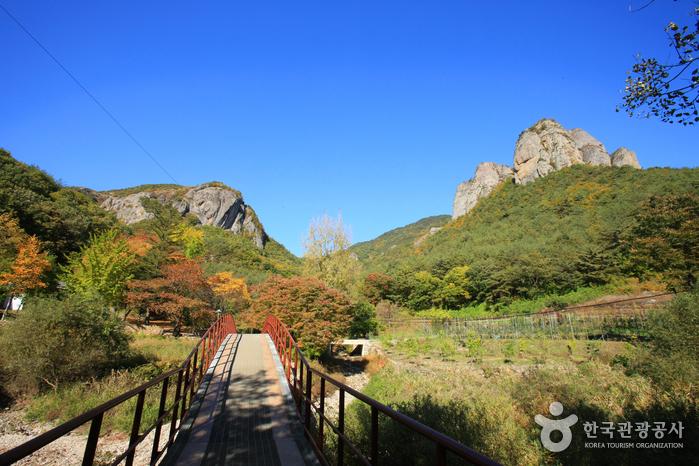
The path from the parking lot to the temple takes about 10 minutes on foot and immediately puts the scale of the cliffs into perspective. The rhyolite rock face behind Daejeongsa rises vertically for over 200 metres, with natural ledges and overhangs that shelter the temple buildings. On a clear summer morning the rock face catches the early light in a way that makes the park feel almost prehistoric.
- Entry fee: 3,000 KRW adults, 1,500 KRW youth, children under 7 free
- Temple hours: Open year-round during daylight hours
- Parking: Free; large lot can fill on summer weekends by 10 a.m.
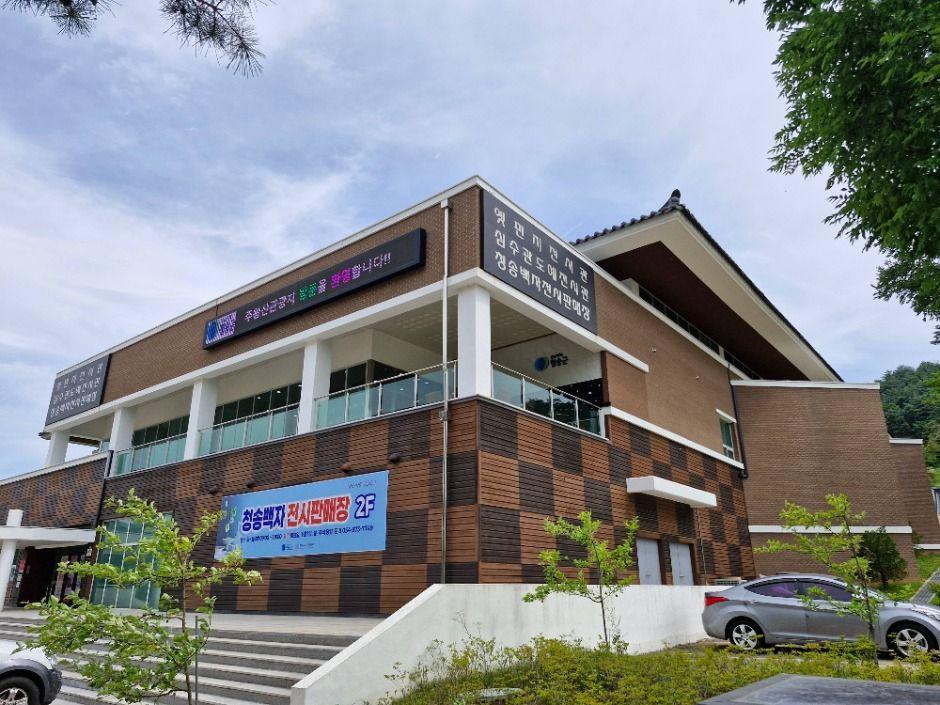
- Facilities: Restrooms, snack stalls, and trail maps at the entrance
The Canyon Trail: Three Waterfalls Through the Gorge
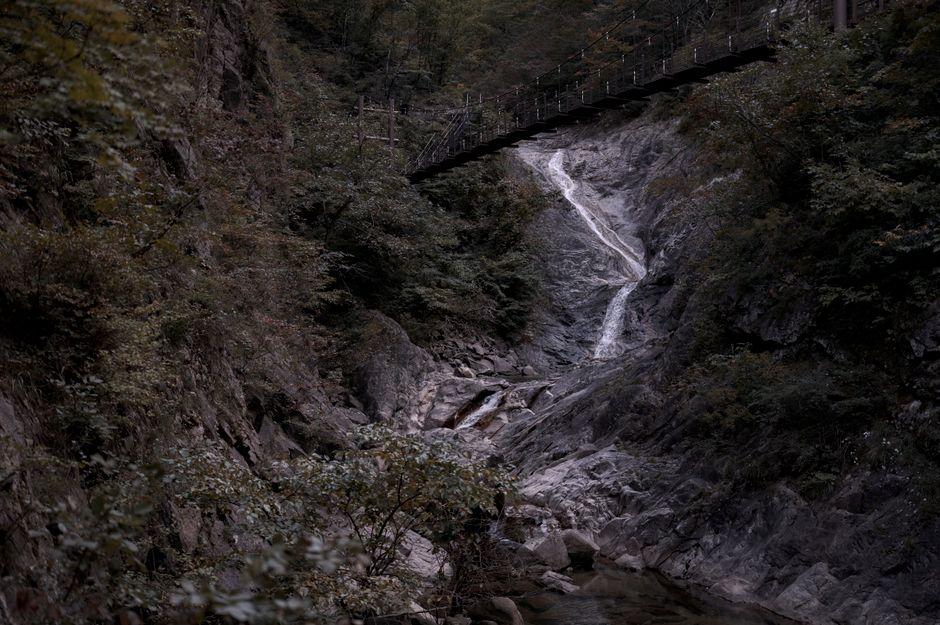
The Juwang Valley Trail (주왕계곡 탐방로) is the park's signature walk — a nearly flat path that follows a mountain stream through progressively narrower canyon walls to three consecutive waterfalls. The trail is well-maintained and suitable for most fitness levels, including families with older children. The round trip to the 3rd waterfall and back is approximately 7–8 km and takes 3–4 hours at a comfortable pace with stops for photos.
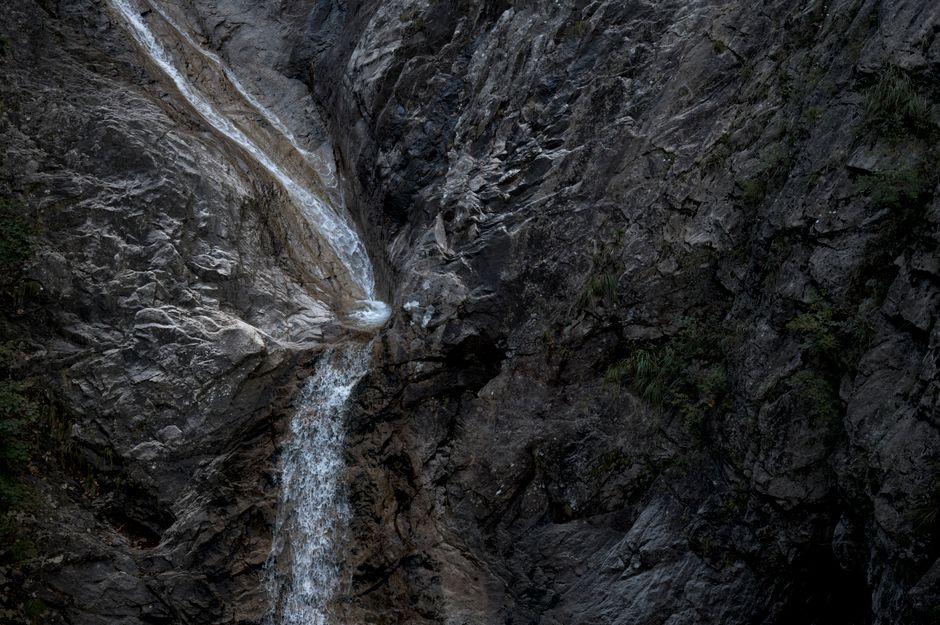
The first major feature is Garyonggul Cave (가룡굴), a dramatic hollow in the canyon wall about halfway to the 1st waterfall, where mist from the stream keeps the air noticeably cool even in midsummer heat. The 1st Waterfall (제1폭포) drops into a clear pool in a wide section of the gorge. The 2nd and 3rd waterfalls are more powerful, with the 3rd set against the widest span of bare cliff in the park. In June and July after rainfall, all three waterfalls run at full strength — the trail is at its most dramatic during Korea's rainy season.
- Trail start: Behind Daejeongsa Temple
- Total distance: ~7–8 km round trip to 3rd waterfall
- Estimated time: 3–4 hours with photo stops
- Difficulty: Easy to moderate — mostly flat with some gentle sections
- Best season for waterfalls: June–August (peak rainy season flow)
- Side stop: Garyonggul Cave — naturally cool, great for summer breaks
Jusan Pond: The Secret Willow Reservoir
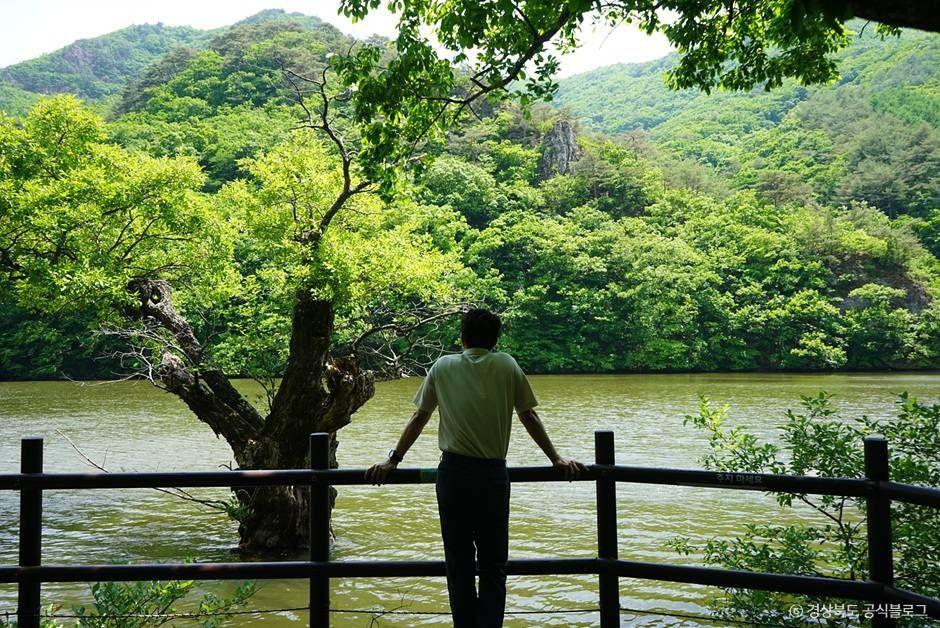
About 2 km from the main park entrance by car, Jusan Pond (주산지) is the hidden gem of the Juwangsan area — and one of the most photographed spots in all of North Gyeongsang Province. This artificial reservoir was built in 1720 during the Joseon dynasty for irrigation, and over three centuries the trees along its banks have grown directly into the water. Ancient Japanese weeping willows rise from the shallows on gnarled roots, their branches trailing across the surface, surrounded by the canyon-ridge skyline.
From the small parking area it's a 10-minute walk on a flat forest path to the observation point at the water's edge. Early morning in summer is extraordinary here — mist rises from the warm water as cooler air flows down from the ridges, and the willows catch the light in a way that feels entirely removed from the national park crowds. The pond was a filming location for Korean director Kim Ki-duk's 2003 film 'Spring, Summer, Fall, Winter... and Spring', which introduced it to international art cinema audiences.
- Distance from main park: ~2 km by car, separate parking area
- Walk from parking: 10 minutes on flat forest path
- Entry: Included in national park ticket
- Best time: Early morning (before 8 a.m.) for mist photography
- Famous as: Filming location for Kim Ki-duk's 'Spring, Summer, Fall, Winter... and Spring' (2003)
Quick Tips for Your Juwangsan Drive
Juwangsan rewards early arrivals — the parking lot fills by 10 a.m. on summer weekends, and the canyon trail gets crowded between 11 a.m. and 2 p.m. Arriving at 8 a.m. gives you the waterfall trail in near-silence, with a good chance of wildlife spotting (the park has a healthy population of deer and small raptors). The gorge is naturally cooler than the surrounding countryside by several degrees, making it a genuine escape from summer heat.
- 1Arrive early: Aim for 8–9 a.m. to beat tour buses and get the parking lot (free, but limited on busy weekends)
- 2Bring trail shoes: The path is mostly flat but can be slippery near the waterfalls after rain — sandals are risky
- 3Combine with Jusan Pond: It adds only 30 minutes of driving and is best visited at dawn before the main park opens
- 4Local food: Cheongsong is famous for 사과 (apples) and 산채비빔밥 (mountain herb bibimbap) — try the restaurants near the park entrance
- 5Avoid Chuseok and peak summer weekends: The park sees heavy domestic traffic in late July and August
- 6Cell service: Patchy inside the canyon — download offline maps before arriving
FAQ
Frequently Asked Questions
Juwangsan is the kind of national park that surprises you — the canyon walls are taller than you expect, the waterfalls louder, and the Jusan Pond mist more otherworldly. Book your rental car early for summer weekends and plan to stay the night in Cheongsong so you can see the pond at dawn.
Share this article
You Might Also Like


Get Travel Inspiration
Subscribe for new stories, route guides, and driving tips delivered to your inbox.