Korea's Best Waterfalls: A Complete Summer Driving Guide
Korea doesn't advertise its waterfalls the way it does its palaces or beaches, but the country has some genuinely spectacular cascades — hidden in national parks, tumbling off seaside cliffs, and roaring through volcanic rock channels. With a rental car, you can reach most of them in a single day. Here's a region-by-region guide to the best waterfall drives in Korea.
Jeju Island: Cheonjiyeon & Jeongbang Falls
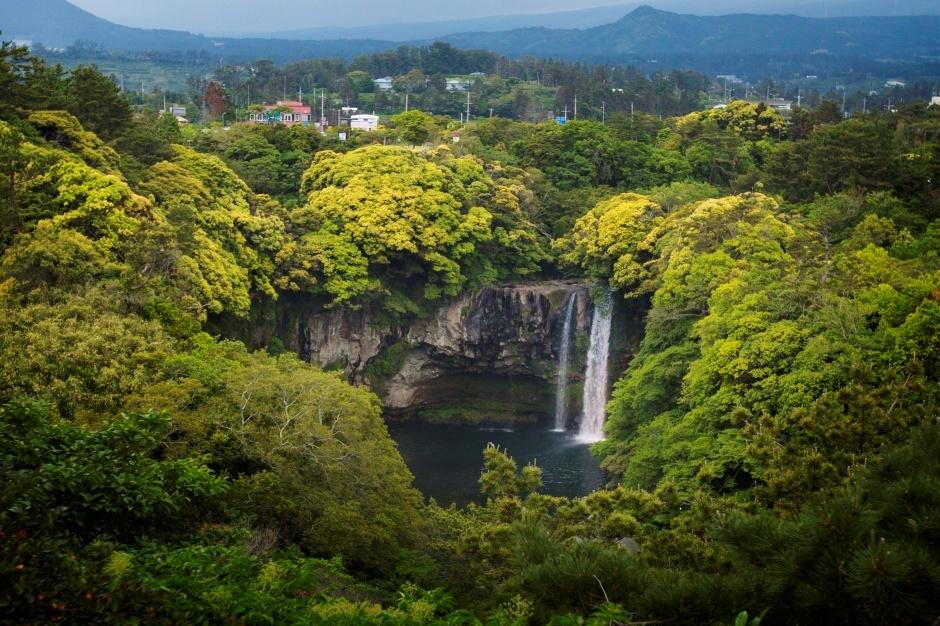
Jeju's two most famous waterfalls sit within a few kilometers of each other near Seogwipo on the island's south coast. Cheonjiyeon Waterfall (천지연폭포) drops 22 meters into a deep, dark pool surrounded by subtropical forest — the name means 'the pond where heaven and earth meet.' The walking path to the base is well-maintained and lit, making it one of the few Korean waterfalls you can visit safely at night.
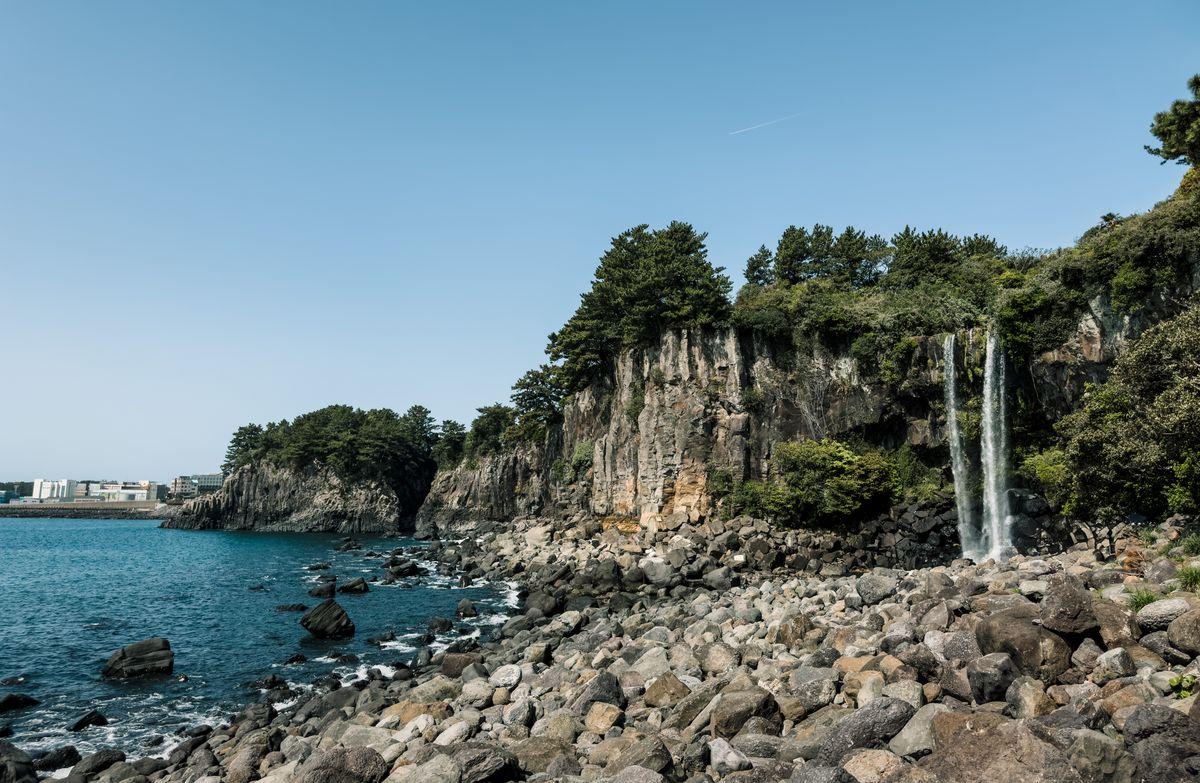
Just a short drive away, Jeongbang Waterfall (정방폭포) is the real showstopper: it falls 23 meters directly into the East Sea, making it one of only two waterfalls in Asia that plunges straight into the ocean. Standing at the base with waves crashing around your feet is genuinely breathtaking. The walk from the parking area takes about 10 minutes on a stone path.
- Cheonjiyeon Falls: Open 08:30–21:00 (last entry 20:00); 2,000 KRW entry
- Jeongbang Falls: Open 08:00–19:00; 2,000 KRW entry
- Parking: Both have dedicated lots; 1,000–2,000 KRW
- Tip: Visit Jeongbang in the morning — sun lights the cliff face directly from the east
- Combine with: Oedolgae Rock & Seogwipo Olle Trail #6
Near Seoul: Bidulginang Falls in Pocheon
Just 90 minutes north of Seoul off Route 3, Bidulginang Waterfall (비둘기낭 폭포) is one of Korea's most unusual natural formations. The waterfall drops into a perfect circular pool carved from columnar basalt — the same type of volcanic rock found on Jeju. The pool's emerald-green water and the surrounding hexagonal rock columns make it look almost unreal. It's part of the Hantan River UNESCO Global Geopark, and there's no entry fee.
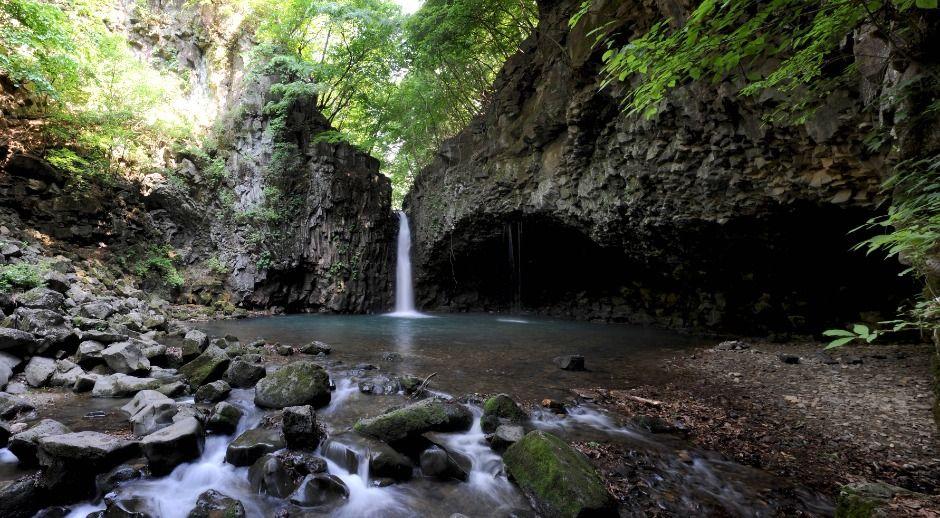
The short trail down to the waterfall (about 300 meters) can get slippery in wet weather — wear proper shoes. The pool is not a designated swimming area, but photography from the viewing platform is excellent. Combine this with a drive along the Hantan River Suspension Bridge (한탄강 하늘다리) nearby for a full day out from Seoul.
- Entry: Free; small parking fee (2,000 KRW)
- Drive from Seoul: ~90 minutes via Route 3 or Gyeonggi-Bukbu Expressway
- Trail: 300m walk down to the viewing platform
- Combine with: Hantan River suspension bridge, Pocheon Art Valley
- Photography tip: Best light in early morning or late afternoon
Gangwon Province: Biryong Falls & More
Gangwon Province is home to Korea's most dramatic mountain waterfalls. Biryong Falls (비룡폭포) in Seoraksan National Park near Yangyang drops 40 meters through a gorge of sheer granite cliffs — 'Biryong' means 'flying dragon,' named for the shape of the mist that rises from the pool below. The trail from Oseak Hot Spring village takes about 30–40 minutes on a well-marked path.
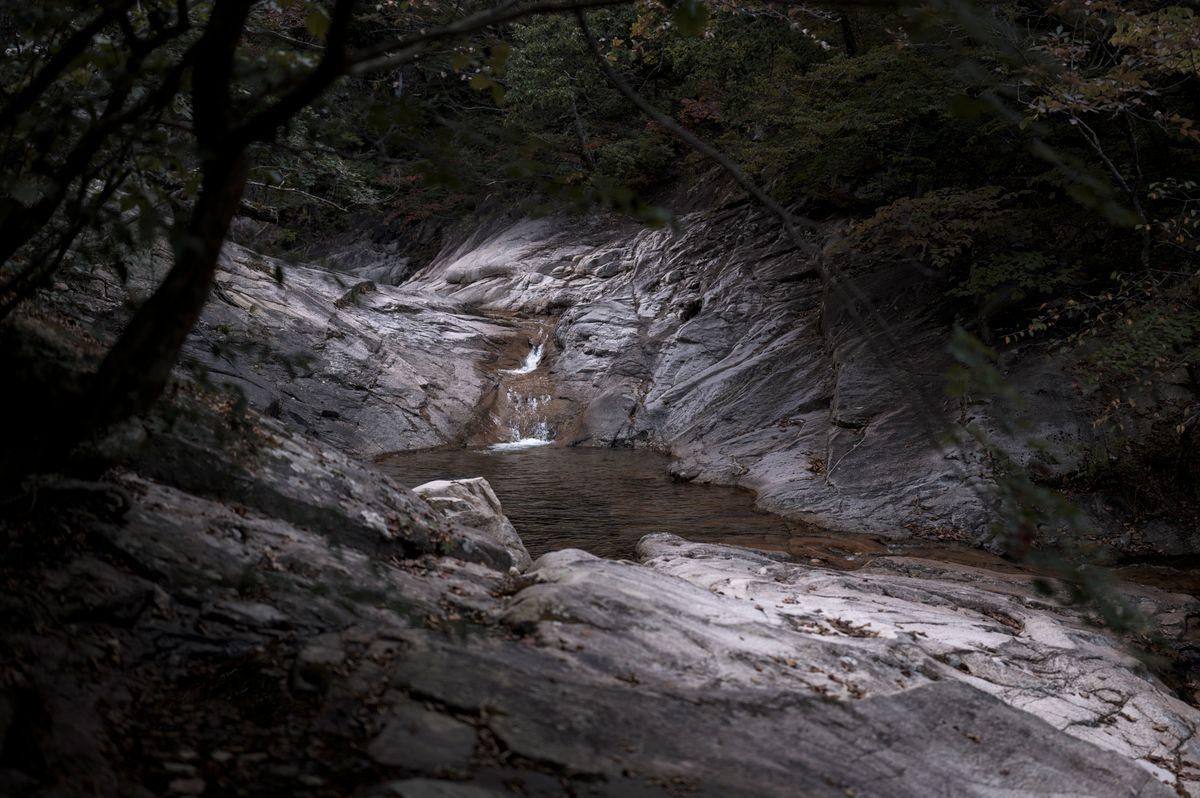
Further inland in Inje County, the Sibiseon Waterfall Trail (십이선녀폭포) follows a gorge with 12 consecutive falls — you can hike as far as you like, with each waterfall bigger than the last. From Seoul, the drive takes about 2.5 hours, but the stretch of Route 44 through the mountains is one of the most scenic roads in the country.
- Biryong Falls, Seoraksan — 2.5h from Seoul; 3,000 KRW national park fee; 30-min hike
- Sibiseon Falls, Inje — 2.5h from Seoul; free entry; gorge with 12 cascades
- Guryong Falls, Odaesan NP — 2.5h from Seoul; one of the highest single-drop falls in Korea
- Best season: July–August for maximum water volume; October for fall foliage backdrop
- Road tip: Route 44 through Inje is stunning — plan extra time for the drive
Southern Korea: Hidden Waterfall Gems
Southern Korea has some of the country's most underrated waterfalls. In South Chungcheong Province, Okgye Falls (옥계폭포) near Yeongdong is a graceful three-tiered cascade hidden in limestone gorge country — the same region known for Nongak folk performances. The surrounding village is quiet and almost entirely unvisited by foreign tourists.
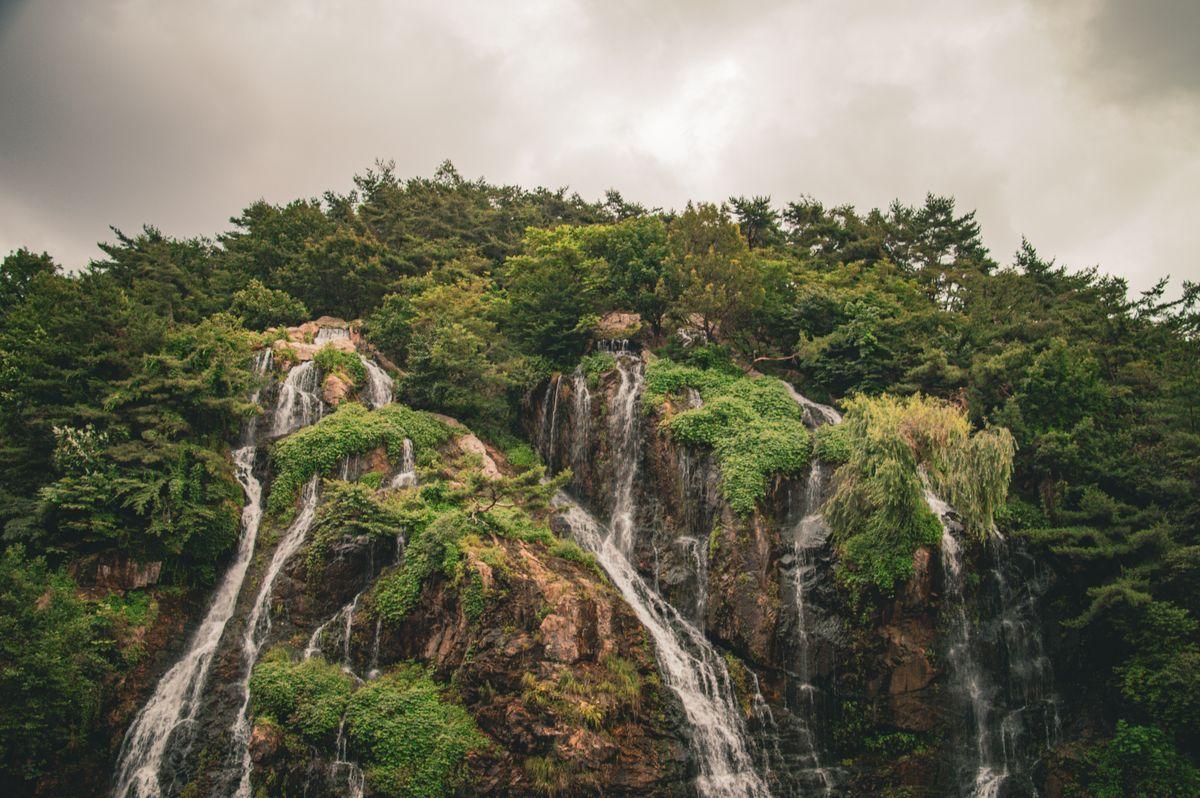
For more drama, Nakdaepokpo (낙대폭포) near Cheongdo in North Gyeongsang Province is a powerful curtain waterfall that flows year-round. If you're already visiting the famous Naksan Falls or spending time around Gyeongju and Busan, this makes an excellent detour. Driving time from Busan is about 1 hour; from Daegu about 40 minutes.
- Okgye Falls, Yeongdong — from Daejeon ~1.5h; free entry; limestone gorge setting
- Nakdaepokpo, Cheongdo — from Busan ~1h; free entry; dramatic curtain falls
- Yongchu Falls, Hamyang — from Busan ~2h; 20m cascade into natural pool (also great for swimming)
- Tip: South Korean waterfalls peak in water volume during and right after the rainy season (late June–mid July)
Quick Tips
- 1Go after rain — Korean waterfalls are most powerful in summer, especially right after the monsoon (장마). A rainy-day drive to a waterfall can be spectacular — just wear waterproof shoes.
- 2Check Naver Maps for the exact parking lot — search the waterfall name + '주차장' (parking lot). Most waterfalls have dedicated parking; some are only accessible by shuttle bus on busy summer weekends.
- 3Wear grip shoes — trails to Korean waterfalls are almost always on wet stone and can be extremely slippery. Regular sneakers are borderline; hiking shoes or trail runners are ideal.
- 4National park passes — Seoraksan, Odaesan, and other national park waterfalls require a park entry fee (1,000–5,000 KRW). Purchase at the main gate; cards accepted.
- 5Summer crowds — popular waterfalls like Cheonjiyeon and Biryong get busy on weekends from late July to mid-August. Arrive before 10am or visit on a weekday for a quieter experience.
FAQ
Frequently Asked Questions
Korea's waterfall circuit is one of those itineraries that never makes the highlight reels but always leaves people saying it was the best part of the trip. Rent a car, pick a region, and let the sound of falling water lead the way.
Share this article
You Might Also Like


Get Travel Inspiration
Subscribe for new stories, route guides, and driving tips delivered to your inbox.