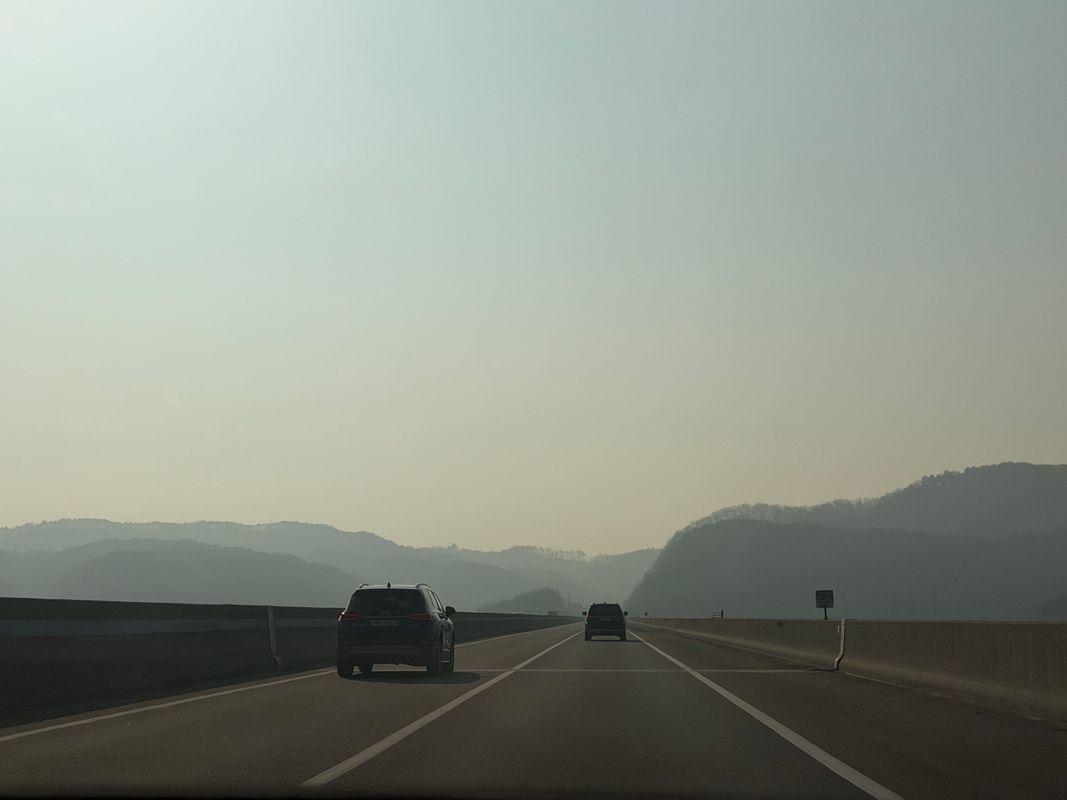
Muju Deogyusan Drive: Korea's Best Mountain Road Trip for Summer
When Korean locals want to escape summer heat, they head to Muju (무주). This small mountain county in North Jeolla Province sits at Korea's highland crossroads — home to Deogyusan National Park (덕유산 국립공원), the country's fourth-highest mountain, and the famous Gucheondong Valley (구천동 계곡), a 36km gorge of jade-green water and shaded cliffside roads. Rent a car, leave Seoul early, and you'll arrive in a completely different Korea.
The drive itself is the attraction. Highway 37 through the valley winds along the Namgang River (남강) tributaries, past waterfalls, suspension bridges, and 33 named scenic spots — the Korean tradition of counting the canyon's best views dates back centuries. In summer, the temperature at 800–1,000m elevation runs 5–8°C cooler than Seoul, making this one of the best reasons in Korea to have a rental car.
Getting to Muju from Seoul
From Seoul, take the Gyeongbu Expressway (경부고속도로) south to the Honam Expressway junction, then follow signs for Muju IC. The full drive is approximately 215 km and 2 hours 30 minutes to 3 hours in normal traffic. Tolls run roughly 15,000–18,000 KRW one-way. The route passes through Daejeon, so a fuel and coffee stop at Daejeon Service Area is a good plan before the final mountain section.
- From Seoul: ~215 km, 2.5–3 hr via Gyeongbu → Honam Expressway → Muju IC
- Tolls (one-way): ~15,000–18,000 KRW
- Best departure: Before 7:00 to clear Seoul's southern corridor before commuter traffic
- Fuel tip: Fill up at Daejeon Service Area — mountain stations are expensive and sparse
- Navigation: Search '무주구천동' in Naver Maps for the full valley route, not just the IC exit
Gucheondong Valley: The 36km Scenic Drive
The main event begins at the Gucheondong Tourist District (구천동 관광특구) entrance and follows a narrow mountain road deep into the gorge. The valley gets its name from the Sino-Korean "nine thousand caves" — a poetic way of saying the landscape is endlessly varied. In summer, the road runs under a thick canopy of oak and pine, with the river visible through the trees on one side and granite cliffs rising on the other.
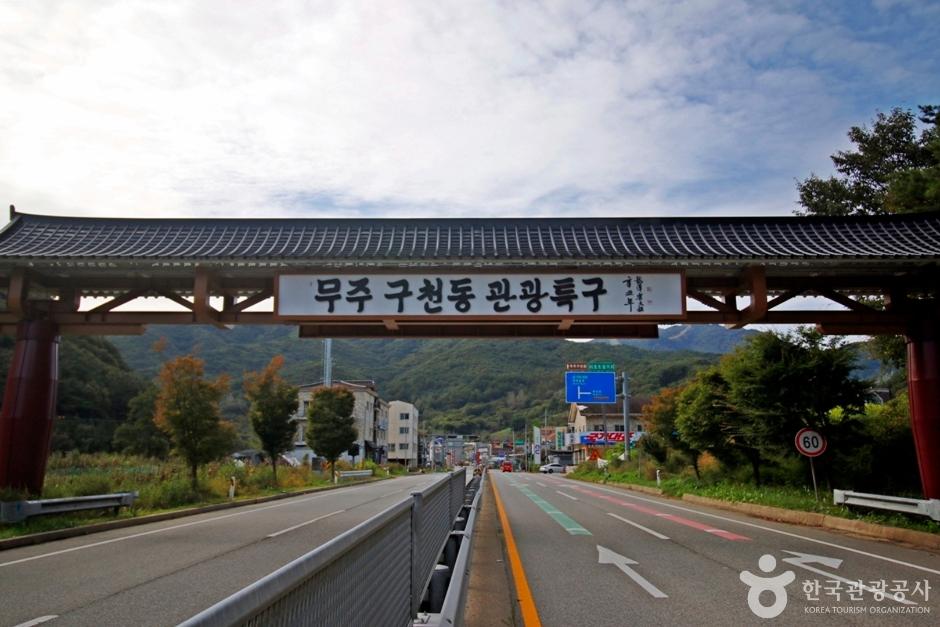
The road through the valley is one-way in places and requires attention — it's narrow, with occasional oncoming traffic on blind bends. Drive slowly and stop at the designated pull-offs for the best views. Gugokpokpo Falls (구곡폭포), about 11km into the valley, is the most popular stop: a 40m waterfall that stays ice-cold even in August. The hike from the parking area takes about 20 minutes round-trip.
- Valley length: 36km from entrance to Deogyusan Resort
- Driving time: 1–1.5 hours at a relaxed pace with stops
- Gugokpokpo Falls: Free, 20-min hike from roadside parking
- Water temperature: Stream water stays around 10–14°C in summer — bring sandals
- Tip: Weekday mornings are nearly empty; weekend afternoons get local traffic
Deogyusan National Park and the Gondola
At the end of the valley road sits Deogyusan National Park headquarters and the Muju Deogyusan Resort (무주덕유산리조트) — yes, it's primarily a ski resort, but in summer it runs a gondola (곤돌라) to within 200m of Hyangjeokbong (향적봉), the 1,614m summit. The gondola ascent takes about 15 minutes and deposits you at 1,520m, where the temperature is typically 10–15°C cooler than the valley floor.
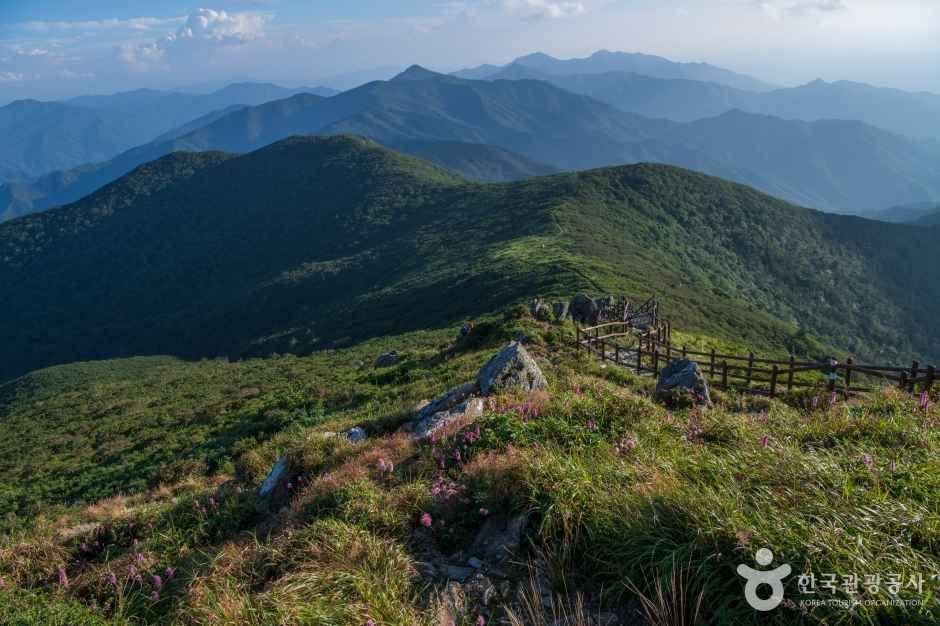
- Gondola hours: 09:00–16:30 (last ascent), check resort website for seasonal variations
- Gondola fare: ~20,000 KRW round-trip (adults)
- Summit walk: 200m trail from gondola station to Hyangjeokbong peak, 20–30 minutes
- What to bring: A light layer — summit temperatures can drop suddenly even in July
- Resort parking: Free, large lot at the base station
Naedari Suspension Bridge and the River Road Back
On the drive back through the valley, stop at the Naedari Suspension Bridge (내도리 출렁다리), a 270m pedestrian bridge that sways gently above the river gorge. Entry is free and the crossing takes about 10 minutes. From the middle of the bridge you get an unobstructed view up and down the valley that you simply can't get from the road. It's particularly photogenic in the late afternoon when the gorge walls catch the low sun.
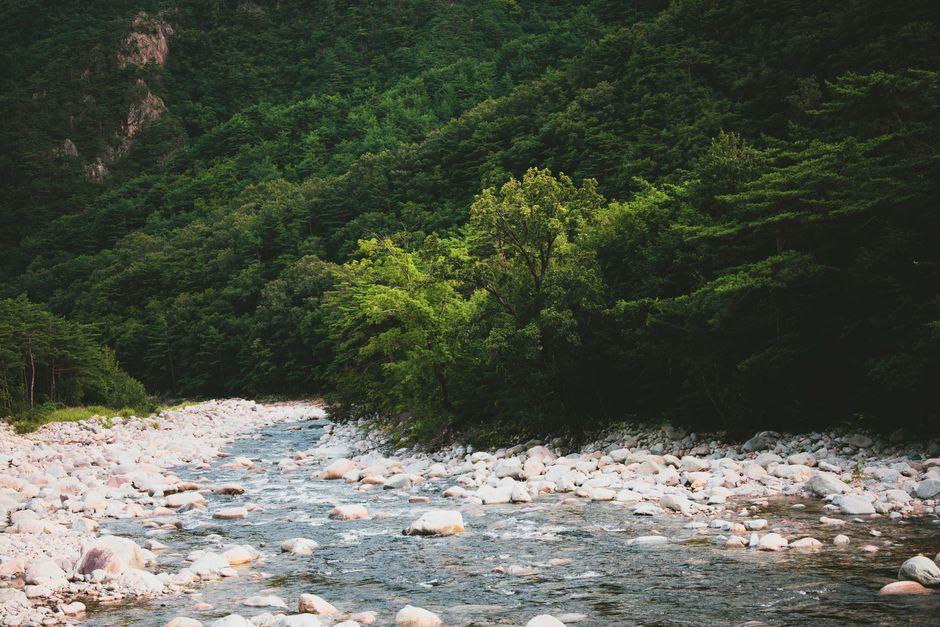
After the bridge, the valley road returns to Muju town (무주읍), the small county seat where you'll find the best food options and the starting point for the annual Muju Firefly Festival (반딧불축제). If you're visiting in early-to-mid August, check the festival dates — it's the only event in Korea centered on the endangered Korean firefly (Luciola lateralis), which still thrives in Muju's unpolluted streams.
Where to Eat and Stay in Muju
Muju town has several restaurants clustered near the central market. Daehak Sikdang (대학식당) near the bus terminal is a local favorite for jeonbuk-style bibimbap — heartier and more vegetable-forward than the Seoul version. The Gucheondong entrance area has a handful of riverside restaurants serving maeuntang (매운탕) using locally caught freshwater fish; budget 12,000–15,000 KRW per bowl.
- Gucheondong area: Riverside restaurants, maeuntang (spicy fish soup), ~12,000–15,000 KRW
- Muju town: Jeonbuk-style bibimbap and Korean set meals, ~10,000–13,000 KRW
- Muju Resort: Several resort restaurants and a convenience store at the gondola base
- Staying overnight: Muju Resort has rooms from ~120,000 KRW; pension guesthouses in the valley from ~70,000 KRW
- Tip: Book valley pensions 2–3 weeks ahead in late July and August — Korean summer holiday (휴가철) fills them fast
Quick Tips for the Drive
- 1Start at Muju IC, drive into Gucheondong Valley, continue to the resort, ride the gondola, then take the valley road back to Muju town — the full loop is about 90 km
- 2In Naver Maps, search '구천동 관광특구' for the valley entrance and '무주덕유산리조트' for the resort — the two points define the mountain drive section
- 3The gondola is the highlight: arrive before 11:00 to avoid afternoon clouds that frequently obscure the summit views
- 4Download Naver Maps offline before heading in — mobile signal drops in the deep valley sections
- 5Muju Firefly Festival dates change annually; check the official Muju County website (muju.go.kr) before planning your trip around it
FAQ
Frequently Asked Questions
Muju doesn't appear on most foreign tourists' radar — which means less traffic on the valley road, shorter gondola queues, and restaurant prices that haven't adjusted for tourist premiums. Rent a car, set the alarm early, and you'll be standing at 1,520m looking down at summer clouds by 10:00 AM. That's a good day in Korea.
Share this article
You Might Also Like



Get Travel Inspiration
Subscribe for new stories, route guides, and driving tips delivered to your inbox.