Haedong Yonggungsa Temple Busan: Korea's Most Dramatic Seaside Temple
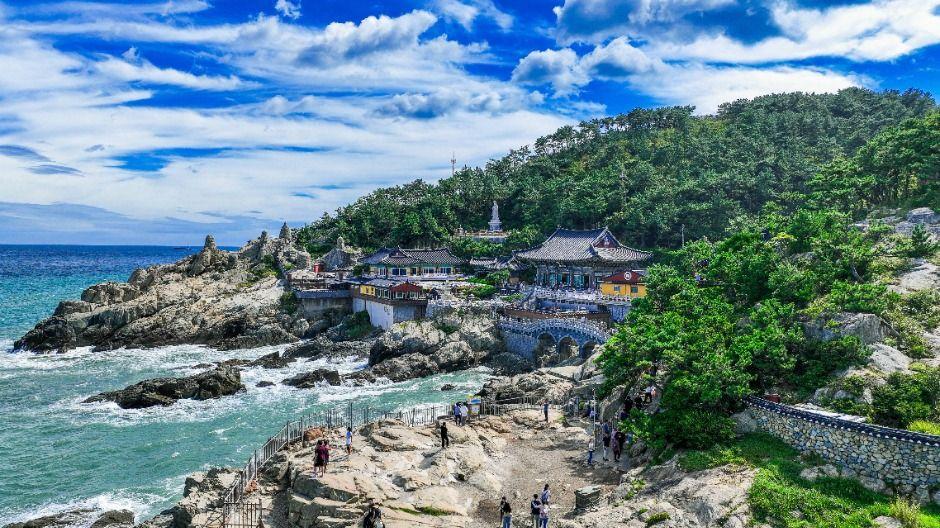
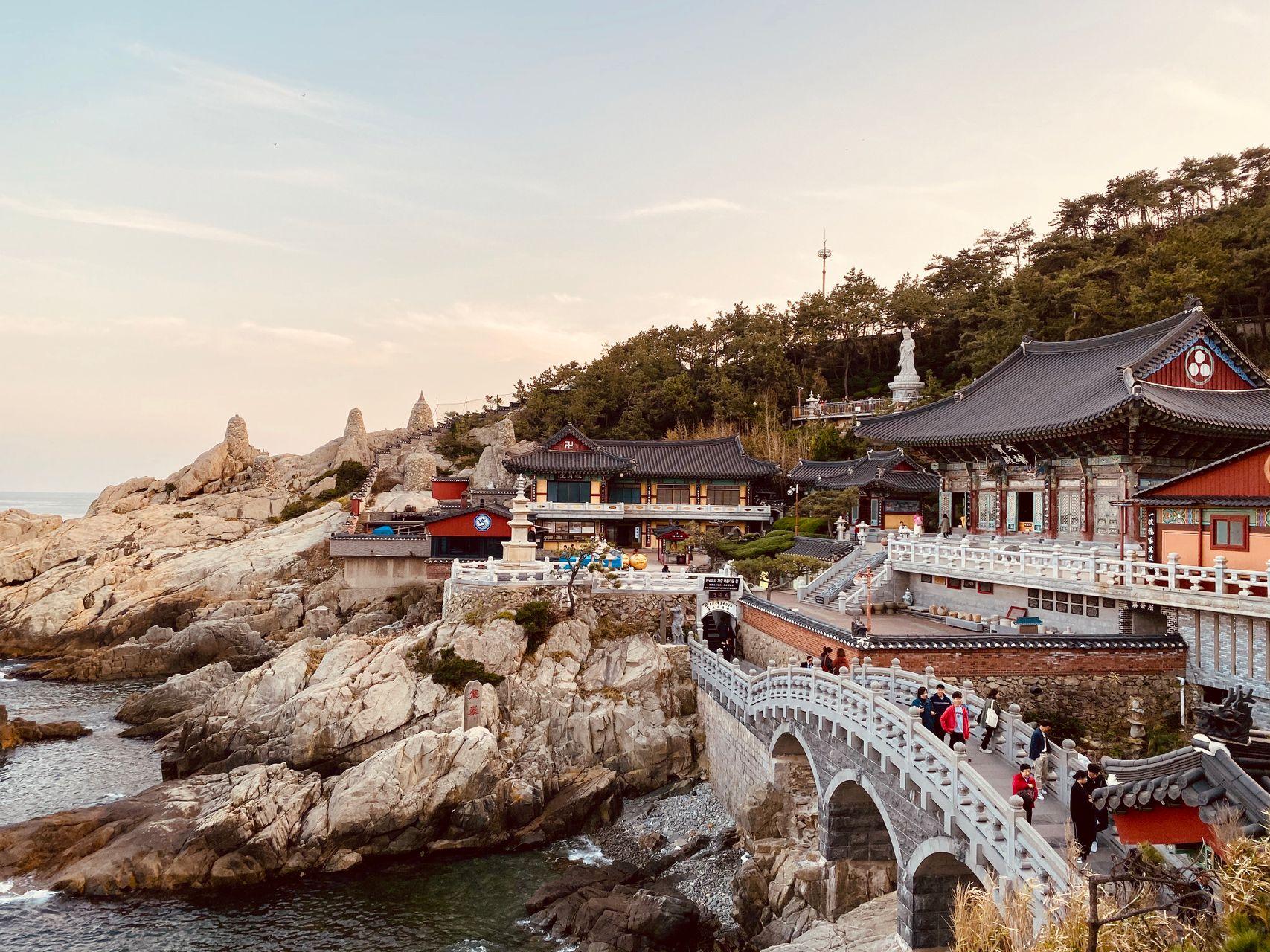
Most Korean temples hide in mountain valleys. Haedong Yonggungsa (해동용궁사) breaks that tradition completely — it's built on a rocky cliff above the East Sea, with waves crashing below the main hall and stone dragons guarding a stairway that descends toward the water. It's one of the most visually striking temples in the country, and it sits just 30 minutes by car from Haeundae Beach.
Getting to Haedong Yonggungsa by Car
The temple is located in Gijang-gun, the county north of Haeundae. From Haeundae Beach, take Gijang-daero north — the drive follows the coast through a tunnel and takes about 25–30 minutes. The address is 86 Yonggung-gil, Gijang-eup, Gijang-gun, Busan. Plug that into Naver Maps or Kakao Map and navigation is straightforward.
There's a large public parking lot at the entrance. Parking costs around 1,000 KRW per 30 minutes on weekdays and slightly more during summer weekends. The walk from the parking lot down to the temple gate takes about 10 minutes along a path lined with souvenir stalls and street food vendors.
- From Haeundae Beach: 25–30 min north via Gijang-daero
- From Busan Station: ~45 min via Gijang Expressway
- Parking: Large lot at entrance, ~1,000 KRW / 30 min
- By bus: Bus 181 from Haeundae Station (about 40 min)
- Address: 86 Yonggung-gil, Gijang-eup, Gijang-gun, Busan
The Temple Grounds: What to See
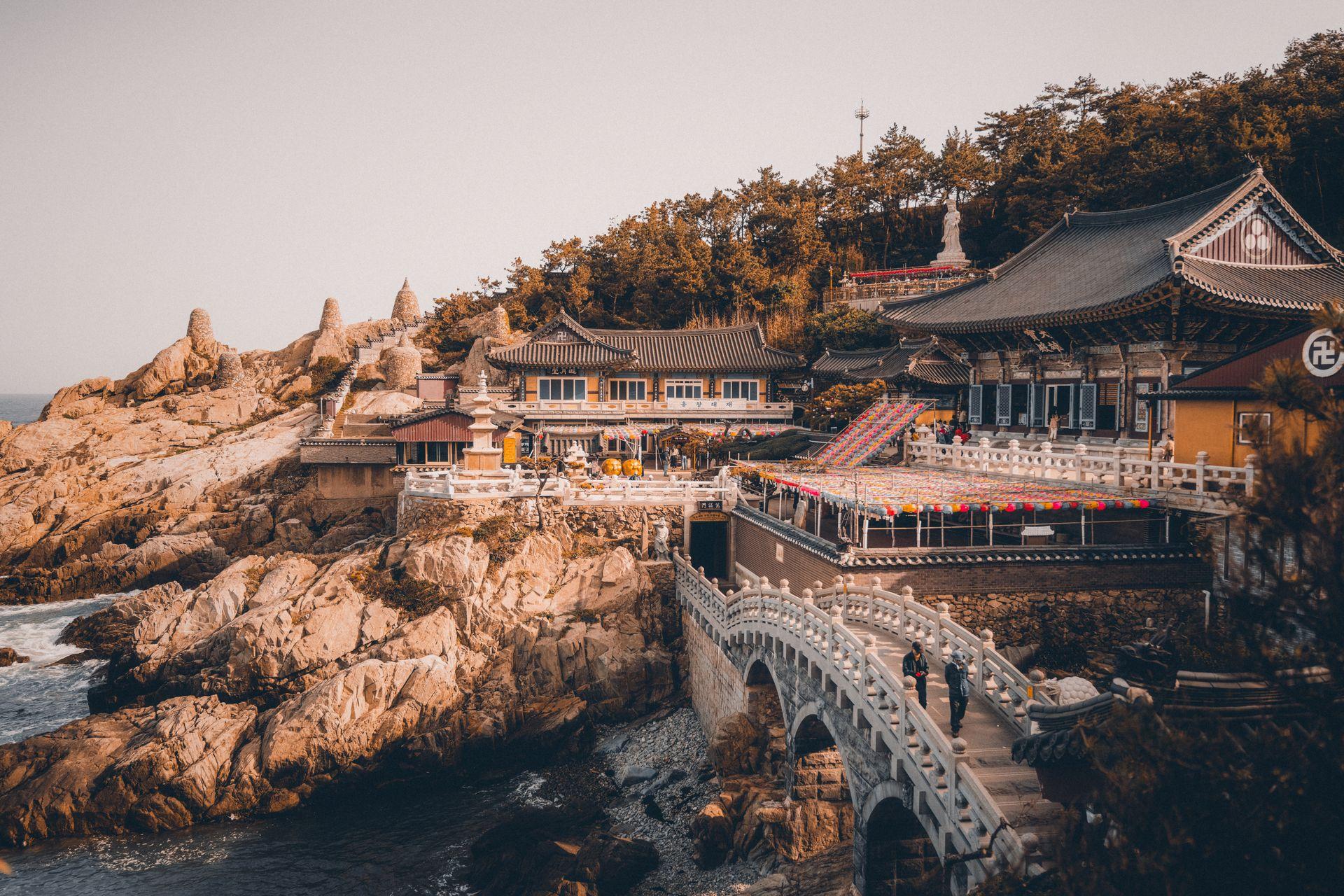
Haedong Yonggungsa was originally built in 1376 during the Goryeo Dynasty by the monk Naong. The current complex was largely rebuilt in the 1970s. The name translates roughly as "Sea Dragon Palace Temple" — and the architecture leans fully into that mythology. A massive stone dragon flanks the main entrance gate, and two stone fish leap above the gate arch.
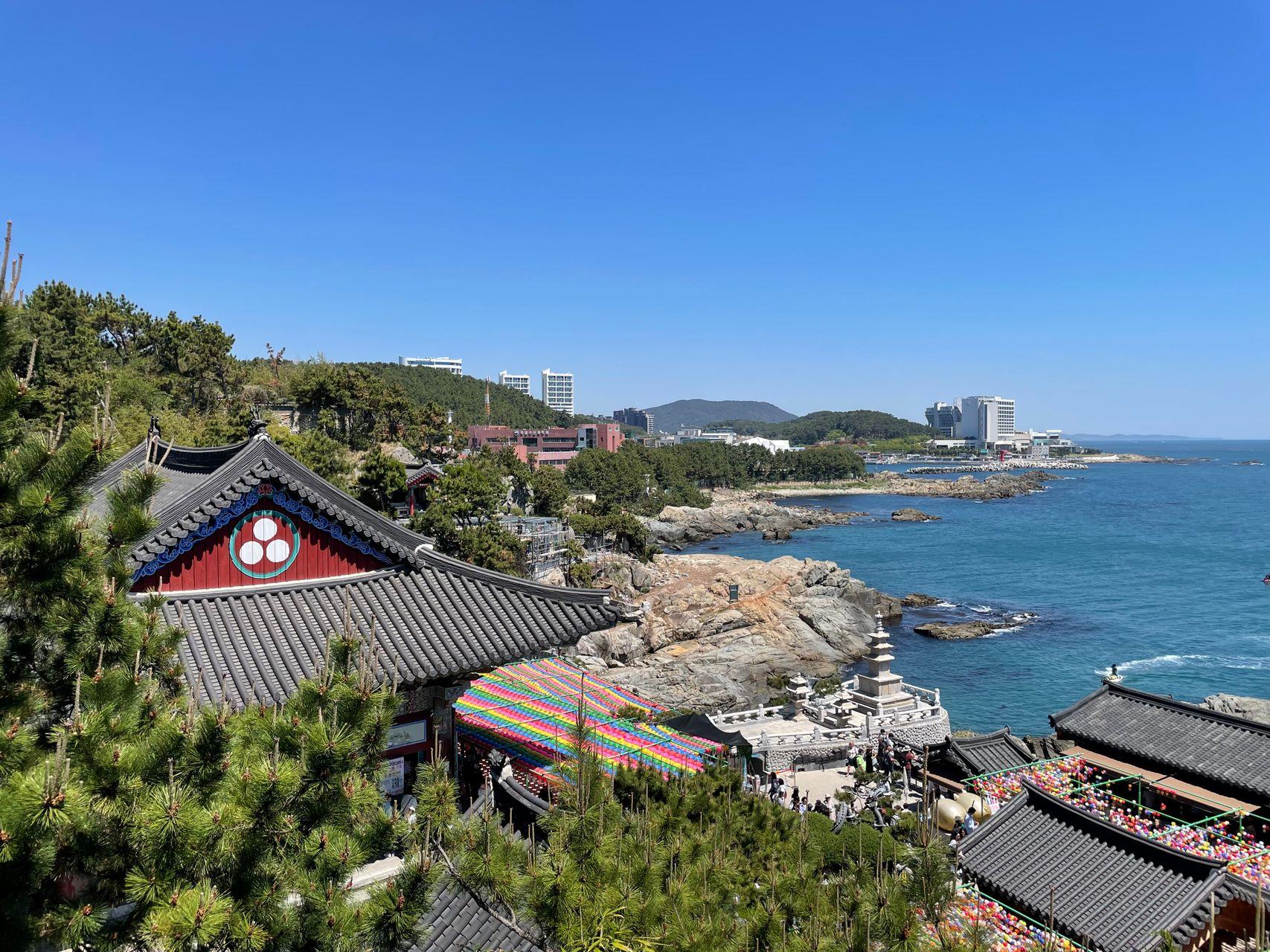
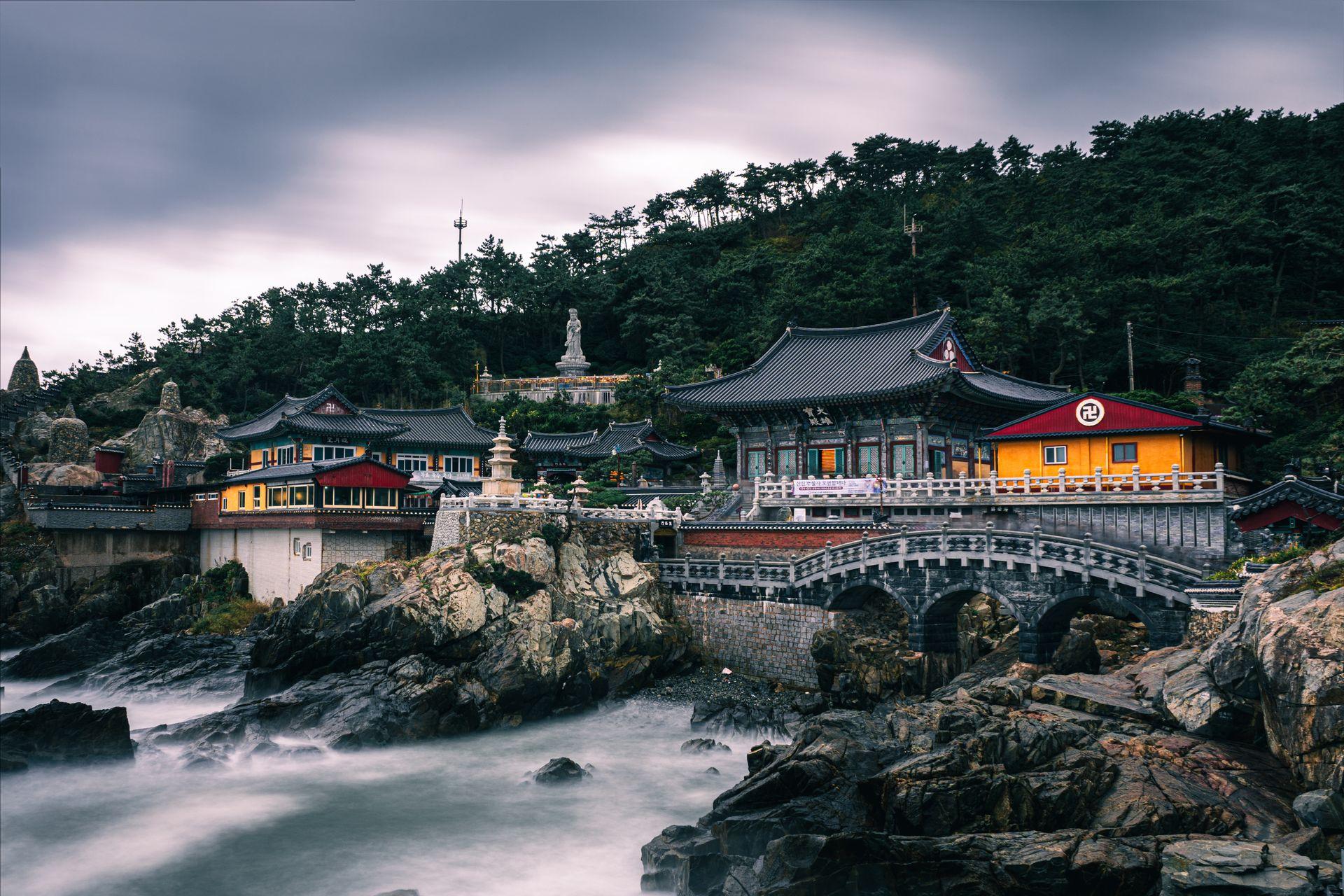
From the gate, a wide stone staircase descends toward the sea. On either side stand the 12 zodiac animal statues — visitors typically pause at their own zodiac sign to make a wish. At the bottom, you reach the main hall (Daeungjeon), which sits on stone pillars above the rocks. Below it, waves roll in constantly. A stone lantern sits on a platform just offshore. The views back up toward the cliff face, with the red-and-gold structures against the blue water, are the money shot that fills every Korea travel photo album.
- Daeungjeon (대웅전): Main hall, sea-facing, free to enter
- 12 Zodiac statues: Along the main staircase
- Stone lantern (해수관음상): Offshore platform statue of Gwaneum Bodhisattva
- Dragon carvings: At the entrance gate and along the cliffs
- Wish stones: Write wishes on small stones and leave them at the altar
Best Time to Visit: Sunrise Beats Everything
Haedong Yonggungsa is one of Korea's premier sunrise spots. The temple faces east, directly out to sea, which means on a clear morning the sun rises straight over the water in front of the main hall. In summer, sunrise comes around 05:15–05:30 — arrive by 04:45 to secure a good position on the staircase. The temple is open 24 hours, and early arrivals beat the crowds entirely.
Midday in summer (July–August) brings large tour groups and the crowd level makes photography difficult. If sunrise isn't realistic, early morning on weekdays (before 09:00) gives you the grounds largely to yourself. New Year's Day and Lunar New Year's Day are the two busiest days of the year — thousands of Koreans come specifically for the sunrise wish ritual.
- Best: Sunrise on a weekday — temple is nearly empty and lit beautifully
- Good: Weekday morning before 09:00 in summer
- Avoid: Weekends 10:00–15:00 in July and August (peak crowds)
- Special: New Year's Day sunrise — atmospheric but very crowded
- Entry fee: Free. Parking only (~1,000 KRW/30 min)
Combine Your Visit: What's Nearby
Gijang-gun is worth exploring beyond just the temple. Gijang Seafood Market (기장시장), about 10 minutes south, is one of the best spots near Busan for fresh raw fish — the live octopus and sea urchin (성게) are famous. For another photogenic stop, Jukseong Cathedral (죽성성당) is a small Catholic church on a seaside cliff about 15 minutes away, often compared to the famous church on Jeju.
After the temple, many visitors continue north along the coast to Gijang Arboretum or circle back to Haeundae for lunch. The whole half-day circuit — temple + seafood market + Haeundae beach walk — is one of the most satisfying day itineraries in Busan.
Practical Tips
- 1Wear flat shoes — the staircase and cliff paths are uneven stone; heels and flip-flops are a bad idea
- 2Bring cash — street food stalls along the entry path don't always accept cards
- 3Don't touch the altar offerings — it's a functioning temple with active worshippers
- 4Allow 1–1.5 hours on-site; the grounds are compact but worth unhurried exploration
- 5Combine with Haeundae — the two make a natural morning-plus-beach afternoon pair
FAQ
Frequently Asked Questions
Haedong Yonggungsa is the kind of place that sticks with you — the sound of waves under a Buddhist hall, zodiac statues watching the sea, and a staircase that seems to lead down to the water itself. It's worth an early wake-up. Pair it with Haeundae Beach and you've got one of Busan's best full-day itineraries.
Share this article
You Might Also Like


Get Travel Inspiration
Subscribe for new stories, route guides, and driving tips delivered to your inbox.