Iksan Baekje Historical Drive: UNESCO Heritage Road Trip in North Jeolla
Most visitors to Korea's ancient history head straight for Gyeongju — the old Silla capital — and stop there. Few realise that the rival Baekje Kingdom (18 BCE–660 CE) left behind equally spectacular ruins in the north of Jeolla Province, clustered around the city of Iksan (익산). Here you'll find the remains of Korea's largest-ever Buddhist temple and a royal palace complex, both designated UNESCO World Heritage Sites in 2015 — and both visited by only a fraction of the tourists that crowd Gyeongju.
Iksan sits just 30 minutes west of Jeonju by car, making it an easy add-on if you're already in the region. If you're driving from Seoul, the city is about 220 km and 2 hours 30 minutes via the Honam Expressway. The route itself is pleasant — flat farmland giving way to low mountain ridges as you enter Jeolla. A full day is enough to cover both major UNESCO sites plus a bonus stop at a famous K-drama filming location.
Mireuksa Temple Ruins: Korea's Largest Ancient Temple
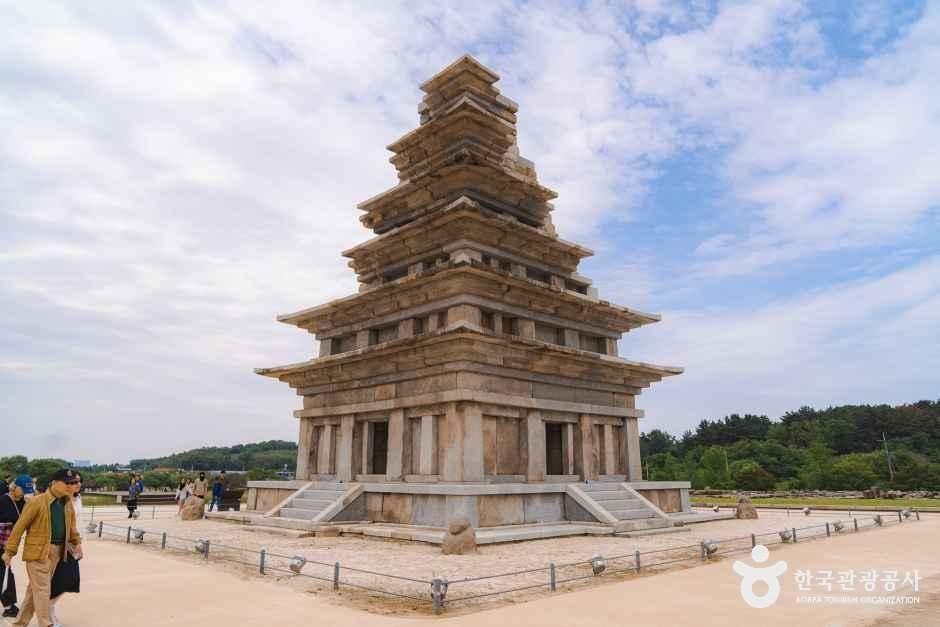
Mireuksa (미륵사지) was the biggest Buddhist temple ever built on the Korean peninsula. Founded by King Mu of Baekje (r. 600–641), the complex once had three pagodas and three halls arranged in a symmetrical east-west axis — a layout unique in Korean Buddhist architecture. Today what survives above ground is the West Stone Pagoda (서석탑), the oldest and largest stone pagoda in Korea, which was painstakingly restored between 2001 and 2019 after over two decades of structural analysis. Standing in front of it, the sheer scale of what was once here becomes clear.
Entry to the open-air ruins is free, and the attached National Museum of Mireuksa (국립익산박물관) — opened in 2020 — is also free. The museum holds artefacts excavated from the site including golden relics found inside the stone pagoda in 2009, which rewrote scholars' understanding of the Baekje court's Buddhist practice. Plan to spend 2–3 hours across the ruins and museum combined. The car park at the entrance is free and large — easily handles a rental car.
- Entry: Free (ruins + National Museum of Mireuksa)
- Hours: Ruins open 24h; Museum 09:00–18:00 (closed Mondays)
- Parking: Free, large lot at the main entrance
- Naver Map: 미륵사지 (익산시 금마면)
- Time needed: 2–3 hours for ruins + museum
Wanggunni Palace Ruins: The Baekje Royal Seat
A 15-minute drive north from Mireuksa brings you to Wanggunni (왕궁리유적), the ruins of the Baekje royal palace. Historians believe King Mu also built this site — possibly as a secondary palace or the administrative heart of his kingdom. The centrepiece today is a five-story stone pagoda, which is a National Treasure (국보) in its own right and stands in remarkably good condition for a 1,400-year-old structure. Excavations since the 1980s have uncovered the outlines of palace halls, gold-crafting workshops, and garden waterways.
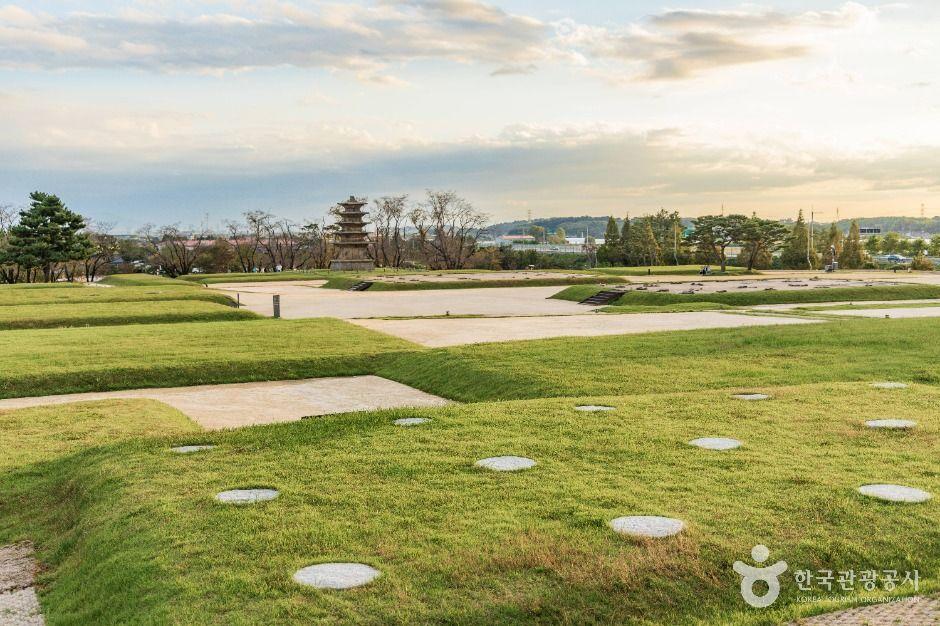
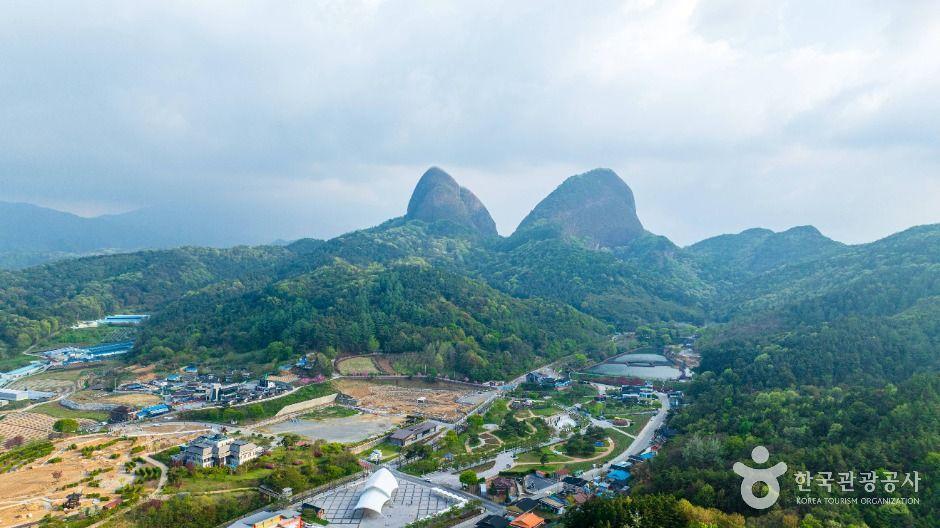
Entry is again free. The site is smaller and quieter than Mireuksa — expect to spend about 1 hour here. On weekday mornings you may well have the entire complex to yourself, which makes for exceptional photography of the pagoda against open sky. From Wanggunni you can see Mireuksan Mountain (미륵산) rising to the southwest — if time and energy allow, the mountain has a cable car and summit views over the entire Iksan plain.
- Entry: Free
- Hours: 09:00–18:00 (closed Mondays and public holidays)
- Parking: Free, roadside lot
- Naver Map: 왕궁리유적 (익산시 왕궁면)
- Time needed: 1 hour
Getting There: Routes from Jeonju and Seoul
From Jeonju, the most convenient base in the region, take Route 27 (국도 27호선) northwest toward Iksan. The drive is about 30 km and 30–35 minutes. Alternatively, take the Seohaean Expressway (Route 15) north one exit to Iksan IC — marginally faster but costs a small toll. Both Mireuksa and Wanggunni are well-signed in English and Korean from the main roads into Iksan.
From Seoul, the fastest route is the Gyeongbu Expressway south to Nonsan Junction, then the Honam Expressway to Iksan IC. Total distance is about 220 km and 2 hours 30 minutes in typical daytime traffic. Budget 14,000–16,000 KRW in tolls one way. If you're coming from Busan, take the Namhae Expressway west to Suncheon, then the Honam Expressway north — about 250 km and 2 hours 45 minutes.
- Jeonju → Iksan: ~30 km, ~30 min via Route 27 or Seohaean Expressway
- Seoul → Iksan: ~220 km, ~2h30m, tolls ~14,000–16,000 KRW one-way
- Busan → Iksan: ~250 km, ~2h45m via Namhae/Honam Expressway
- Mireuksa → Wanggunni: 6 km, ~10 min drive
- Naver Map search: 익산시 or 미륵사지 for the main entrance
Bonus: K-Drama Filming at Iksan Prison Set
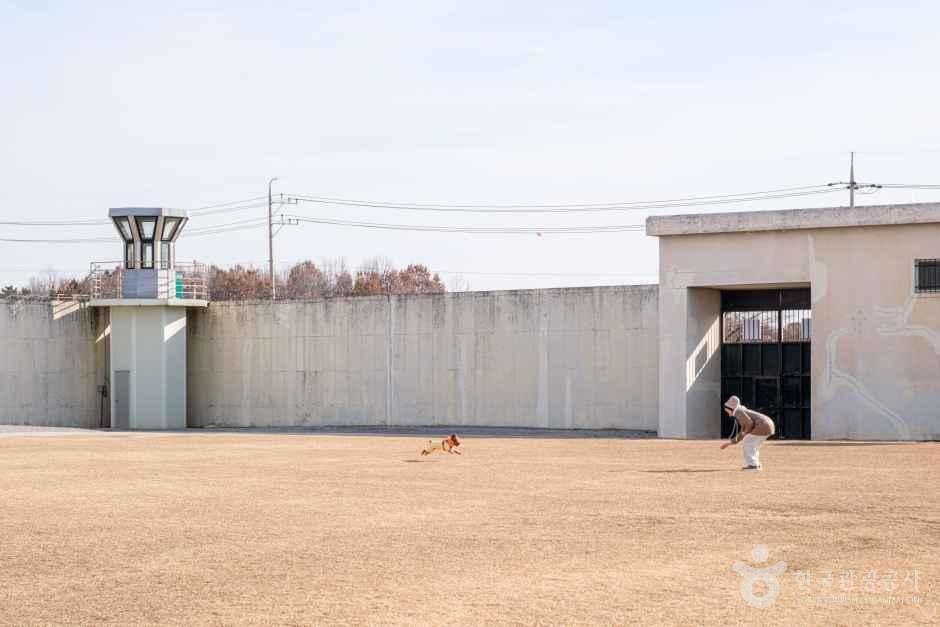
If you're a K-drama fan, add one more stop. The Iksan Prison Film Set (익산교도소세트장) is a decommissioned prison complex that has doubled as a shooting location for dozens of dramas and films, most famously Prison Playbook (슬기로운 감빵생활), Vincenzo, and D.P. The cavernous cellblocks and watchtowers are genuinely atmospheric — especially in the long shadows of late afternoon. The set is about 15 km northeast of Mireuksa, easily reachable as a final stop before heading back to Jeonju.
- Entry: ~3,000 KRW per person
- Hours: 09:00–18:00 (closed Mondays)
- Location: 성당면 함낭로 207, Iksan
- Naver Map: 익산교도소세트장
- Time needed: 30–45 minutes
Quick Tips
- 1Combine with Jeonju Hanok Village — just 30 minutes away, making an easy overnight trip from Seoul.
- 2Both UNESCO sites are free entry — this is an exceptionally low-cost day trip for the historical weight on offer.
- 3Visit on a weekday morning for the quietest experience; weekends draw Korean day-trippers from Jeonju.
- 4The National Museum of Mireuksa is closed Mondays — plan accordingly if the artefact collection is on your list.
- 5The Mireuksan cable car (미륵산 케이블카) runs on weekends year-round and daily in peak season — check current hours before visiting.
FAQ
Frequently Asked Questions
Iksan rewards curious travellers willing to look beyond the usual Korean heritage trail. Two UNESCO sites, one compelling K-drama location, and almost no tourist crowds — all within a 30-minute drive of Jeonju. Book your rental, set your navigation to 미륵사지, and discover the forgotten third capital of Baekje.
Share this article
You Might Also Like


Get Travel Inspiration
Subscribe for new stories, route guides, and driving tips delivered to your inbox.