
Yangyang Surfing Drive: Korea's Surf Capital by Car (2026)
Korea has a surf scene, and almost all of it lives in one small county: Yangyang (양양군), on the East Sea coast about 210 km northeast of Seoul. In a decade it has gone from a quiet rice-and-mushroom town to the country's surfing capital — packed with board rental shacks, beach bars, and Seoul twenty-somethings driving out on Friday night for dawn patrol on Saturday.
This guide is for foreigners who want to drive themselves to Yangyang and surf without speaking Korean. You'll learn the route from Seoul, the four beaches that actually have waves, what to rent, how much it costs, and where to stay. Two days is plenty for a first trip. Three lets you actually learn to stand up.
The Drive from Seoul: Seoul-Yangyang Expressway
Yangyang sits 210 km east of Seoul. The fastest way out is the Seoul-Yangyang Expressway (E60) — a modern tolled highway that punches straight through the Taebaek Mountains via a chain of long tunnels, including the 10.9 km Inje Tunnel, the second-longest road tunnel in Korea. From central Seoul, count on 2 hours 30 minutes with no traffic and 3 hours on summer weekends.
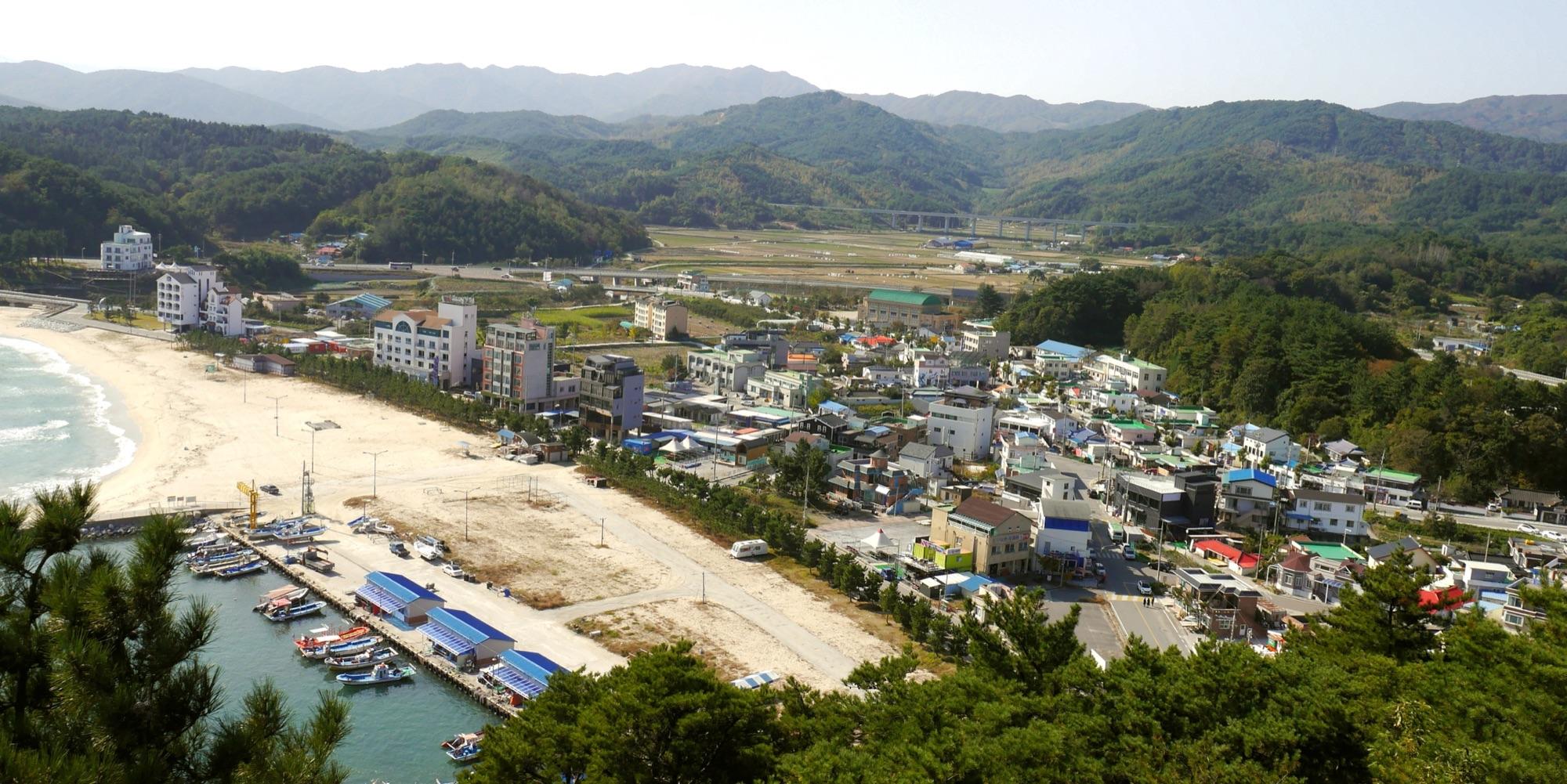
Tolls run about 13,000 KRW one-way with Hi-Pass (almost every rental car has one pre-installed). If yours doesn't, use the cash lane (현금) — foreign credit cards are not accepted at toll plazas. The exit you want is Yangyang IC; the expressway ends here and dumps you onto National Route 7, the East Coast road that strings together every surf beach.
- Seoul → Yangyang: ~210 km, 2h30m, tolls ~13,000 KRW (Seoul-Yangyang Expressway)
- Incheon Airport (ICN) → Yangyang: ~270 km, ~3h15m via the Second Yeongjong Bridge → E60
- Avoid: Fridays after 17:00 and Sunday afternoons in surf season — expressway crawls
- Rental tip: Pick up at Seoul Station or Yongsan; both have all major rental brands
- Fuel: Fill up at the Naelin-cheon Rest Area (~80 km in) — last big rest stop before the long tunnels
The Four Surf Beaches: Surfyy, Jukdo, Ingu, Hajodae
Yangyang's surf scene is strung along about 15 km of coast on Route 7. The four beaches that actually have a surf culture are, north to south: Naksan, Jukdo (죽도), Ingu (인구), and Hajodae (하조대). Surfyy Beach (서피비치) — the commercial surf zone that put Yangyang on the map — sits on the southern end of Hajodae Beach.
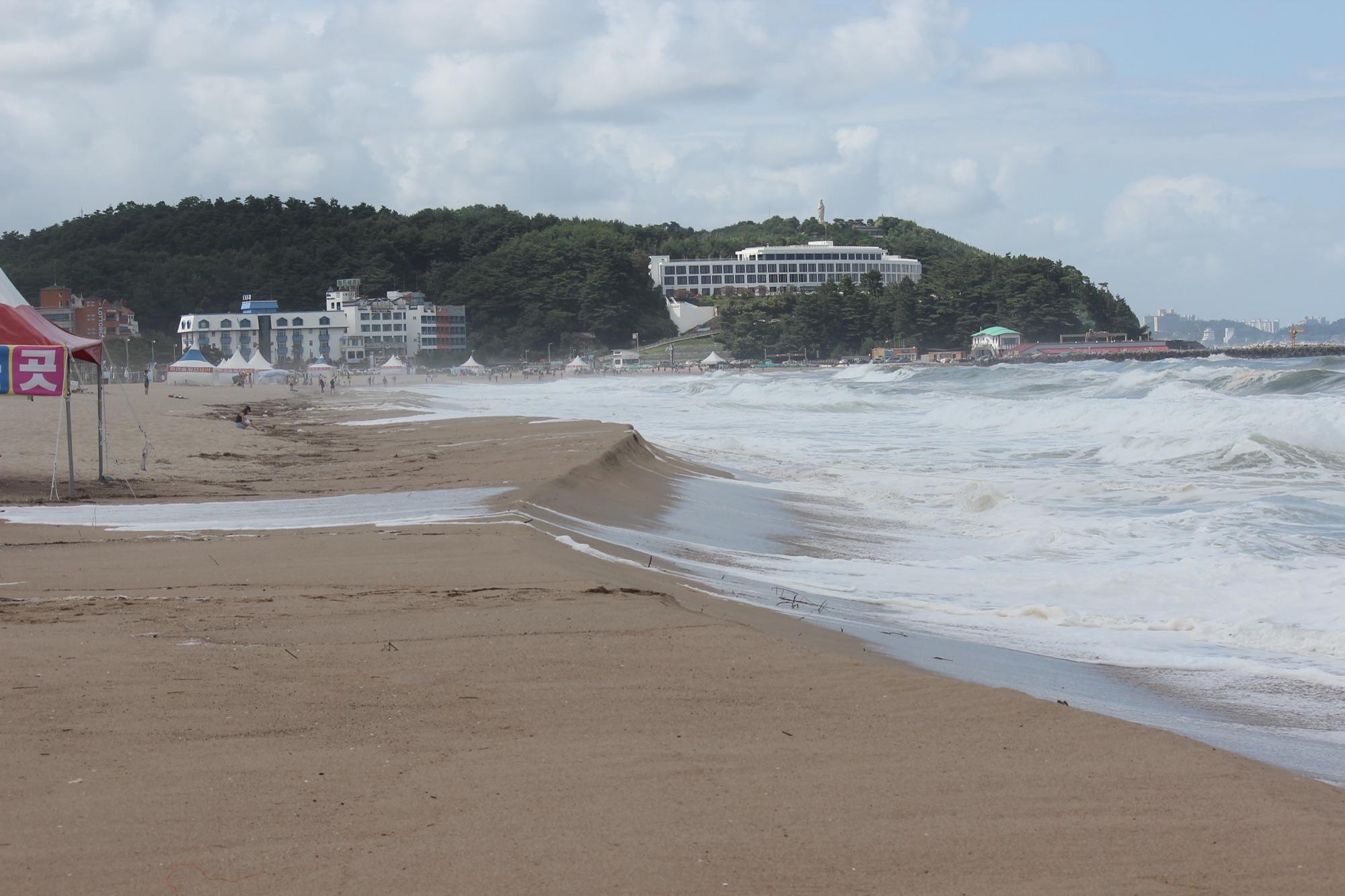
Jukdo Beach is the longboarder's beach — small, mellow, with a rocky headland that holds shape on small swells. The lineup is often packed on weekends but the vibe is friendly. Ingu Beach is the next bay south, less commercial, where local schools take beginners. Hajodae Beach is the longest of the four (about 1.5 km) and has the strongest tube-shaped waves when an autumn swell hits.
Parking is the one annoyance: every beach has a paid lot at 3,000–5,000 KRW for the day. Surfyy Beach has its own large lot at 5,000 KRW. Free street parking exists if you arrive before 09:00 — after that, plan on the lot.
Surfyy Beach: The Heart of Korean Surf
Surfyy Beach opened in 2015 on a stretch of Hajodae that the Korean Marines had used for training. It's the country's first beach-club-meets-surf-school — a single private operator running rentals, lessons, a restaurant, two beach bars, and a film festival every September. On a hot Saturday in summer, it draws 10,000+ visitors in a day.
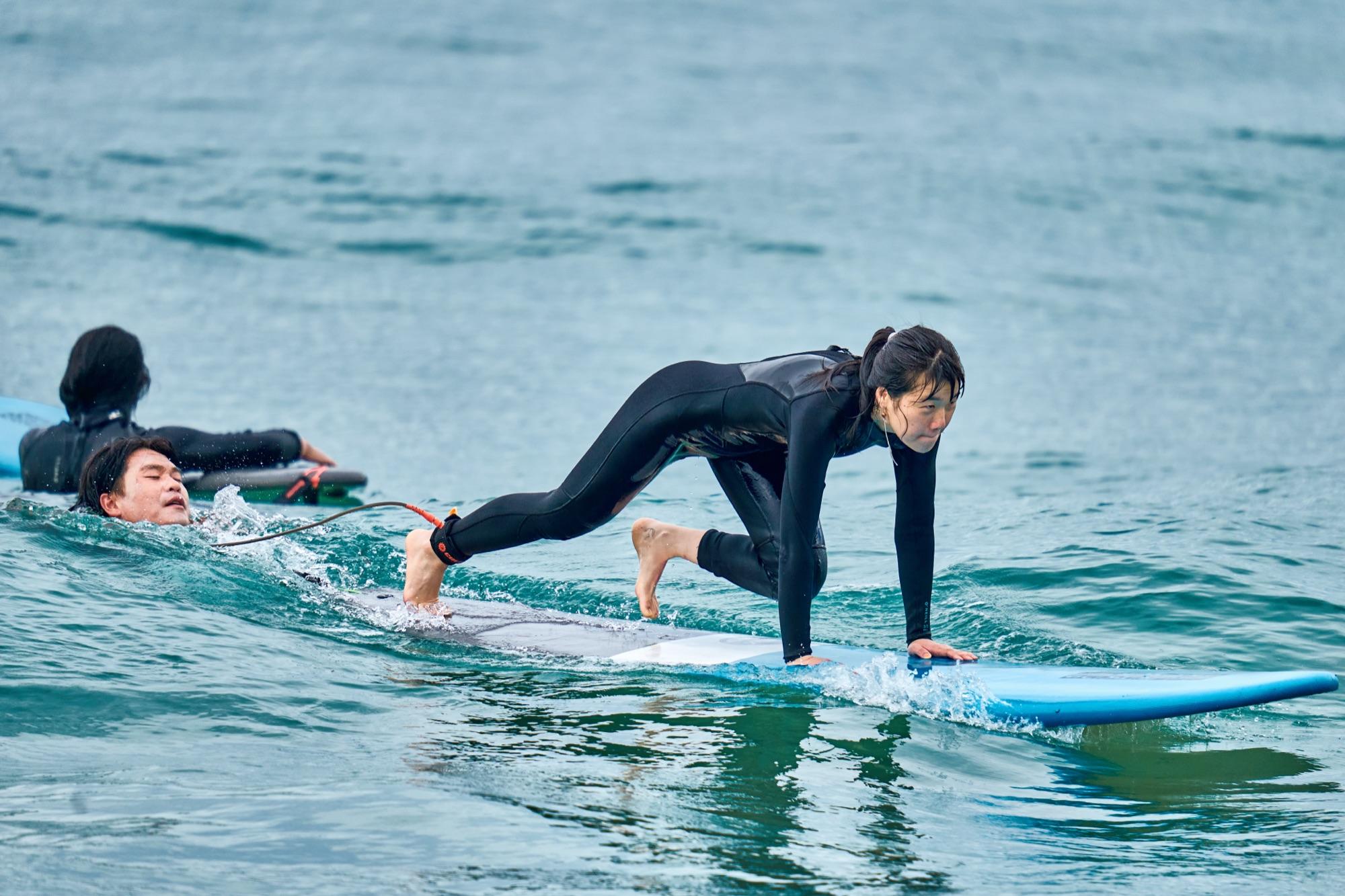
Most first-timers book a 2-hour group lesson at Surfyy: around 80,000 KRW including board, wetsuit, and rashguard. They run lessons in English on request — book ahead if you don't speak Korean. The actual surf zone at Surfyy is roped off and watched by lifeguards, which makes it the safest place in Yangyang to take a first wave.
Outside Surfyy, dozens of small independent shops cluster around Jukdo, Ingu, and Hajodae. Caramel Surf Village, Hailey & Boots, Eastsurf, and Drinking Surf are the well-known names. Independent shops are cheaper — typically 30,000–40,000 KRW for an all-day board rental — but lessons in English are less reliable. Message them on Instagram before you drive out.
Renting Gear: Boards, Wetsuits, Wax
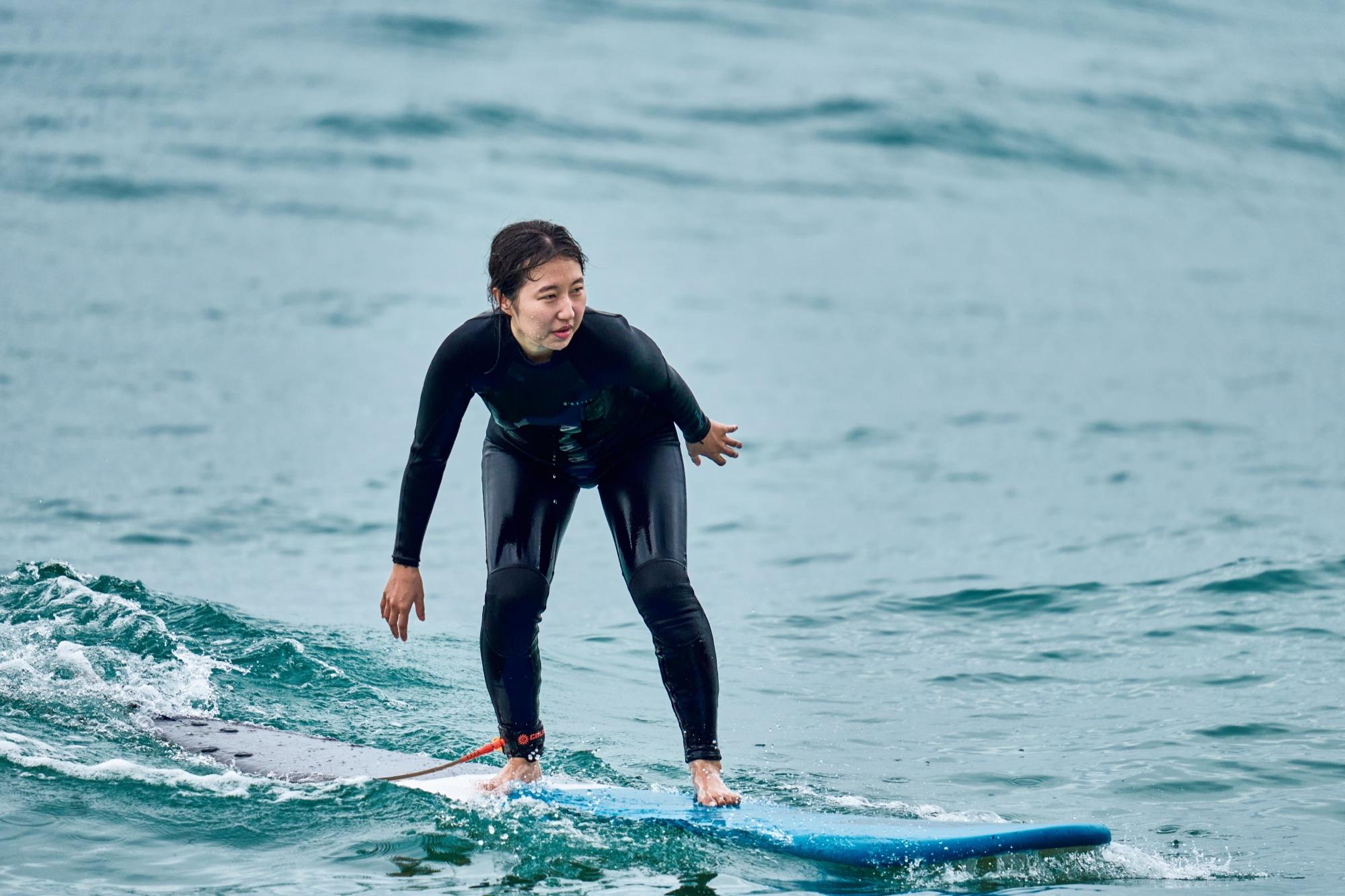
You don't need to bring anything. Rental is universal and the gear is matched to the season. East Sea water is cold — even in August the surface barely hits 24°C, and by November it's down to 14°C. A wetsuit is essential almost year-round.
- Soft-top board (all-day): 30,000–40,000 KRW
- Longboard (all-day): 40,000–50,000 KRW
- Wetsuit rental: 15,000–20,000 KRW (3/2 mm summer, 5/4 mm winter)
- Boots + hood (winter): 10,000 KRW extra
- 2-hour group lesson with gear: 70,000–90,000 KRW
- Private 1-on-1 lesson: 150,000+ KRW
Bring your own sunscreen — beach shops charge 15,000 KRW for a small tube. Cash works at every shop, but most also accept Korean cards. Foreign cards work at Surfyy Beach but are hit-or-miss at small independents.
When to Surf: Seasons and Swell
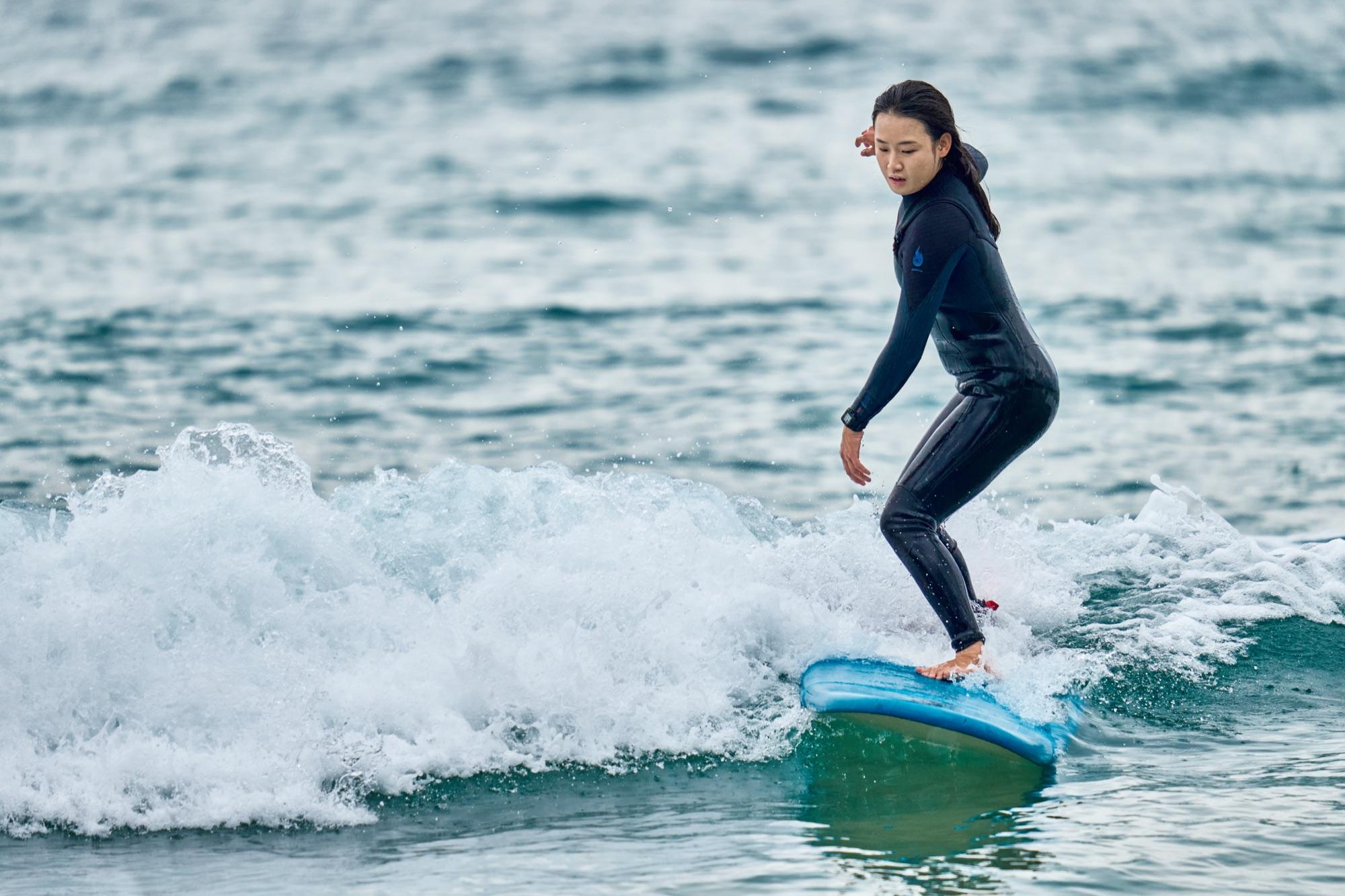
Korea isn't Bali. The East Sea is a small, semi-enclosed sea, so swell windows are short and inconsistent. There's no real wave-machine of a season — but there are patterns. Summer (June–August) is the busiest time but the smallest waves; great for beginners, frustrating for anyone with experience. Autumn (September–November) is the peak: typhoons in the Pacific push 3–6 ft swells up the coast, and water stays warm into October.
Winter (December–February) is the locals' season — cold, empty lineups, and the biggest, cleanest waves of the year when a northeast low spins offshore. You'll need a 5/4 hooded wetsuit, boots, and gloves, but the water rarely drops below 8°C. Spring is the worst — windy, cold, flat. Skip it.
When the Waves Are Flat: Hajodae, Naksansa, Food

Flat day? Drive 10 minutes north to Naksansa Temple — a 1,300-year-old Buddhist temple perched on a forested cliff above the East Sea, with a 16-meter granite Haesu Gwaneum Avalokitesvara statue facing the water. Entry 4,000 KRW, parking 4,000 KRW. Sunrise here is genuinely spectacular; the temple opens at 04:00 in summer specifically for early visitors.
Food in Yangyang skews seafood. Songijuk (송이죽) — pine-mushroom porridge — is the local specialty since Yangyang produces some of Korea's best matsutake mushrooms; expect 15,000–20,000 KRW for a bowl. Daepohang Port in nearby Sokcho is a 30-minute drive north for live flounder sashimi (~50,000 KRW for two). On the beaches themselves, the Surfyy Beach restaurants and Hajodae beachfront cafes do solid burgers and Korean fried chicken at city prices (12,000–18,000 KRW).
Where to Stay & a 2-Day Itinerary
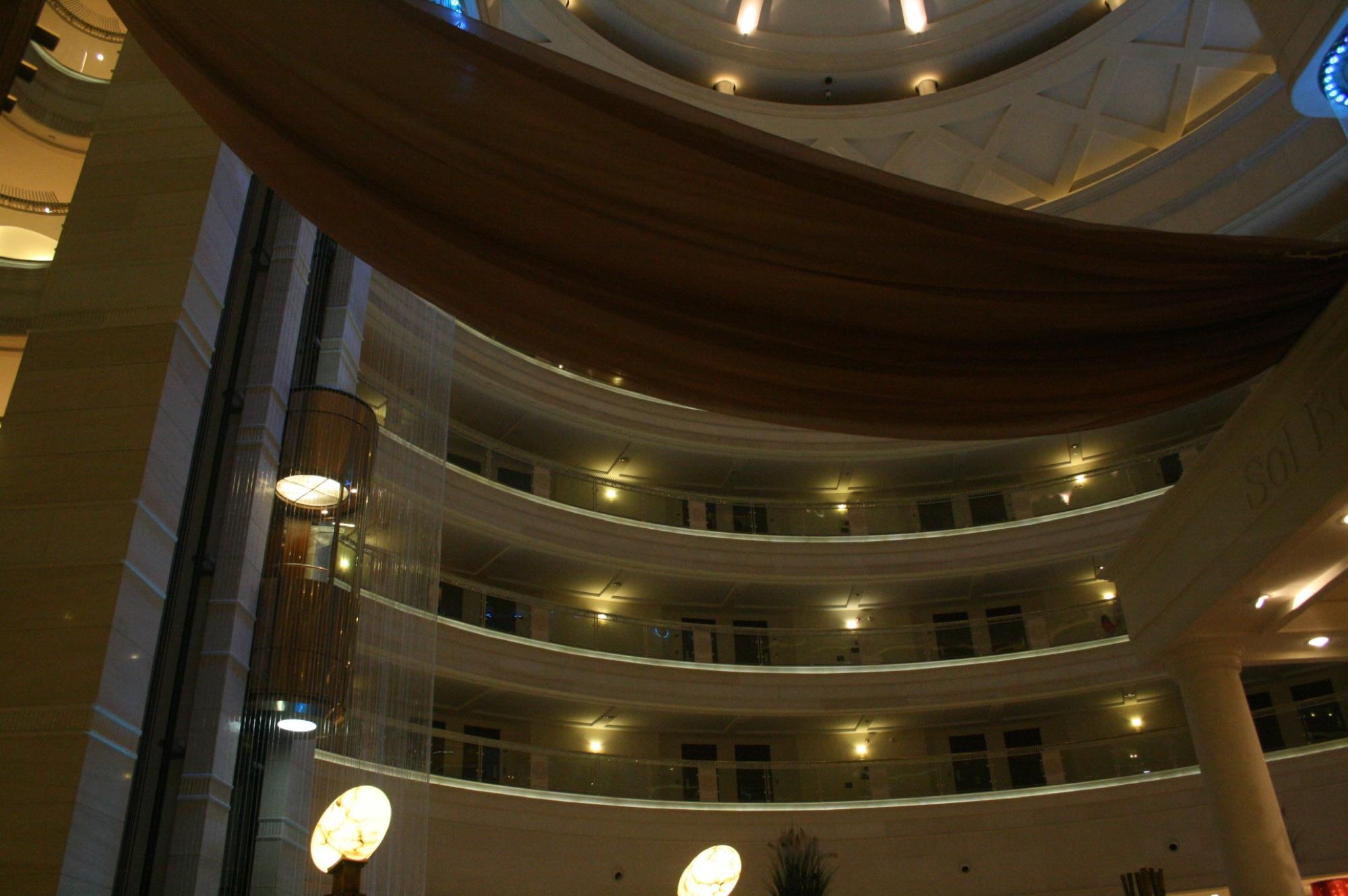
Yangyang's accommodation falls into three buckets. Surf hostels — small, board-friendly, around the beaches — go for 40,000–70,000 KRW a night for a dorm bed or basic private. Mid-range guesthouses and pensions near Jukdo and Ingu run 90,000–150,000 KRW. Resorts like Solbeach Yangyang are the upscale option, from 220,000 KRW in shoulder season up to 450,000+ KRW in peak summer.
A workable 2-day itinerary: Day 1 — leave Seoul by 07:00, arrive Yangyang by 10:00, gear up at Surfyy or a Jukdo shop, surf until 14:00, lunch on the beach, second session 16:00–18:00, dinner in town. Day 2 — sunrise at Naksansa, breakfast in Sokcho, morning surf at Hajodae, lunch, drive back to Seoul by 17:00 to beat the traffic.
FAQ
Frequently Asked Questions
Pick up a car in Seoul, point the GPS at the Inje Tunnel, and you'll be paddling into a Yangyang lineup before lunch. Drive safe, paddle hard.
Share this article
You Might Also Like


Get Travel Inspiration
Subscribe for new stories, route guides, and driving tips delivered to your inbox.