Ulsan Day Trip Drive: Ganjeolgot Cape, Whale Museum & Taehwagang Garden
Most travelers skip Ulsan entirely — they see 'Korea's industrial city' and move on. Big mistake. Tucked between Busan and the Gangwon coast, Ulsan has Korea's easternmost cape, a bamboo forest threaded through its city center, and the country's only whale museum. It's all connected by good roads and takes one very satisfying day to drive.
Ulsan is about 370 km southeast of Seoul — roughly a 3.5-hour drive on the Gyeongbu Expressway (경부고속도로, Route 1). Toll fees run about 16,000–20,000 KRW one way depending on which exit you take. Most people pair this with a night in Ulsan or tack it onto a Busan road trip, since Busan is just 60 km south.
Ganjeolgot Cape: Korea's Easternmost Point
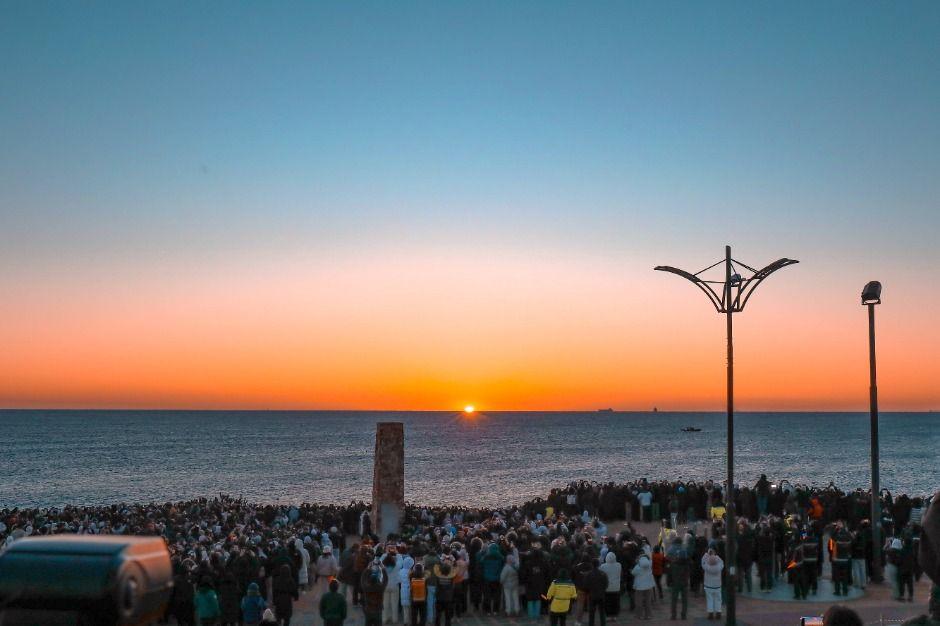
Ganjeolgot (간절곶) is the easternmost point on the Korean mainland — it sees the sunrise a full 5 minutes before Seoul and 1 minute before Dokdo. Koreans flock here every New Year's Eve to watch the first sunrise of the year. In summer it's quieter, but no less striking: the white lighthouse, the rocky coastline, and the East Sea stretching to the horizon are genuinely beautiful.
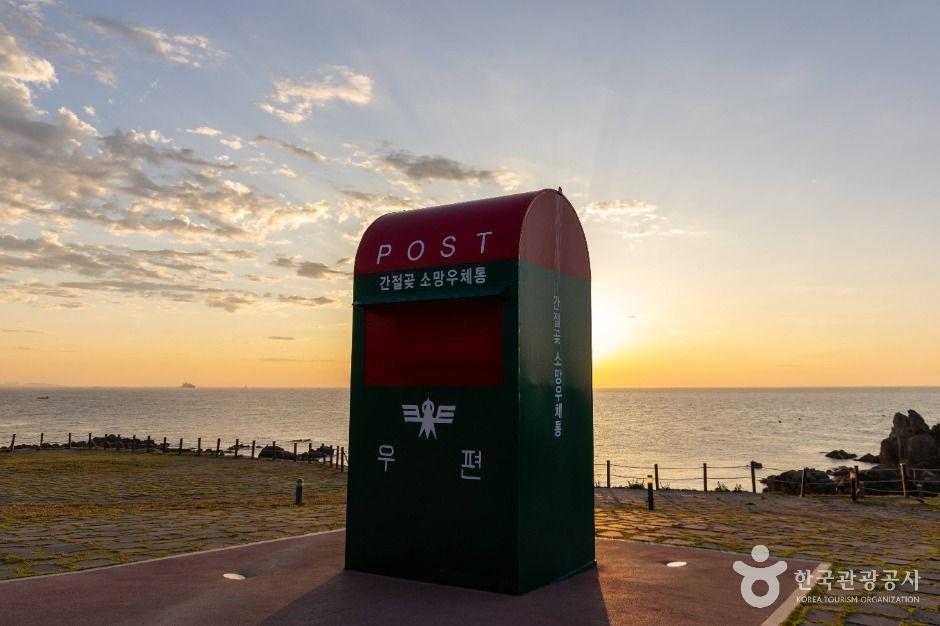
The cape sits in Ulju County on Ulsan's southern tip, about 35 km from the city center. From the parking lot, it's a short walk to the lighthouse and the open coastal deck. There's a large sculpture of a mailbox here too — the '간절곶 소망우체통' (Hope Mailbox) where visitors drop in postcards to be delivered in a year.
- Admission: Free
- Parking: Free (large lot at the cape entrance)
- Best time: Early morning for sunrise or late afternoon for golden hour
- From Ulsan city center: 35 km south, about 40 minutes via Route 31
- Address: 39-2 Ganjeolgot 1-gil, Seo-saengmyeon, Ulju-gun, Ulsan
Taehwagang National Garden: Bamboo and Iris in the City
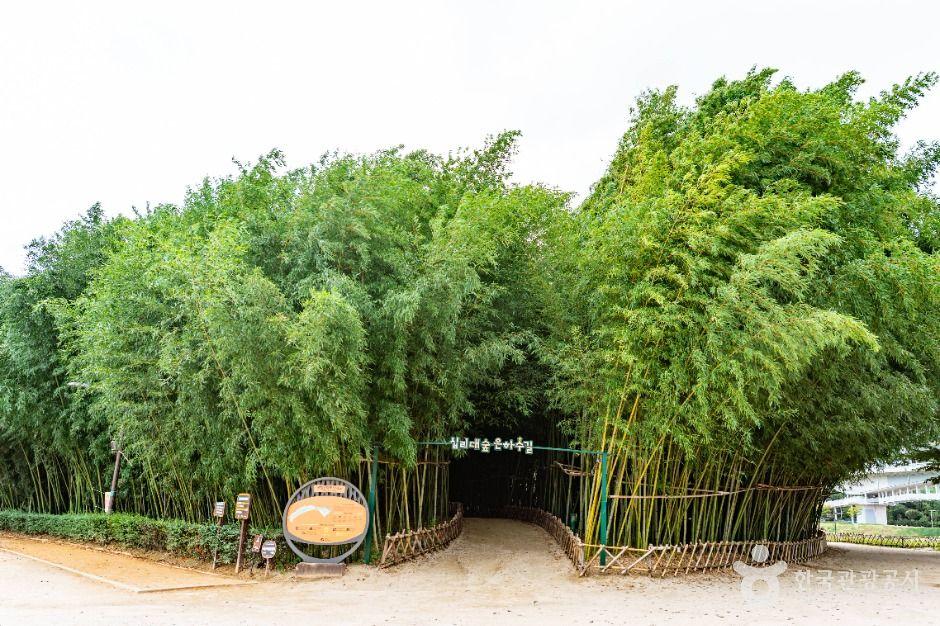
The Taehwagang National Garden (태화강 국가정원) is Ulsan's crown jewel and one of Korea's two designated national gardens (the other is Suncheon Bay). What makes it special is that it runs right through the city center along the Taehwa River — a 5.4 km² park that most visitors walk in 1.5–2 hours.
The highlight is the 십리대숲 (Ten-ri Bamboo Grove) — a 4 km stretch of dense bamboo forest that lines the riverbank. In summer the thick canopy keeps it cool even on hot days, and the sound of wind through the bamboo is something else. The garden also has themed sections: an iris garden, wildflower meadows, and a pavilion area with good river views.
- Admission: Free
- Parking: Multiple free lots along the river (enter from Taehwa-ro)
- Hours: Open 24 hours (facilities close at 22:00)
- Best season: June (irises bloom) and October (cosmos and reeds)
- From Ganjeolgot: 45 minutes north via Route 7
Every year in mid-October, thousands of starlings roost in the bamboo grove at dusk — one of Korea's most spectacular wildlife displays. If you happen to be here in autumn, arrive at the garden around 17:30 and look up.
Jangsaengpo Whale Museum: Korea's Whaling History
Jangsaengpo (장생포) was once Korea's whaling hub — the port that launched boats into the East Sea for minke whale hunts from the 1960s through the 1980s. Commercial whaling ended in Korea in 1986, and the neighborhood has since reinvented itself as a whale-themed destination.
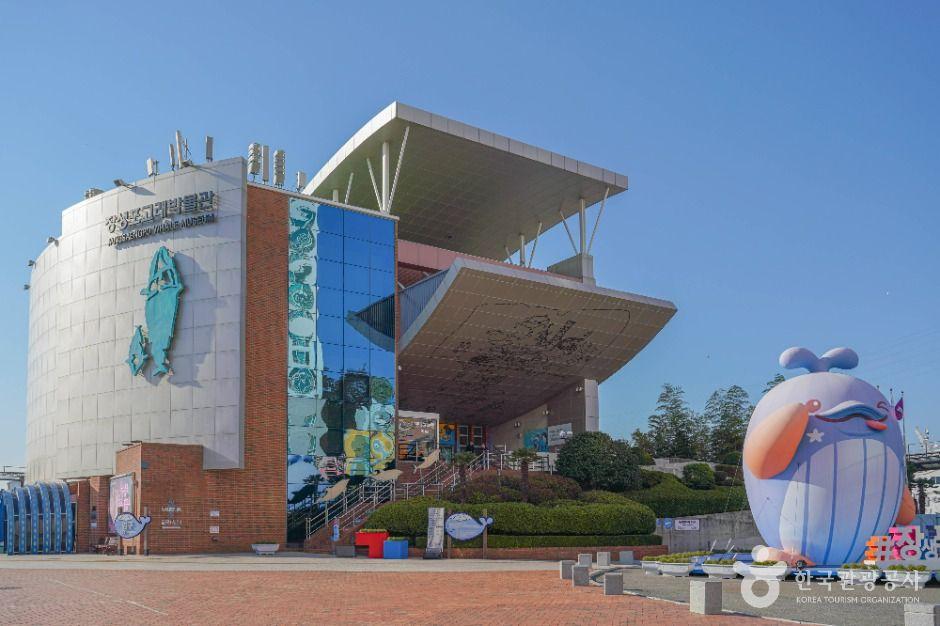
The Jangsaengpo Whale Museum (장생포 고래박물관) is the centerpiece — Korea's only museum dedicated entirely to whales. Inside are full whale skeletons, interactive exhibits on whale biology and the history of Korean whaling, and a small theater. Right next door is the Whale Culture Village, an outdoor area with life-size whale replicas, murals, and a retro recreation of the old whaling village.
- Admission: 2,000 KRW adults / 1,000 KRW children
- Hours: 09:30–18:00 (closed Mondays)
- Combined ticket with Whale Culture Village: 3,000 KRW
- From Taehwagang Garden: 20 minutes south via Sanup-ro
- Address: 244 Jangsaengpogoreae-ro, Nam-gu, Ulsan
Ulsan Harbor and Ilsan Beach
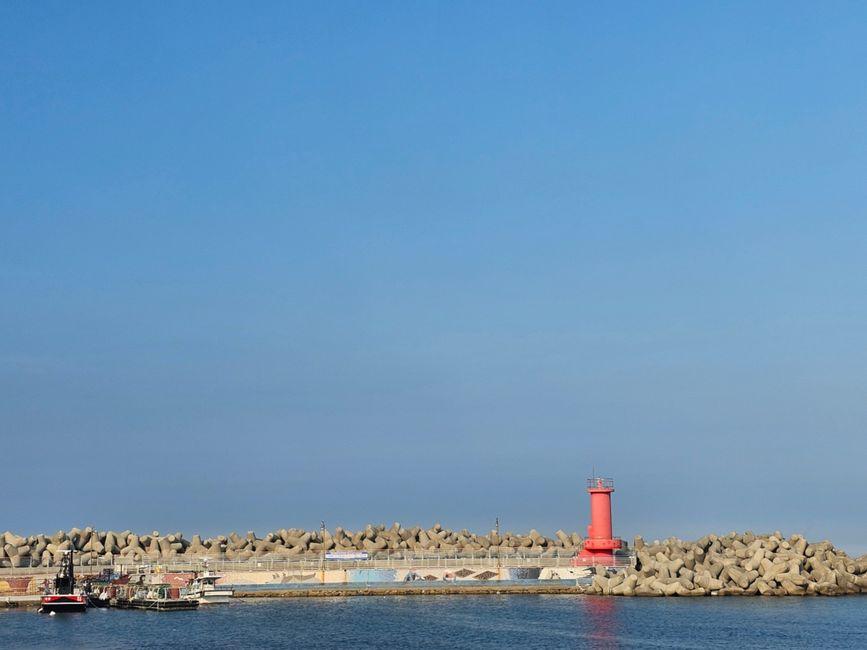
After the whale museum, it's worth swinging by Ulsan Harbor to see the red lighthouse before heading to Ilsan Beach (일산해수욕장), the city's main sandy beach. Ilsan is a proper swimming beach — clean water, a long stretch of sand, and good seafood restaurants lining the promenade. In summer it fills up on weekends but stays manageable on weekdays.
The drive along the Ulsan Harbor coastal road gives you a glimpse of the massive industrial port that powers the Korean economy — including the Hyundai Heavy Industries shipyard, one of the largest in the world. It's oddly compelling to watch container ships and car carriers moving through the harbor as you drive past.
Suggested Day Trip Route
- 107:00 — Depart Seoul, head south on Gyeongbu Expressway (경부고속도로)
- 210:30 — Arrive Ganjeolgot Cape. 30–45 min walk around the cape and lighthouse
- 312:00 — Drive north to Taehwagang National Garden (40 min). Picnic or grab food from a nearby café on Taehwa-ro
- 413:30 — Walk the Ten-ri Bamboo Grove (1.5 hours)
- 515:30 — Drive to Jangsaengpo Whale Museum (20 min). 1 hour in the museum
- 617:00 — Coastal drive past Ulsan Harbor to Ilsan Beach. Dinner at a seafood restaurant
- 719:00 — Depart Ulsan, return via Gyeongbu Expressway
FAQ
Frequently Asked Questions
Ulsan consistently surprises first-timers — they expect factory stacks and leave talking about bamboo groves and whale skeletons. If you're driving the east coast or making a loop from Busan, carve out a day for it. You won't regret it.
Share this article
You Might Also Like


Get Travel Inspiration
Subscribe for new stories, route guides, and driving tips delivered to your inbox.